
Spring in the Lowcountry is beautiful but it’s also pollen season, and your indoor air can feel like a sneeze factory. Choosing the right filtration can make the difference between a comfortable home and constant congestion.
Tired of Pollen Taking Over Your Home?
Find the right indoor air solution with expert HVAC guidance. Call today for cleaner, healthier air.
Here’s the Plain Answer
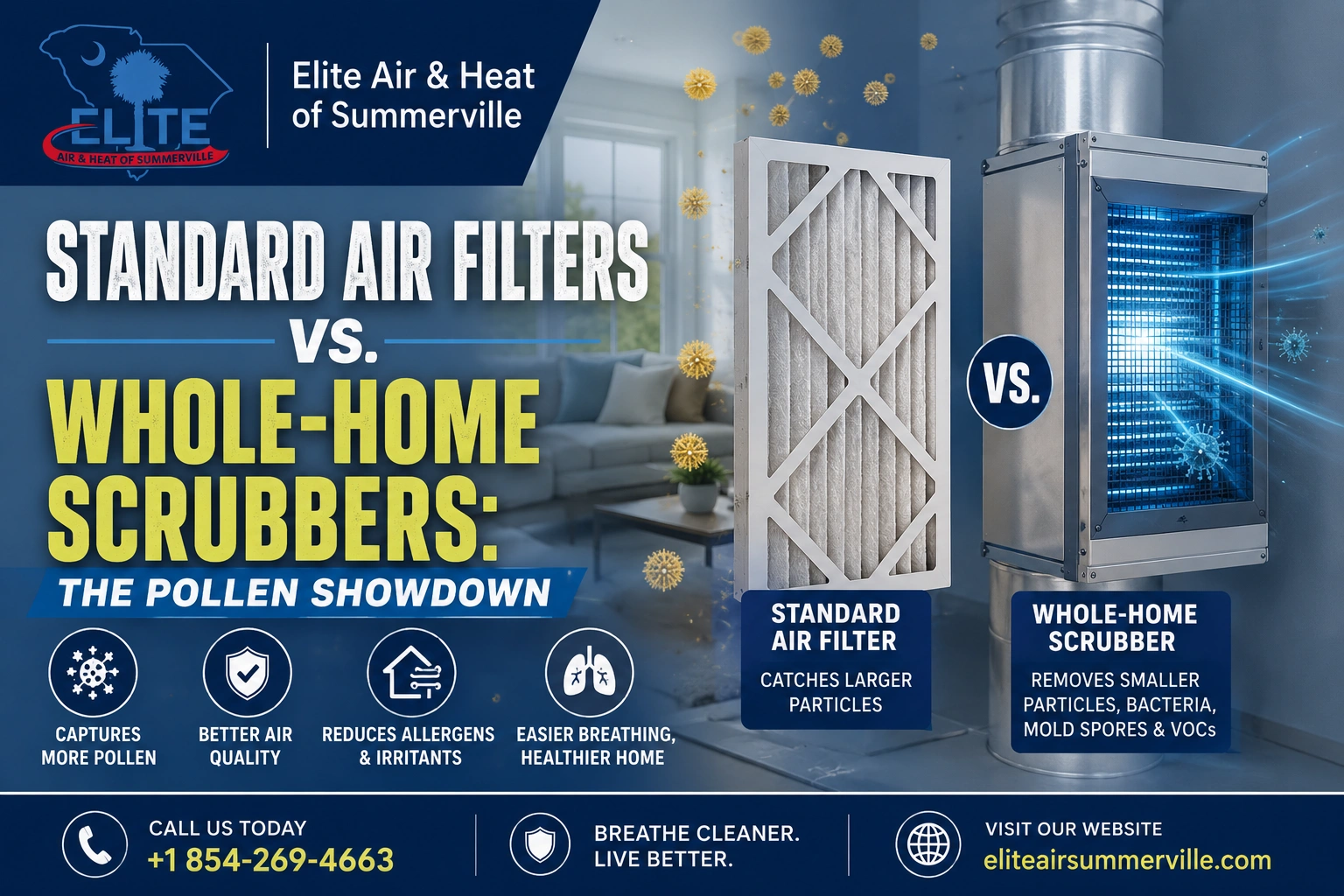
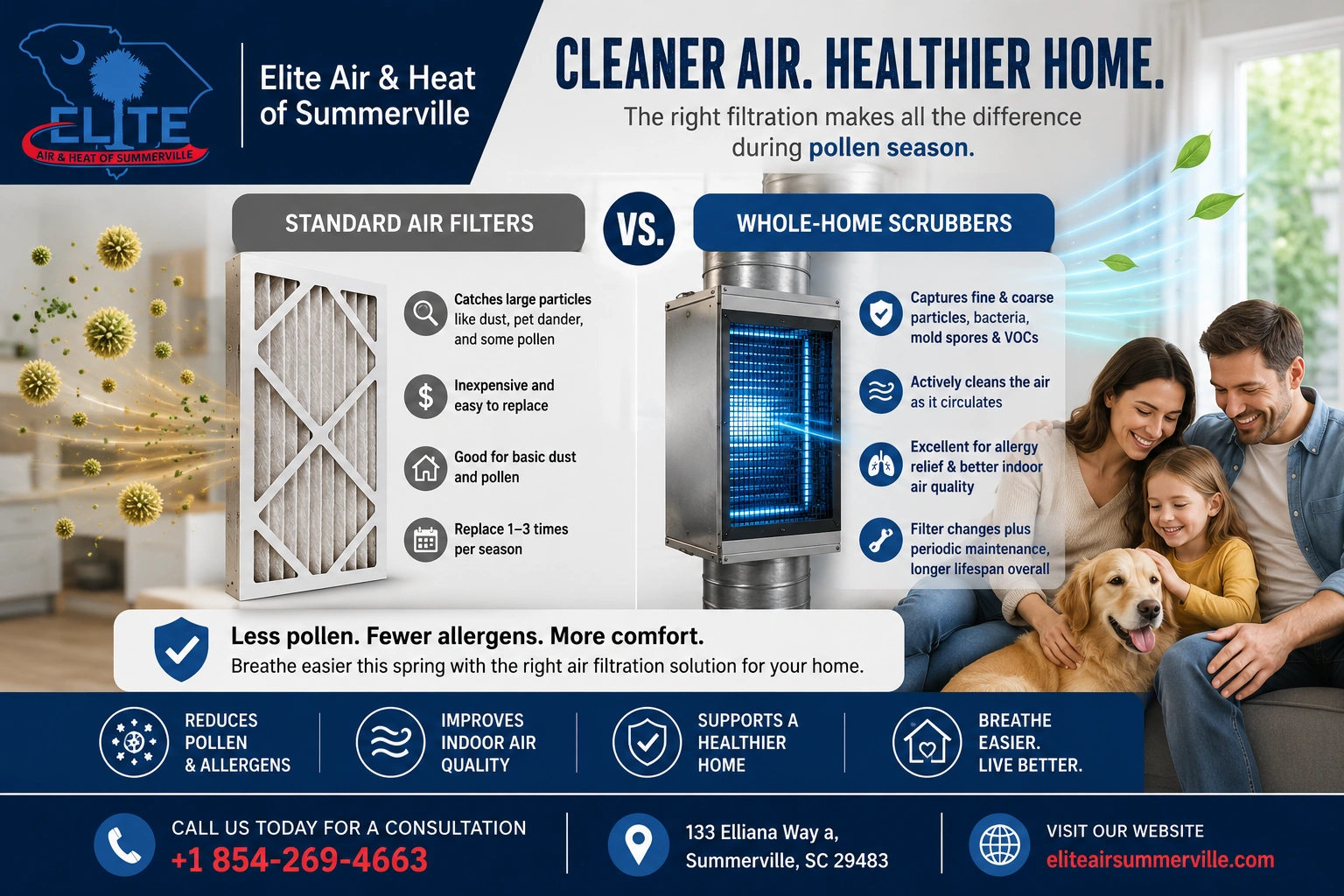
- Standard air filters catch large particles like dust, pet dander, and some pollen. They are inexpensive and easy to replace, but limited in scope.
- Whole-home air scrubbers actively clean the air, removing smaller particles, bacteria, mold spores, and fine pollen. They are more expensive but can dramatically improve indoor air quality.
That does not automatically mean every home needs a scrubber your decision depends on allergy sensitivity, home construction, and budget.
How They Work
Standard Air Filters
- Installed in your HVAC return vents
- Rated by MERV (Minimum Efficiency Reporting Value) from 1–16
- Typical residential filters: MERV 6–10, good for dust and large pollen
- High-MERV filters (11–13) capture smaller pollen but may reduce airflow if your system isn’t designed for them
Whole-Home Air Scrubbers
- Installed directly on HVAC ductwork
- Continuously treat air passing through, often with UV or antimicrobial technology
- Capture microscopic allergens, spores, and volatile organic compounds (VOCs)
- Can reduce cleaning needs and allergy symptoms in sensitive households

Top 5 Historic Home HVAC Solutions for Downtown Summerville
Historic homes in downtown Summerville have a different HVAC problem than newer homes. You are not just trying to cool…

Pollen Performance
| Feature | Standard Air Filter | Whole-Home Scrubber |
| Pollen Capture | Moderate (depends on MERV rating) | High (captures fine and coarse particles) |
| Maintenance | Replace 1–3 times per season | Filter changes plus periodic maintenance, longer lifespan overall |
| Indoor Air Quality | Good for basic dust and pollen | Excellent, reduces allergens and microbes |
| Cost | Low upfront, low maintenance | Higher upfront, but can reduce long-term allergy symptoms and cleaning |
What a Technician Will Check
- HVAC compatibility with high-MERV filters or scrubbers
- Airflow to ensure the system isn’t overstrained
- Installation location for maximum efficiency
- Integration with existing humidifiers or dehumidifiers
What Homeowners Can Safely Do
- Replace standard filters on schedule
- Keep return vents clear of dust and debris
- Track indoor pollen counts and allergy symptoms to see if improvement occurs
Avoid DIY: Installing a whole-home scrubber incorrectly can damage the HVAC system or reduce efficiency. Professional installation ensures safety, performance, and warranty compliance.
Calm Next Step
If your household suffers from seasonal allergies, a professional evaluation of your air filtration options can help you decide between standard filters or a whole-home air scrubber. The key is matching technology to your home’s air quality needs and your family’s comfort, rather than choosing based solely on cost.
Not Sure Which Air Cleaner Is Right?
Get honest recommendations and professional installation from trusted HVAC experts. Call today.