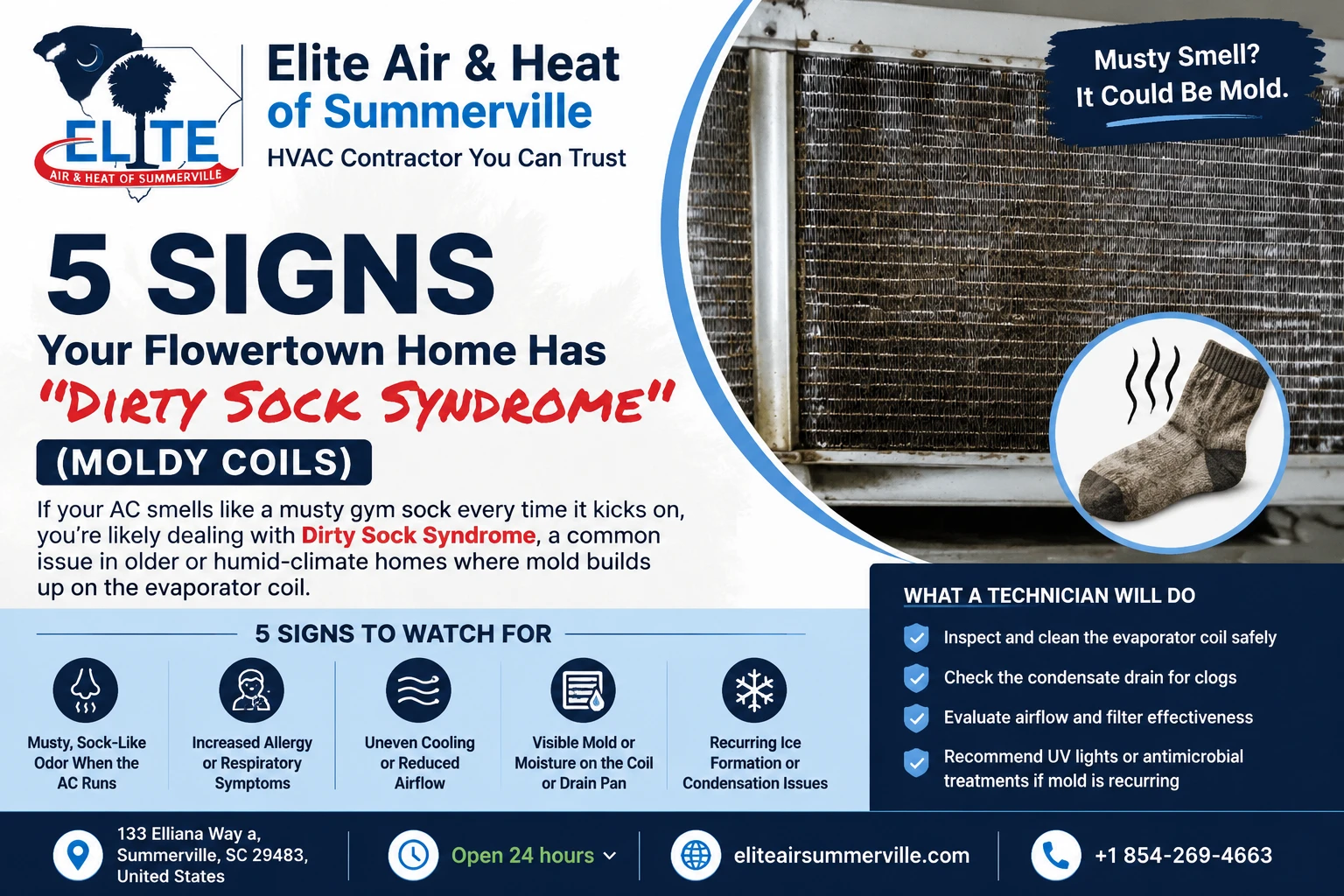

If your AC smells like a musty gym sock every time it kicks on, you’re likely dealing with Dirty Sock Syndrome, a common issue in older or humid-climate homes where mold builds up on the evaporator coil.
Here’s the Plain Answer
That smell comes from mold and bacteria growing on the AC coil. It doesn’t mean your system is broken, but it does mean you need intervention. Left unchecked, it can reduce airflow, lower efficiency, and worsen indoor air quality.
Don't Let Dirty Sock Syndrome Spread
A quick inspection today can help prevent costly HVAC repairs tomorrow. Call to schedule your service.
5 Signs to Watch For
- Musty, Sock-Like Odor When the AC Runs
- The smell is usually strongest right after turning on the system.
- It’s a reliable indicator that moisture is accumulating on the coil, feeding mold growth.
- Increased Allergy or Respiratory Symptoms
- Sneezing, watery eyes, or mild coughing when the AC runs may indicate spores are circulating in your home.
- Uneven Cooling or Reduced Airflow
- Mold buildup can restrict airflow over the coil, causing some rooms to stay warmer than others.
- Visible Mold or Moisture on the Coil or Drain Pan
- If you inspect your indoor unit, you might see black, green, or brown streaks near the coil or in the condensate pan.
- Do not touch coils or attempt cleaning yourself if you are unsure; mold can be hazardous.
- Recurring Ice Formation or Condensation Issues
- Mold and debris can trap moisture, increasing the risk of coil freezing or water leaks.
- Mold and debris can trap moisture, increasing the risk of coil freezing or water leaks.
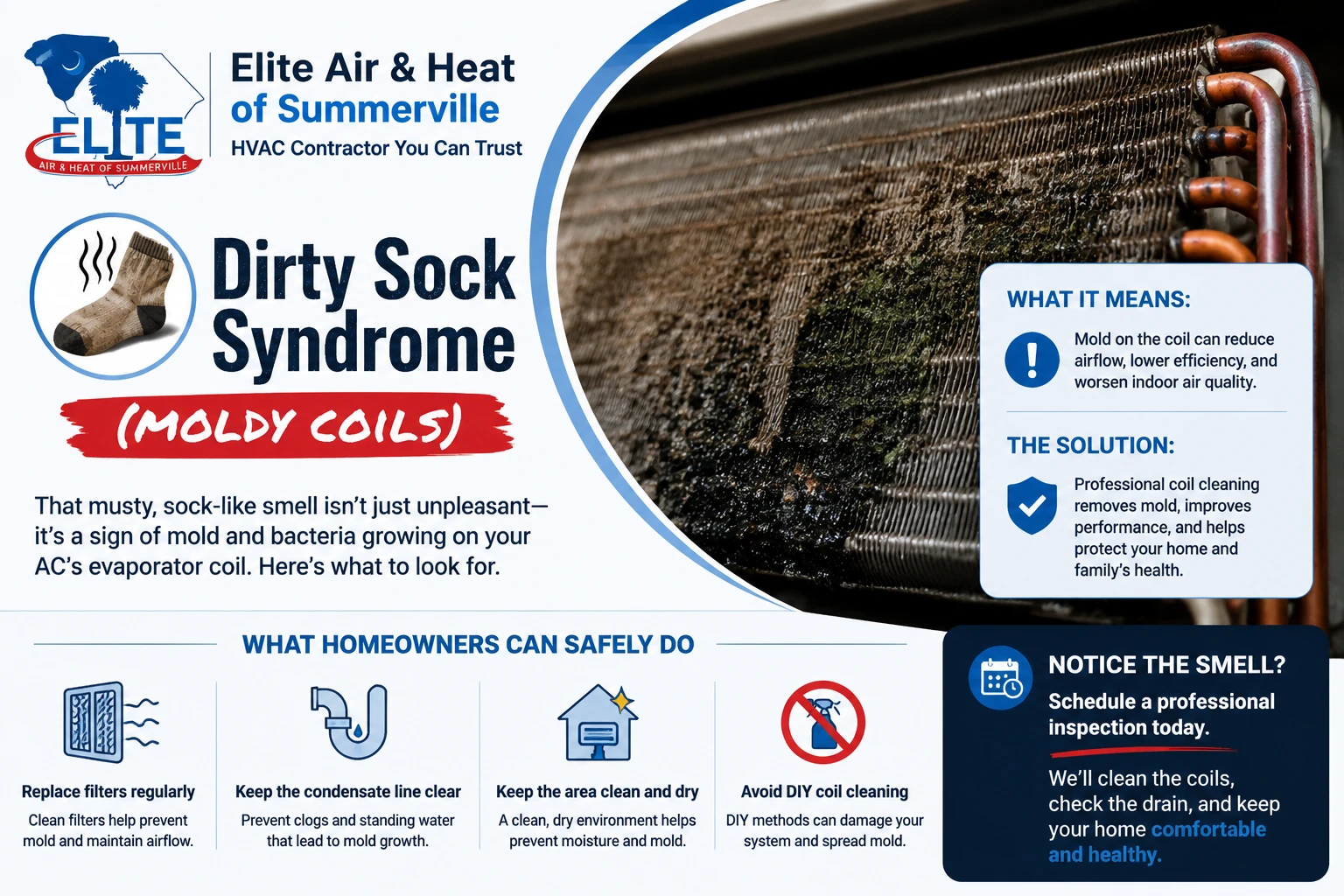
What a Technician Will Do
- Inspect and clean the evaporator coil safely
- Check the condensate drain for clogs or standing water
- Evaluate airflow and filter effectiveness
- Recommend UV lights or antimicrobial treatments if mold is recurring
Simple vs. Serious
- Simple: Minor surface mold or dirty filters cleaning and filter replacement usually resolves the issue.
- Serious: Deep mold on coils, recurring moisture, or water leaks requires professional cleaning and possibly coil replacement.

The Cost of a Whole-Home Generator for South Carolina Storm Seasons
When a tropical storm, hurricane, or summer thunderstorm knocks out power, many South Carolina homeowners start asking the same question:…

What Homeowners Can Safely Do
- Replace filters regularly
- Ensure the condensate line is clear
- Keep the area around the indoor unit clean and dry
Avoid DIY: Scraping or spraying coils yourself can damage components or spread mold spores. Professional cleaning is safer and more thorough.
Calm Next Step
If you notice that musty smell, unusual allergies, or reduced airflow, schedule a professional inspection. A technician can clean the coils, check the drain, and ensure your AC is not spreading mold through your home. Addressing Dirty Sock Syndrome early protects your comfort, efficiency, and indoor air quality.
Does Your AC Smell Like Dirty Socks?
Don't ignore musty odors. Schedule professional coil cleaning and HVAC service before the problem gets worse.