

If you live in Cane Bay and your upstairs bedrooms feel dramatically hotter than the rest of the house, you’re not imagining it.
A complaint we hear all the time is:
“The kitchen downstairs is comfortable, but the bedrooms upstairs are 8 to 10 degrees hotter.”
Here’s the plain answer:
Most upstairs temperature problems come down to airflow, humidity, or HVAC system design not necessarily a broken air conditioner.
That does not automatically mean you need a new system. In many cases, the issue can be improved once the actual cause is identified.
Hot Upstairs? Your HVAC May Need Attention
Poor airflow, duct issues, or system imbalance could be behind the heat. Call now for expert troubleshooting and a reliable solution.
Reason #1: Heat Naturally Rises, and the Upstairs Gets the Worst of It
This sounds obvious, but it’s a bigger factor than many homeowners realize.
During a Lowcountry summer, your roof and attic absorb tremendous amounts of heat throughout the day.
That heat radiates downward into:
- Upstairs ceilings
- Bonus rooms
- Second-floor bedrooms
- Hallways near attic spaces
Meanwhile, warm air inside the home naturally rises.
The result is a double hit:
- Heat entering from above
- Heat collecting upstairs
Even when the AC is working properly, second floors often require more cooling than first floors.
Signs This May Be Your Problem
- Bedrooms get hotter in the afternoon.
- Temperatures improve after sunset.
- The downstairs stays comfortable.
- The AC runs for long periods but struggles upstairs.
A good technician should evaluate attic insulation levels, attic temperatures, and overall heat gain before assuming the AC itself is failing.

Is Your Heater Ready for Winter? How to Stay Cozy All Season Long
As the days get shorter and the temperatures drop, there’s one thing on everyone’s mind: staying warm. And when the…
Reason #2: Your Upstairs Isn’t Getting Enough Airflow
This is one of the most common causes of hot bedrooms.
Your air conditioner can only cool rooms that receive enough conditioned air.
If airflow is restricted, those rooms may never reach the thermostat setting.
Common causes include:
- Undersized ductwork
- Poor duct design
- Crushed flex ducts
- Leaking ducts in the attic
- Closed dampers
- Dirty filters
- Blocked return air pathways
This is where homeowners sometimes get into trouble.
Many people assume a hotter upstairs means they need a larger AC unit.
In reality, the equipment may be producing plenty of cooling. The problem is getting that cooling where it’s needed.
What You Can Check Yourself
- Verify all supply vents are open.
- Check for blocked return grilles.
- Replace a dirty air filter.
- Make sure furniture isn’t covering vents.
If the issue has existed since the day you moved in, there’s a good chance the root cause is related to airflow design rather than equipment failure.
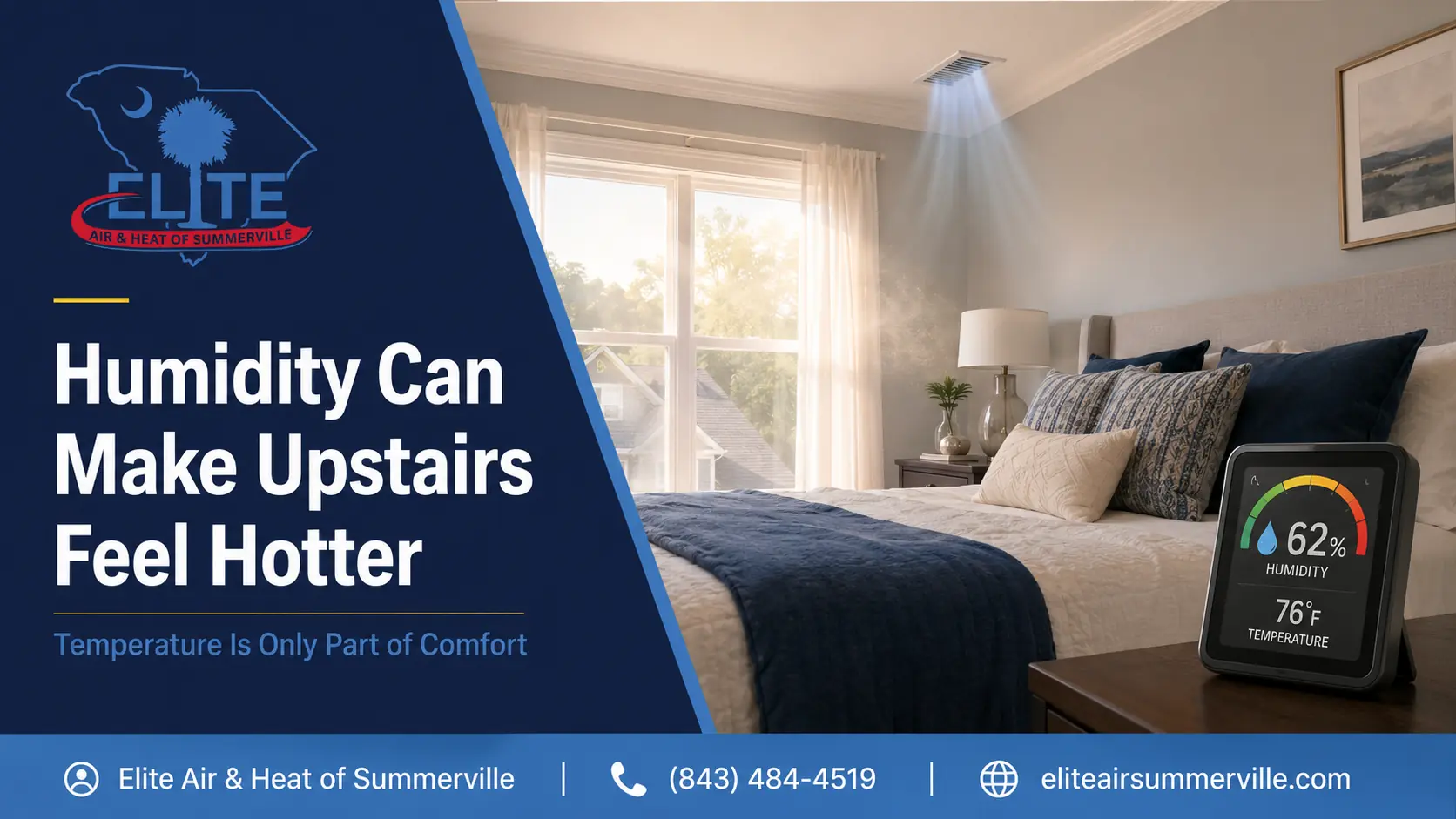
Reason #3: Humidity Is Making the Upstairs Feel Hotter
In Cane Bay and throughout the Charleston area, comfort is not just about temperature.
Humidity plays a major role.
A bedroom that’s 75 degrees with high humidity can feel far less comfortable than a room that’s 78 degrees with proper humidity control.
When indoor humidity rises:
- Air feels sticky
- Sleep becomes uncomfortable
- The AC seems ineffective
- Homeowners often lower the thermostat even further
Some common causes include:
- Oversized AC systems
- Poor airflow
- Duct leakage
- High attic heat gain
- Improper system settings
An oversized system is especially common.
Many homeowners assume bigger is better.
Unfortunately, oversized systems often cool the house quickly and shut off before removing enough moisture from the air.
The home reaches the temperature setting but never feels truly comfortable.
Why the Thermostat Location Matters
Many two-story homes have a thermostat located downstairs.
The problem?
The thermostat only knows the temperature where it’s installed.
If the kitchen reaches 72 degrees, the system may shut off even though the upstairs bedrooms are still 80 degrees.
This is one reason zoning systems and properly balanced airflow can make such a dramatic difference in larger homes.
Does This Mean You Need a New HVAC System?
Not necessarily.
A hotter upstairs can be caused by:
- Airflow issues
- Duct problems
- Insulation deficiencies
- Humidity control problems
- Thermostat placement
- System sizing mistakes
Some require repairs.
Some require adjustments.
Some require upgrades.
But replacing equipment without diagnosing the root cause often leads to disappointment.
If the issue keeps coming back, replacing parts blindly usually is not the answer.
What a Good HVAC Technician Should Inspect
Before recommending solutions, a technician should evaluate:
- Supply airflow to each room
- Return airflow capacity
- Duct leakage
- Static pressure
- Attic insulation levels
- System sizing
- Indoor humidity levels
- Thermostat location
- Temperature differences between floors
The goal is not to sell the biggest repair. The goal is to understand why the upstairs is uncomfortable in the first place.
The Bottom Line
If your upstairs bedrooms in Cane Bay are consistently 10 degrees hotter than your kitchen, the three most likely causes are:
- Excess heat gain from the attic and second floor
- Insufficient airflow reaching the upstairs rooms
- Humidity problems that make the space feel warmer than it actually is
The good news is that many of these issues can be improved without replacing the entire HVAC system.
If you’re unsure which category your problem falls into, the next step is a thorough airflow and comfort evaluation rather than guessing. A good technician should be able to explain what’s causing the temperature difference, what options are available, and which improvements are most likely to make a noticeable difference in your home’s comfort.
Upstairs Feeling 10 Degrees Hotter?
Uneven temperatures can signal an HVAC airflow or system issue. Call now for professional service and get your Cane Bay home comfortable again.