
For many homeowners in Del Webb, Cane Bay, and other active adult communities, the goal isn’t finding the most advanced HVAC system.
It’s finding the system that requires the least amount of attention while keeping the home comfortable year-round.
If you’re retired, travel frequently, split time between homes, or simply don’t want to think about your HVAC system every week, your priorities are usually different than those of a growing family.
Here’s the plain answer:
The best low-maintenance HVAC setup is typically a properly sized variable-speed heat pump combined with regular maintenance and simple indoor air quality upgrades.
The goal is not to eliminate maintenance entirely. Every HVAC system needs some care. The goal is to reduce surprises, improve reliability, and avoid emergency repairs during the hottest weeks of summer.
Enjoy Comfort Without the HVAC Hassle
Choose dependable, low-maintenance HVAC solutions built for easier retirement living. Call today for professional service.
What Most Retirees Actually Want
When homeowners in Del Webb and Cane Bay talk about HVAC, they usually care about four things:
- Consistent comfort
- Low energy bills
- Fewer breakdowns
- Minimal upkeep
Notice what’s missing from that list.
Most aren’t asking for the highest SEER rating available or the most complicated smart-home integration.
They want something that works quietly and reliably.
Why Variable-Speed Heat Pumps Are Worth Considering
Many newer homes already use heat pumps, and for good reason.
Modern variable-speed heat pumps can:
- Adjust output automatically
- Run quietly
- Maintain steadier temperatures
- Improve humidity control
- Reduce temperature swings
In the Lowcountry, comfort is not just about temperature.
Humidity plays a major role.
A variable-speed system often keeps indoor humidity lower because it runs longer at lower speeds rather than constantly cycling on and off.
Many homeowners notice the comfort improvement long before they notice the energy savings.
The Biggest Maintenance Mistake Retirees Make
This is where homeowners sometimes get into trouble.
Many people assume:
“The system is working, so it must be fine.”
Then they skip maintenance for several years.
Unfortunately, small issues often become expensive repairs when ignored.
Common examples include:
- Dirty coils
- Weak capacitors
- Drain line blockages
- Electrical connection problems
- Low refrigerant caused by developing leaks
Most of these are easier and cheaper to address before they become emergency service calls.

The Hidden Value of Comprehensive HVAC Services for Property Longevity
When it comes to maintaining a property, most homeowners focus on what they can see, fresh paint, new landscaping, or…
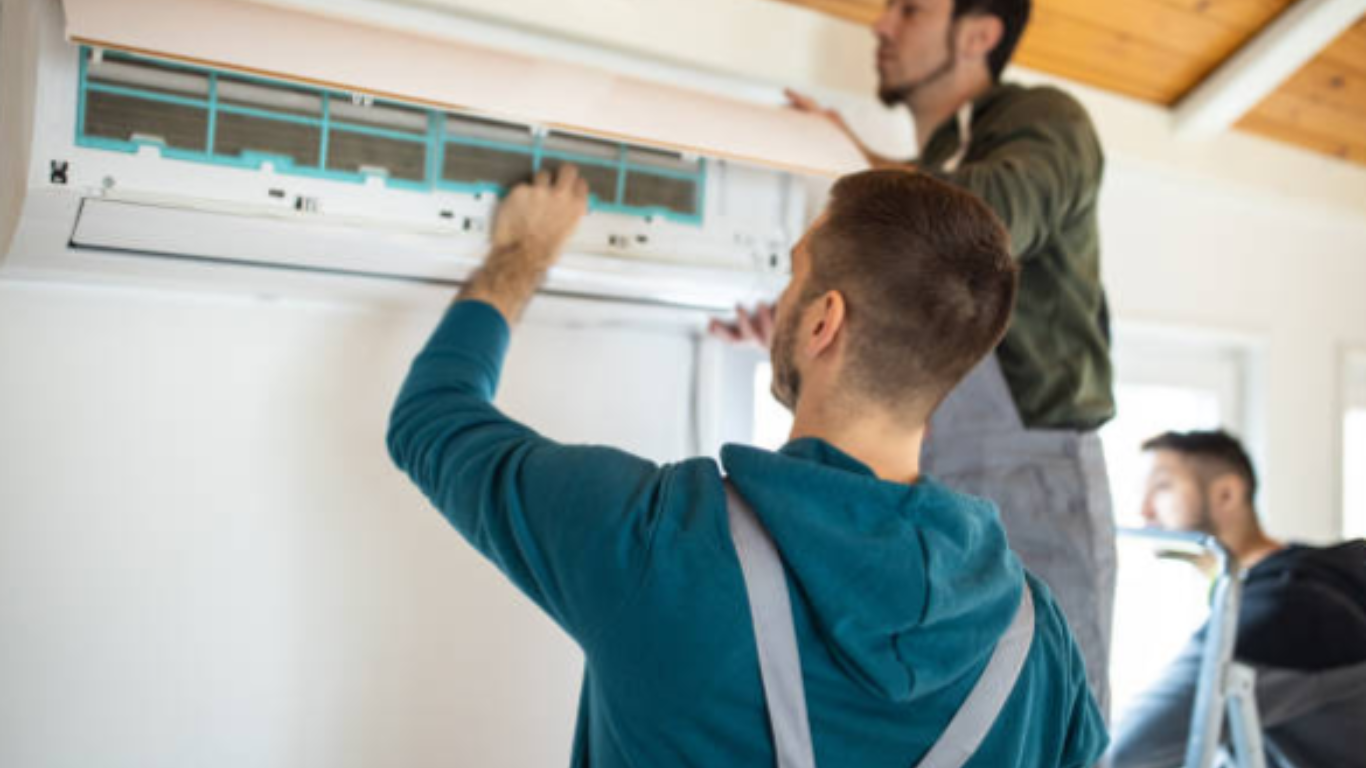
The Best HVAC Upgrades for Low Maintenance
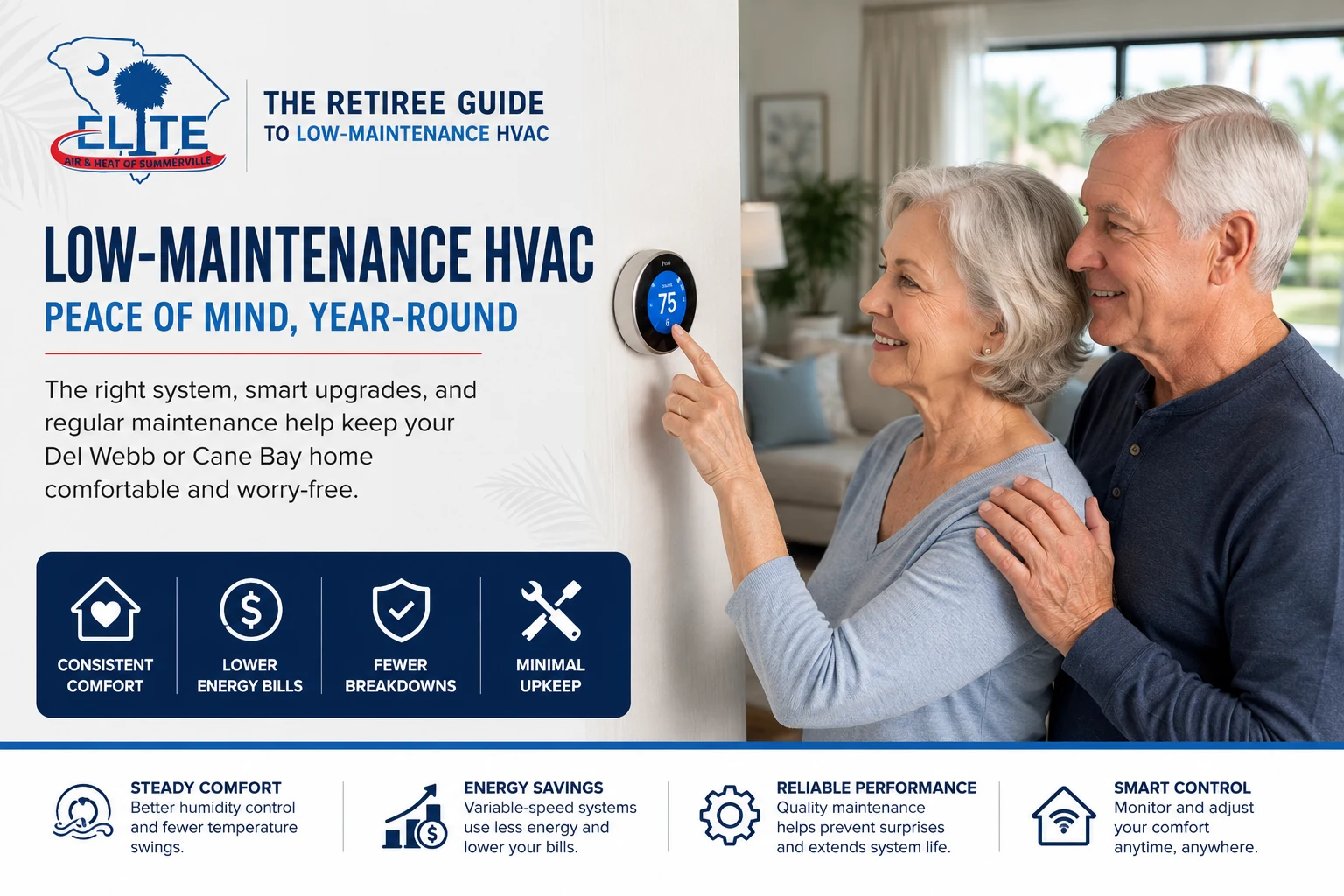
Smart Thermostat
A smart thermostat can help retirees who:
- Travel frequently
- Spend time away from home
- Want remote monitoring
Many systems allow you to:
- Check temperatures remotely
- Adjust settings from a phone
- Receive alerts if temperatures become extreme
Surge Protection
South Carolina thunderstorms can be tough on HVAC electronics.
A whole-system surge protector can help protect:
- Control boards
- Variable-speed motors
- Thermostats
- Compressor electronics
This is one of the most overlooked upgrades available.
High-Quality Air Filtration
A properly selected filter can help keep:
- Coils cleaner
- Dust lower
- Airflow healthier
For most homes, a MERV 8 to MERV 11 filter provides a good balance between filtration and airflow.
What About Maintenance Plans?
For many retirees, maintenance plans make sense because they simplify ownership.
A good maintenance program should include:
- Coil inspections
- Drain cleaning
- Electrical testing
- Refrigerant evaluation
- Airflow checks
- Filter guidance
The value isn’t just the tune-up.
It’s having someone regularly looking for small issues before they become larger ones.
If You Travel for Weeks at a Time
Many Del Webb and Cane Bay homeowners travel seasonally.
If that’s you, consider:
Humidity Monitoring
A home can develop humidity problems even when nobody is there.
Excess humidity can contribute to:
- Musty odors
- Mold growth
- Wood movement
- Indoor air quality concerns
Remote Thermostat Access
Being able to check your home’s temperature while traveling provides peace of mind and can help identify problems early.
Drain Line Protection
Condensate drain backups are one of the most common causes of preventable water damage.
Ask whether your system has:
- Float switches
- Overflow protection
- Drain monitoring
Should You Buy the Most Efficient System Available?
Not necessarily.
The most expensive HVAC system is not automatically the best fit.
A good technician should help you balance:
- Comfort
- Reliability
- Budget
- Maintenance expectations
- Length of home ownership
The cheaper option is not always wrong, but it should make sense.
Likewise, the most expensive option should solve a problem you actually have.
What a Good HVAC Contractor Should Discuss
Before recommending equipment, they should ask about:
- Travel habits
- Humidity concerns
- Comfort complaints
- Energy costs
- Noise preferences
- Maintenance expectations
- Future plans for the home
The goal is not to sell the most complicated system.
The goal is to build a comfort system that quietly does its job with as little homeowner involvement as possible.
The Bottom Line
For most retirees in Del Webb and Cane Bay, the ideal low-maintenance HVAC setup includes:
- A properly sized variable-speed heat pump
- Smart thermostat monitoring
- Whole-system surge protection
- Quality filtration
- Regular preventative maintenance
If you only remember one thing, remember this:
The lowest-maintenance HVAC system isn’t the one with the most features. It’s the one that’s properly installed, properly maintained, and designed around how you actually live.
If you’re evaluating repair or replacement options, ask your contractor to explain not only efficiency ratings, but also expected maintenance requirements, long-term reliability, and what ownership will realistically look like over the next 10 to 15 years. That’s often where the best decisions are made.
Spend Less Time Worrying About Your HVAC
Get professional HVAC solutions designed for reliable comfort and easier upkeep. Call today to get started.