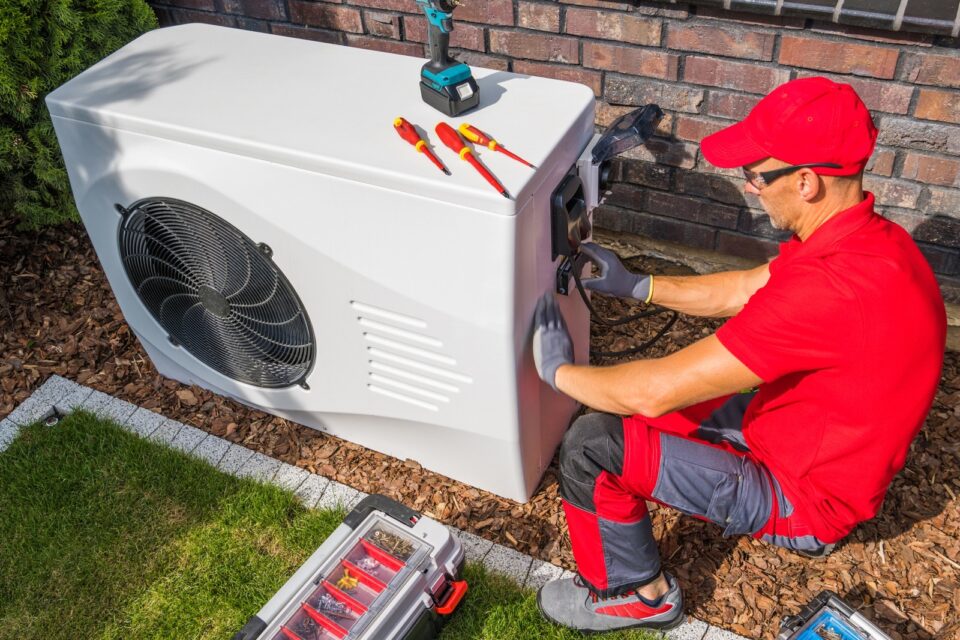


If you are reasonably handy, HVAC maintenance can look pretty simple.
Change the filter.
Rinse some leaves off the outdoor unit.
Make sure the drain is not clogged.
Maybe spray a little cleaner somewhere.
So when an HVAC company recommends a professional tune-up, the obvious question is:
What are they actually doing that I cannot do myself?
That is a fair question.
Here’s the plain answer.
Homeowners can and should handle several basic HVAC maintenance tasks themselves. But DIY maintenance and a professional precision tune-up are not substitutes for each other.
DIY maintenance keeps obvious problems from developing.
A thorough professional tune-up goes further. It should involve measurements, electrical testing, refrigeration checks when appropriate, airflow evaluation, drain inspection, equipment cleaning, and verification that the system is actually operating within the manufacturer’s intended range.
You can look at an air conditioner and determine that it is running.
A technician should be able to tell you how well it is running and why.
That difference becomes important during Summerville’s long cooling season.
Keep Your System Running at Its Best!
DIY maintenance can only do so much. Schedule a professional precision tune-up for reliable performance.
DIY vs. Professional HVAC Maintenance: The Quick Comparison
| Maintenance Task | Homeowner DIY | Professional Tune-Up |
| Check/replace air filter | Yes | Yes |
| Clear leaves around outdoor unit | Yes | Yes |
| Inspect thermostat settings | Yes | Yes |
| Look for visible drain problems | Yes | Yes |
| Gently rinse accessible condenser debris | Usually | Yes |
| Measure electrical voltage/current | No | Yes |
| Test capacitors/contactors | No | Yes |
| Measure system airflow | No | Yes |
| Check refrigerant performance | No | Yes |
| Evaluate temperature split properly | Limited | Yes |
| Inspect blower operation | Limited | Yes |
| Inspect evaporator coil condition | Usually limited | Yes |
| Test safety controls | No | Yes |
| Diagnose abnormal operating pressures | No | Yes |
| Evaluate heat-pump heating operation | Limited | Yes |
ENERGY STAR recommends both homeowner maintenance and annual professional pre-season HVAC checkups. Its homeowner guidance specifically calls for regularly checking the filter and keeping equipment clear of debris, while its professional checklist includes electrical measurements, refrigerant evaluation, airflow checks, condensate inspection, coil cleaning, and control testing.
What HVAC Maintenance Can You Safely Do Yourself?
More than some contractors admit.
Homeowners who pay attention to their equipment can prevent a surprising number of avoidable service calls.
Change the air filter
This is probably the single highest-value HVAC maintenance task you can do yourself.
A dirty filter restricts airflow.
That can make the system work harder, increase energy consumption, reduce comfort, contribute to coil icing, and place additional stress on blower components.
ENERGY STAR recommends checking filters monthly during heavy heating and cooling periods and changing them when dirty; at minimum, its general guidance says filters should be changed about every three months.
But do not treat “every three months” as a rule carved in stone.
Your filter may need attention more frequently if you have:
- Pets
- Heavy pollen
- Construction dust
- A highly restrictive filter
- Longer HVAC run times
- A large household
- Recent remodeling
Here in the Lowcountry, spring pollen alone can make filter conditions change faster than homeowners expect.
The better rule is:
Check it. Do not guess.
Keep the outdoor unit clear
Your outdoor condenser or heat pump needs airflow.
Leaves, pine straw, grass clippings, weeds, and other debris can obstruct the coil.
You can safely keep vegetation trimmed back and remove loose debris around the cabinet.
ENERGY STAR specifically recommends keeping indoor and outdoor HVAC equipment clean and clear of debris.
If the exterior coil is visibly dirty, a gentle rinse may also be appropriate on many systems after power is safely shut off.
But avoid high-pressure spraying.
Condenser fins can bend easily.
And do not remove electrical panels or start disassembling the unit simply because you found a coil-cleaning video online.
Check the Condensate Drain Area
During the cooling season, your AC removes moisture from indoor air.
That water has to go somewhere.
In Summerville’s humid climate, the amount of condensate moving through an AC drain can be substantial during peak cooling weather.
Homeowners can watch for obvious warning signs such as:
- Water around the indoor unit
- A full emergency drain pan
- Staining around the air handler
- A float switch repeatedly shutting the system off
- Water dripping somewhere it normally does not
- Musty odors near the equipment
ENERGY STAR notes that a clogged condensate drain can cause water damage and affect indoor humidity levels.
If your system has a homeowner-accessible drain-cleaning point and your installer has shown you how to maintain it, routine drain maintenance may be appropriate.
If you are unsure where the drain goes or what you are opening, stop there.
A condensate system can include traps, vents, float switches, pumps, and drain configurations that are easy to disturb unintentionally.
Use Your Eyes and Ears
Homeowners are around their HVAC system every day.
That gives you an advantage the technician does not have.
Pay attention to changes.
For example:
- Has the outdoor unit become louder?
- Is there a new buzzing sound?
- Does the system start and stop much more frequently?
- Is airflow weaker?
- Does one room suddenly stay warmer?
- Is the thermostat taking longer to reach temperature?
- Does the house feel more humid?
- Is the heat pump behaving differently than last winter?
- Has your electric usage changed dramatically?
Those observations are valuable.
Maintenance is not just cleaning things.
It is noticeable when normal operation changes.
What You Cannot Determine With a Visual Inspection
This is where the professional tune-up earns its place.
An air conditioner can appear to work normally while operating outside its ideal range.
The house may still cool.
The outdoor fan may still spin.
Cold air may still come from the vents.
But that does not necessarily tell us whether:
- The refrigerant circuit is performing correctly
- The blower is moving proper airflow
- A capacitor is deteriorating
- A motor is drawing abnormal current
- Electrical connections are overheating
- A coil is partially restricted
- A heat pump is staging correctly
- Auxiliary heat is coming on unnecessarily
- The thermostat is configured correctly
Those conditions require measurements.
That is why we call it a precision tune-up rather than simply an HVAC cleaning.
What Should a Professional Tune-Up Actually Include?
This is important because not every service advertised as a “tune-up” is equally thorough.
A homeowner should reasonably expect more than somebody changing the filter, spraying the condenser for five minutes, and handing over a replacement quote.
ENERGY STAR’s maintenance checklist recommends that a professional check thermostat operation, electrical connections, motor voltage and current, controls, condensate drainage, cooling coils, refrigerant level, and blower components.
The exact procedure should depend on your equipment.
But a good cooling-system inspection often includes several categories.
Electrical Testing
An HVAC system contains motors, relays, contactors, capacitors, wiring, terminals, and control boards.
Those components do not always fail instantly.
Some deteriorate gradually.
A technician may inspect and test:
- Capacitors
- Contactors
- Disconnects
- Electrical terminals
- Motor amperage
- Voltage
- Wiring condition
- Control circuits
Why does that matter?
Because a weakening component may still operate today.
The question is whether it is operating within acceptable limits.
ENERGY STAR specifically includes tightening electrical connections and measuring voltage and current on motors as part of a typical maintenance checkup, noting that faulty connections can create unsafe operation and shorten component life.
That is not something we recommend homeowners test with a multimeter inside energized HVAC equipment.
Refrigerant Performance
This is one of the clearest differences between DIY maintenance and professional diagnostics.
Refrigerant is not something a homeowner should “top off.”
Your AC or heat pump operates as a sealed refrigerant circuit.
If it is genuinely low, we need to understand why.
Depending on system type and operating conditions, a technician may use temperatures and pressures to evaluate whether the refrigerant side of the equipment appears to be operating correctly.
That can include measurements such as:
- Suction and liquid pressures
- Refrigerant line temperatures
- Superheat
- Subcooling
- Indoor and outdoor conditions
You do not need to know what every number means.
But the technician should.
ENERGY STAR includes refrigerant-level evaluation in its cooling maintenance checklist and notes that either too much or too little refrigerant can reduce efficiency and equipment life.
Does Every Tune-Up Need Refrigerant Gauges Connected?
Not necessarily.
This is worth explaining.
Connecting gauges to a refrigeration system is itself an intervention into the sealed system, and the correct diagnostic process depends on equipment, symptoms, measured temperatures, manufacturer procedures, and technician judgment.
A good tune-up should not become:
“Connect gauges because gauges look professional.”
The point is to verify system performance using appropriate diagnostic methods.
If readings suggest a refrigeration problem, then the technician should investigate appropriately.
Airflow Is Just as Important as Refrigerant
This gets overlooked constantly.
An air conditioner can have the correct refrigerant charge and still perform badly because it cannot move enough air.
A technician should pay attention to things such as:
- Filter condition
- Evaporator coil cleanliness
- Blower wheel condition
- Blower speed settings
- Supply and return restrictions
- Static pressure
- Duct problems
- Register airflow
ENERGY STAR notes that airflow problems can reduce HVAC system efficiency substantially; its maintenance checklist specifically calls for cleaning and adjusting blower components to provide proper airflow.
This is particularly important when homeowners have complaints like:
“The AC runs, but the upstairs never gets comfortable.”
That does not automatically mean refrigerant.
It may be an airflow problem.
Coil Inspection and Cleaning
Your HVAC system has an indoor evaporator coil and outdoor condenser coil.
Both need good heat transfer.
Dirt acts like insulation where you do not want insulation.
ENERGY STAR warns that dirty coils reduce the system’s ability to cool the home, increase run time, raise energy use, and can shorten equipment life.
The outdoor coil is often relatively easy to see.
The indoor coil may not be.
Depending on the installation, inspecting it properly may require access that a homeowner should not attempt.
A professional should not automatically sell a deep coil cleaning every year either.
The coil should be inspected first.
Clean equipment that does not need cleaning should not become an unnecessary add-on.
Heat Pumps Need Attention on Both Sides of the Year
This matters in South Carolina because heat pumps are common.
Your heat pump is both your air conditioner and your heating system.
A spring tune-up might confirm cooling performance.
That does not necessarily tell us everything about:
- Heating operation
- Defrost controls
- Auxiliary heat
- Emergency heat
- Reversing valve operation
- Heating staging
ENERGY STAR recommends pre-season professional checkups and specifically suggests cooling inspection before summer and heating inspection before winter.
For a heat pump, both operating modes matter.

What Can a Tune-Up Actually Prevent?
Not every breakdown.
This deserves to be said clearly.
A professional tune-up cannot guarantee that an electronic board will not fail next month or that a compressor will never develop an internal problem.
Mechanical and electrical equipment can fail even when maintained.
What maintenance can do is improve the odds of finding developing or preventable problems before they become bigger ones.
For example:
A dirty outdoor coil can be cleaned.
A badly restricted filter can be corrected.
A weakening electrical component may show abnormal readings.
A clogged drain can be cleared before it damages a ceiling.
A poor electrical connection can be corrected.
Incorrect airflow may be identified.
An abnormal refrigerant condition may be investigated before the system spends the entire summer struggling.
ENERGY STAR identifies dirt and neglect as major causes of heating and cooling system inefficiency and failure and recommends routine professional maintenance to catch problems earlier.

Why 2026 HVAC systems cost about 15% more: the Low-GWP refrigerant transition
Here’s the plain answer: 2026 HVAC systems cost more because the industry is no longer just selling the same equipment…

Can DIY Maintenance Save You Money?
Absolutely.
If changing a $15 filter prevents the blower from fighting a severely restricted airflow condition, that is money well spent.
If keeping grass clippings away from the outdoor coil prevents airflow restriction, that costs almost nothing.
If spotting water in an emergency drain pan catches a blocked drain before it damages drywall, that can save considerably more.
DIY maintenance has a very high return when it focuses on tasks homeowners can safely and consistently perform.
Where homeowners get into trouble is assuming:
“I cleaned it, so I know it is mechanically healthy.”
Those are two different things.
Can a Professional Tune-Up Save You Money?
Potentially.
But we would be careful promising that every tune-up will “pay for itself.”
Maybe your system is already running very well.
In that case, the technician might find very little wrong.
That is not a failed tune-up.
Confirming that equipment is operating correctly has value too.
The stronger financial argument is risk management.
You are looking for conditions that may:
- Raise operating costs
- Reduce comfort
- Cause water damage
- Stress expensive components
- Turn into an avoidable service call
A precision tune-up should give you information you did not already have.
Beware of the $29 “Tune-Up” Problem
Low-priced maintenance offers are not automatically dishonest.
Companies sometimes use promotions to introduce themselves to new customers or fill slower parts of the schedule.
But homeowners should understand what the advertised service includes.
If a tune-up price seems unusually low, ask:
What exactly are you measuring and inspecting?
There is a big difference between:
- A quick visual inspection
and
- A complete system performance evaluation
The cheaper option is not always wrong, but it should make sense.
If the only purpose of the visit seems to be getting a technician inside the house to generate a list of expensive recommendations, that is not what we would call precision maintenance.
What Should You Receive After a Good Tune-Up?
The technician should be able to explain what they found.
Ideally, that means more than:
“Everything looks okay.”
Depending on the equipment, they should be able to discuss actual observations or measurements such as:
- System temperatures
- Electrical component condition
- Amp draw
- Capacitor condition
- Coil condition
- Drain condition
- Airflow concerns
- Refrigeration performance
- Thermostat operation
- Any developing issues
If a repair is recommended, the technician should be able to show you why.
For example:
“This capacitor is rated at X and measured Y, which is outside its acceptable range.”
That is different from:
“Your capacitor looks old.”
Homeowners should not have to approve repairs based entirely on trust.
A good technician should be able to provide evidence.
Should You Replace Every Weak Part During a Tune-Up?
Not automatically.
This is where judgment matters.
There is a difference between:
- A failed component
- A component operating outside specification
- A component showing wear
- A component that is simply old
Age alone is not a diagnosis.
A 10-year-old capacitor operating properly is not automatically bad because the technician would prefer a new one.
On the other hand, if a measured component is outside manufacturer tolerance, the technician should explain the risk and your options.
The goal is not to buy the biggest repair.
The goal is to understand the actual condition of the equipment.
What DIY HVAC Work Should You Avoid?
There is a point where maintenance becomes repair work.
Homeowners should generally stay away from:
- Refrigerant handling
- Opening the sealed refrigeration circuit
- Live-voltage electrical testing
- Replacing capacitors without proper training
- Replacing contactors
- Altering furnace gas pressure
- Burner adjustments
- Combustion testing
- Bypassing safety switches
- Cutting or brazing refrigerant tubing
- Rewiring HVAC controls
- Deep internal equipment disassembly
Some of those procedures involve high voltage, stored electrical energy, high refrigerant pressures, combustible fuel, or safety controls.
A YouTube tutorial does not remove those risks.
What About Cleaning the Evaporator Coil Yourself?
Be careful.
There are dozens of videos showing homeowners spraying cleaner onto indoor coils.
But your evaporator coil may sit above a furnace, inside an air handler, behind sealed cabinet panels, near electrical components, or above a condensate-management system.
Using the wrong chemical or too much water can create a different problem.
If the coil is readily accessible through a manufacturer-provided service opening and you know exactly what you are doing, light maintenance may be possible.
For most homeowners, though, we would leave significant evaporator-coil cleaning to someone who can access and protect the equipment properly.
DIY Maintenance Does Not Protect a Warranty by Itself
If your equipment is under warranty, read the actual manufacturer terms.
Do not assume that changing your own filters satisfies every maintenance requirement.
Some manufacturers or extended-labor warranty programs may require evidence that the equipment has been maintained according to specified procedures.
Keep records.
That can include:
- Installation paperwork
- Equipment model and serial numbers
- Maintenance invoices
- Repair invoices
- Warranty registration
A good maintenance company should make that documentation easy to keep.
Is a Maintenance Plan Worth It?
Sometimes.
A maintenance plan can make sense when it provides services you would already purchase separately.
For example, depending on the company, a plan might include:
- Scheduled seasonal tune-ups
- Priority service
- Repair discounts
- Reduced diagnostic fees
- Maintenance reminders
- Documentation
- Other service benefits
The important question is not:
“Does it have a monthly payment?”
It is:
“Would I actually use what is included?”
If the plan costs more than the services and benefits you realistically need, it may not be a good value.
If it keeps maintenance consistent and provides useful service benefits, it can be worthwhile.
The Best Approach Is Usually Both
This comparison does not need a winner.
The best-maintained HVAC systems usually have an involved homeowner and professional inspection.
Think of the responsibilities this way.
Homeowner responsibilities
You handle the frequent, visible basics:
- Check the filter
- Keep the outdoor unit clear
- Watch the drain
- Keep supply and return vents unobstructed
- Monitor unusual sounds
- Notice changes in comfort
- Pay attention to humidity
- Call when something changes
Professional responsibilities
The technician handles the measurements and equipment-specific work:
- Electrical testing
- Refrigerant diagnostics
- Airflow evaluation
- Coil inspection
- Blower evaluation
- Drain servicing
- Control testing
- Heating-mode checks
- Safety inspection
- Identification of developing problems
That combination makes far more sense than expecting either side to do everything.
How Often Should You Have the System Professionally Tuned?
ENERGY STAR recommends annual pre-season checkups, with cooling equipment checked before summer and heating equipment checked before winter.
In a Lowcountry home, we tend to place particular importance on cooling-season preparation because the AC may run heavily for months.
Heat pumps deserve heating-season attention too because the same equipment is responsible for winter comfort.
The exact maintenance schedule should account for:
- Equipment type
- Age
- Manufacturer recommendations
- Warranty requirements
- Run time
- Home conditions
- Previous problems
A newer system in a clean mechanical space may not require the same attention as an aging heat pump that runs hard for most of the year.
What If the System Is Brand New?
Maintenance still matters.
New equipment does not become immune to:
- Dirty filters
- Drain clogs
- Installation problems
- Airflow problems
- Electrical issues
- Debris
- Control problems
In fact, the first maintenance visits can sometimes identify installation or commissioning issues that were present from day one.
A high-efficiency system only delivers its rated performance when the entire system is installed and operating correctly.
What If the System Is 15 Years Old?
Then maintenance becomes partly about planning.
If a tune-up identifies several deteriorating components on an older system, the homeowner should be given context.
Do you repair it?
Do you monitor?
Do you begin budgeting for replacement?
That does not mean a tune-up should become an automatic replacement sales appointment.
An older system that is safe, operating properly, and meeting your needs may still have useful life left.
But knowing its condition allows you to make the decision before a 95°F afternoon makes it for you.
The Bottom Line
So, DIY maintenance or professional precision tune-ups?
Both because they accomplish different jobs.
DIY maintenance is excellent for:
filters, debris, visible drainage issues, basic cleanliness, and noticing changes in system behavior.
Professional maintenance is valuable for:
electrical measurements, refrigeration performance, airflow, internal components, controls, safety checks, and finding developing problems you cannot reliably see.
ENERGY STAR recommends regular homeowner filter maintenance along with professional pre-season HVAC inspections, and its professional checklist includes electrical, airflow, refrigerant, coil, condensate, and control checks.
If you only remember one thing, remember this:
Cleaning your HVAC system and testing your HVAC system are not the same thing.
A homeowner can do a lot to keep equipment clean and give it an easier life.
A good technician should bring the instruments, training, and diagnostic process needed to determine whether the system is actually operating correctly.
And if a tune-up produces a repair recommendation, you should not have to accept:
“Trust me.”
A good technician should be able to show you the reading, explain what it means, tell you what happens if you wait, and let you make an informed decision.
If you want the system checked before Summerville’s cooling season puts it under its heaviest load, Elite Air & Heat of Summerville can perform a precision tune-up and explain what is healthy, what deserves attention, and what does not need to be replaced.
The goal is not to find something to sell.
The goal is to know what condition your HVAC system is actually in.
Is Your System Getting the Care It Needs?
Go beyond basic DIY maintenance with expert inspections and precision adjustments. Book your tune-up today!