
If you live in a historic home, you probably already know that updating systems isn’t as simple as swapping old for new. HVAC retrofits in older homes—especially those with preserved character—require extra thought, care, and, yes, cost.
Here’s the Plain Answer
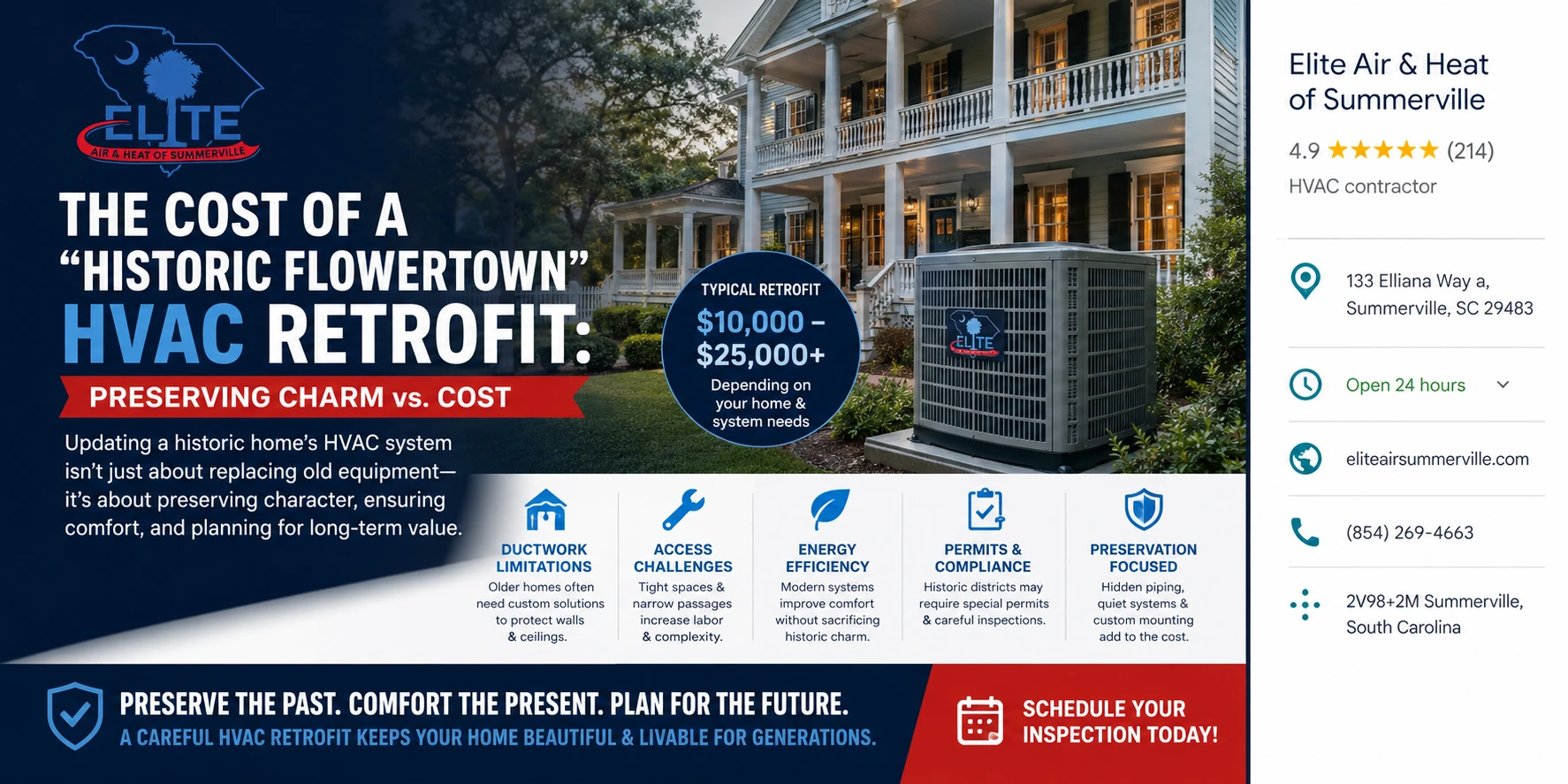
A full HVAC retrofit in a historic home can range from $10,000 to $25,000 or more, depending on the size of the house, ductwork complexity, system choice, and preservation needs. That does not automatically mean you need the most expensive option—but it does mean a quick, standard install could compromise your home’s charm, efficiency, or both.
Worried About HVAC Retrofit Costs?
Talk to trusted HVAC experts about smart, efficient options for your historic Flowertown property today.
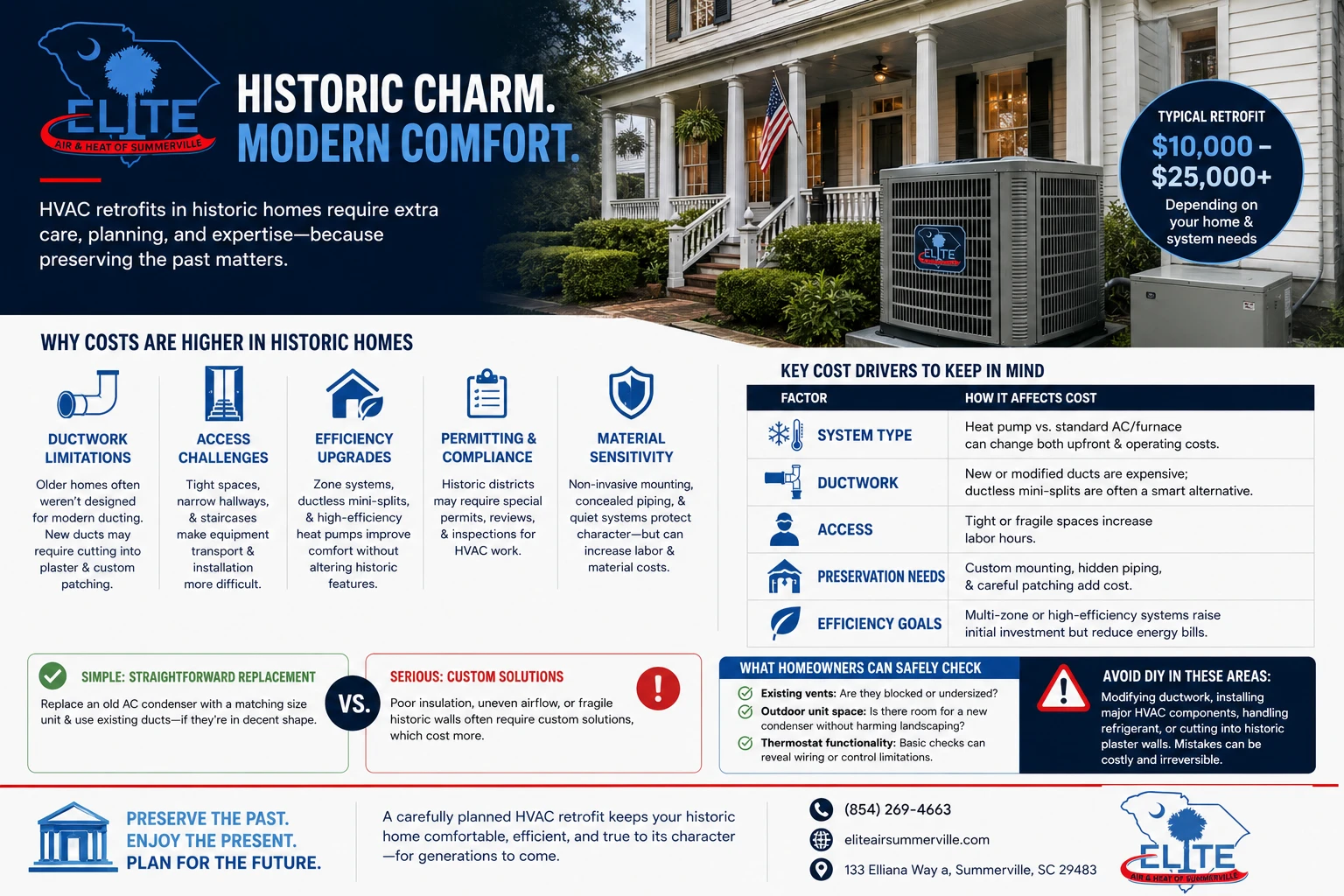
Why Costs Are Higher in Historic Homes
- Ductwork Limitations: Many older homes weren’t designed with modern ducting in mind. Installing new ducts may require cutting into plaster walls or ceilings, which can be labor-intensive and require custom patching.
- Access Challenges: Tight spaces, narrow hallways, and staircases make transporting equipment and installing systems more difficult.
- Energy Efficiency Upgrades: Older homes may benefit from zone systems, ductless mini-splits, or high-efficiency heat pumps to maintain comfort without altering historic features.
- Permitting & Code Compliance: Some municipalities require special permits or inspections for work in historically designated districts.
- Material Sensitivity: Using non-invasive mounting hardware, concealed piping, or quiet systems can increase labor and material costs.
What’s Usually Happening
Many homeowners are surprised to learn that the “simple replacement” often turns into a combination of replacement, rerouting, and retrofitting. The main reasons costs can jump are:
- Unseen damage or insulation gaps
- Obsolete system components that are incompatible with modern equipment
- Challenges in maintaining airflow balance while avoiding visible ducts
Simple vs. Serious Issues
- Simple: Replacing an old AC condenser with a matching size unit and using existing ducts, if they’re in decent shape.
- Serious: Adding a new system to a home with poor insulation, uneven airflow, or fragile historic walls—this usually triggers custom solutions, which cost more.

Why “Free Estimates” Aren’t Always Free — And What Elite’s Estimate Includes
A lot of homeowners hear the words “free estimate” and assume it means a technician will come out, inspect the…

How a Professional Thinks Through It
A good technician will:
- Inspect all existing ductwork, vents, and mechanical spaces
- Evaluate whether a standard system fits without major demolition
- Recommend options for preserving the home’s character while improving efficiency
- Provide a clear estimate including labor, materials, permits, and any contingency for surprises
Cost Drivers to Keep in Mind
| Factor | How It Affects Cost |
| System Type | Heat pump vs. standard AC/furnace can change both upfront and operating costs |
| Ductwork | New or modified ducts are expensive; sometimes ductless mini-splits are cheaper |
| Access | Tight or fragile spaces increase labor hours |
| Preservation Needs | Custom mounting, hidden piping, and careful patching add cost |
| Efficiency Goals | Multi-zone or high-efficiency systems raise initial investment but reduce bills |
What Homeowners Can Safely Check
- Existing vents: Are they blocked or undersized?
- Outdoor unit space: Is there room for a new condenser without cutting into landscaping?
- Thermostat functionality: Basic checks can reveal wiring or control limitations
Avoid DIY in these areas: modifying ductwork, installing major HVAC components, handling refrigerant, or cutting into historic plaster walls. Mistakes can be costly and irreversible.
Limitations and Exceptions
Even with careful planning, retrofits in historic homes may uncover:
- Rot, mold, or outdated wiring behind walls
- Structural limitations that require engineering solutions
- Compatibility issues with very old chimneys, flues, or furnace connections
Calm Next Step
If you are weighing a historic home retrofit, the goal is understanding what the project actually entails before signing a quote. Ask your technician to:
- Show exactly what will be replaced or altered
- Explain why certain options cost more
- Provide contingencies for unseen issues
In other words, the goal is not just comfort—it’s preserving the home while making it livable for today. If your system keeps struggling, or you’re worried about hidden damage, a full inspection and a carefully planned retrofit are the safest path forward.
Preserve the Past. Upgrade the Comfort.
Schedule an HVAC retrofit consultation and keep your historic home comfortable year-round.