
Here’s the plain answer:
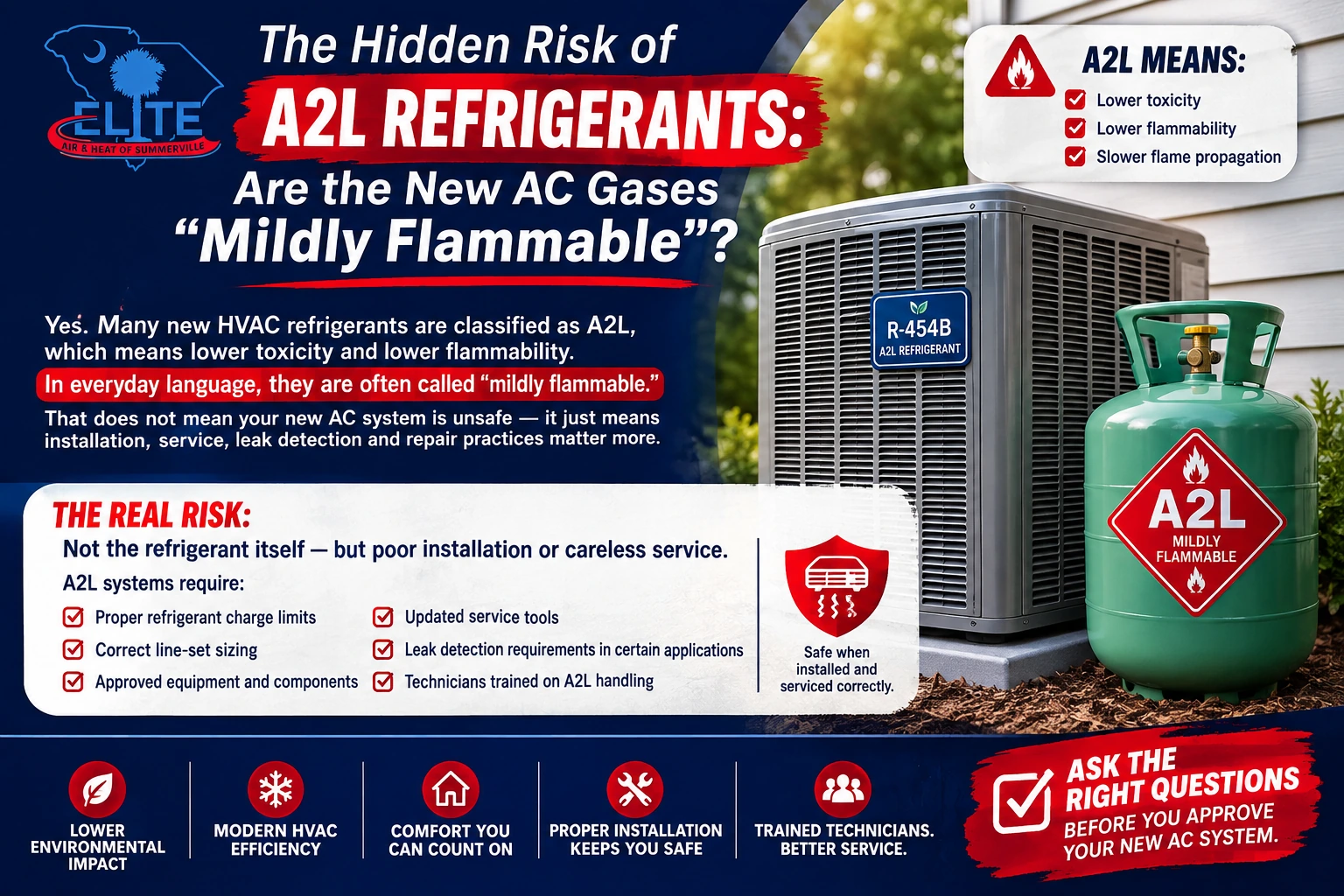
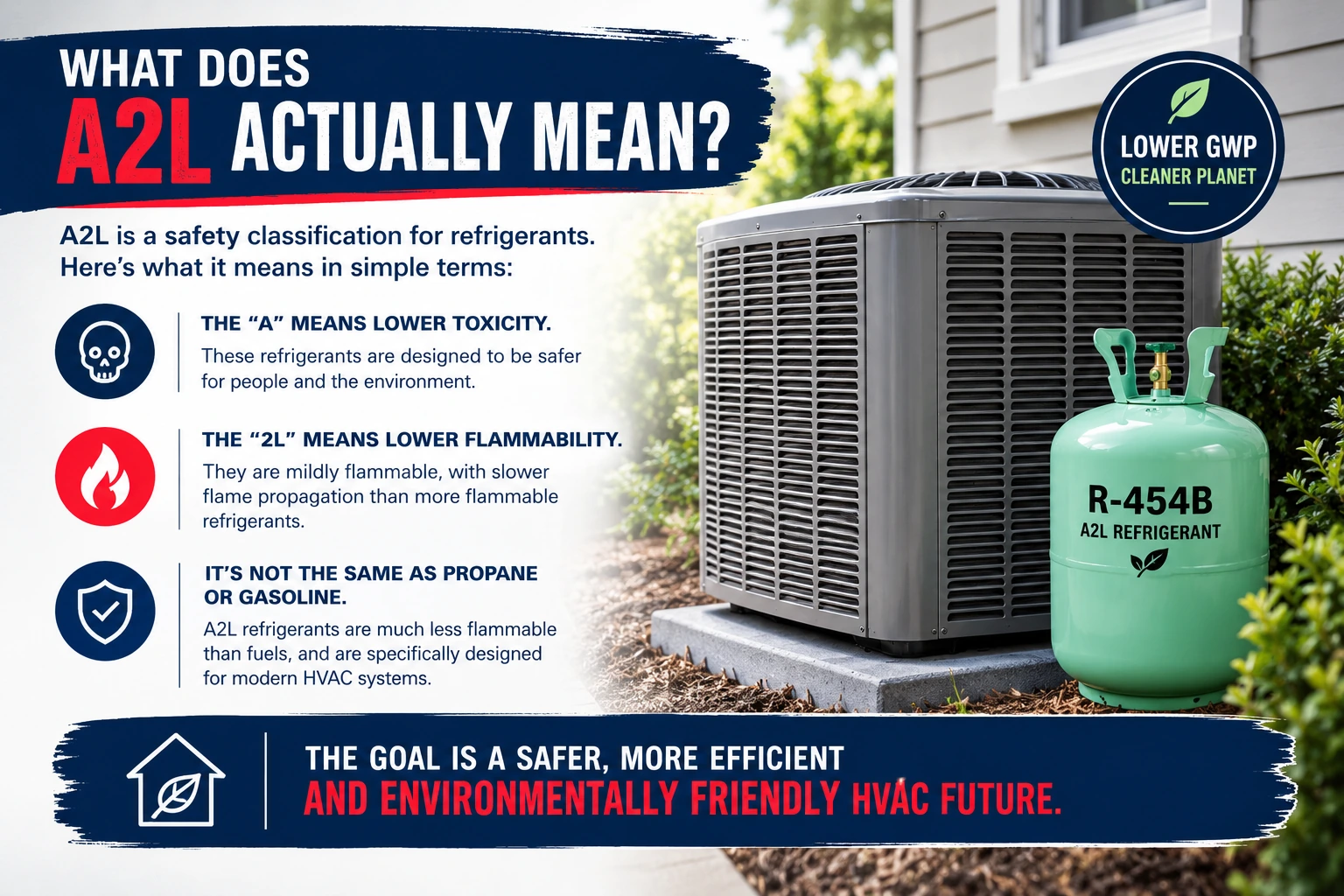
Yes. Many new HVAC refrigerants are classified as A2L, which means lower toxicity and lower flammability. In everyday language, they are often called “mildly flammable.”
That does not mean your new AC system is unsafe.
It does mean installation, service, leak detection, and repair practices matter more than they used to.
Why Are Refrigerants Changing?
The HVAC industry is moving away from higher-global-warming refrigerants such as R-410A toward lower-GWP options, including refrigerants like R-454B and R-32. EPA restrictions began affecting certain higher-GWP HVAC products starting January 1, 2025.
These newer refrigerants help manufacturers meet environmental rules, but many fall into the A2L safety class.
What Does A2L Actually Mean?
The “A” means lower toxicity.
The “2L” means lower flammability with slower flame propagation compared with more flammable refrigerants. ASHRAE separates refrigerants into flammability classes, with Class 1 being no flame propagation, Class 2 lower flammability, and Class 3 higher flammability.
So yes, “mildly flammable” is a fair homeowner translation.
But it is not the same thing as propane, gasoline, or highly flammable refrigerants.
Is Your AC Using an A2L Refrigerant?
Make sure your system is serviced safely and correctly. Call today for trusted professional AC service.
What Is the Hidden Risk?
The hidden risk is not that your AC is going to randomly catch fire.
The real risk is poor installation or careless service.
A2L systems may require:
- Proper refrigerant charge limits
- Correct line-set sizing
- Approved equipment and components
- Updated service tools
- Leak detection requirements in certain applications
- Technicians trained on A2L handling
- No open flames or unsafe brazing practices around refrigerant
This is where homeowners can get into trouble.
A system may look like a normal AC from the outside, but the refrigerant rules behind it are different.
Should Homeowners Be Worried?
Not if the system is installed and serviced correctly.
A2L refrigerants are being adopted across the industry, and equipment is designed around their safety requirements. AHRI has industry-wide resources focused specifically on safe refrigerant transition training and practices.
The concern is not the refrigerant by itself.
The concern is whether the person installing or repairing the system understands what changed.

Emergency HVAC Repair: What to Expect and How Fast Can You Get Help?
When your heating or cooling system suddenly fails, it’s more than just inconvenient, it can quickly become a serious problem.…
What Should You Ask Before Buying a New AC?
Before approving a replacement, ask:
- What refrigerant does this system use?
- Is it R-454B, R-32, or something else?
- Is the equipment approved for that refrigerant?
- Are the installers trained for A2L systems?
- Does my home need any leak detection or code-related updates?
- What changes for future repairs and refrigerant costs?
A good technician should be able to explain this clearly without making it sound scary.
Does This Mean R-410A Systems Are Bad?
No.
If your current R-410A system is working well, this does not automatically mean you need to replace it.
But if you are buying a new system, you should understand that refrigerant type now matters more than it used to. It may affect future repair costs, parts availability, service procedures, and installation requirements.
The Bottom Line
A2L refrigerants are commonly called mildly flammable, but that phrase needs context.
They are lower-flammability refrigerants designed for modern HVAC equipment, not highly flammable fuels. The real risk is not normal operation. The real risk is improper installation, poor leak handling, or technicians using old habits on new equipment.
If you are replacing your AC in Summerville or the Lowcountry, ask the refrigerant question before you approve the quote. A good HVAC contractor should be able to explain the safety controls, code requirements, and long-term service implications in plain language.
Concerned About New A2L Refrigerants?
Get expert AC service and clear answers about today’s mildly flammable refrigerants. Call now for professional HVAC help.