
If your summer bills feel unusually high, a decade-old air conditioner may be the culprit. The short answer: older AC units lose efficiency over time, and in a humid climate, that inefficiency shows up as wasted energy—and money.
Here’s the Plain Answer
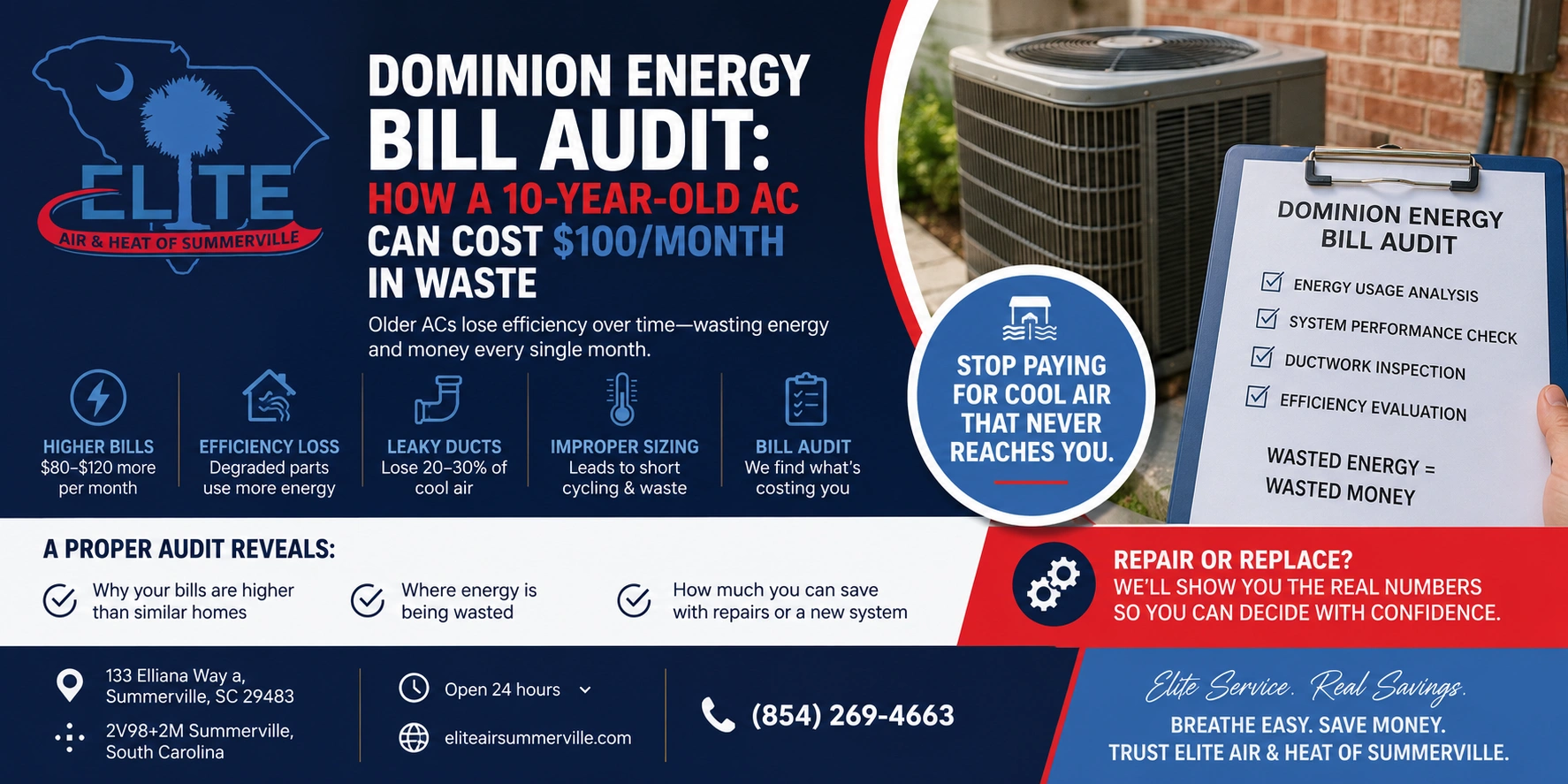
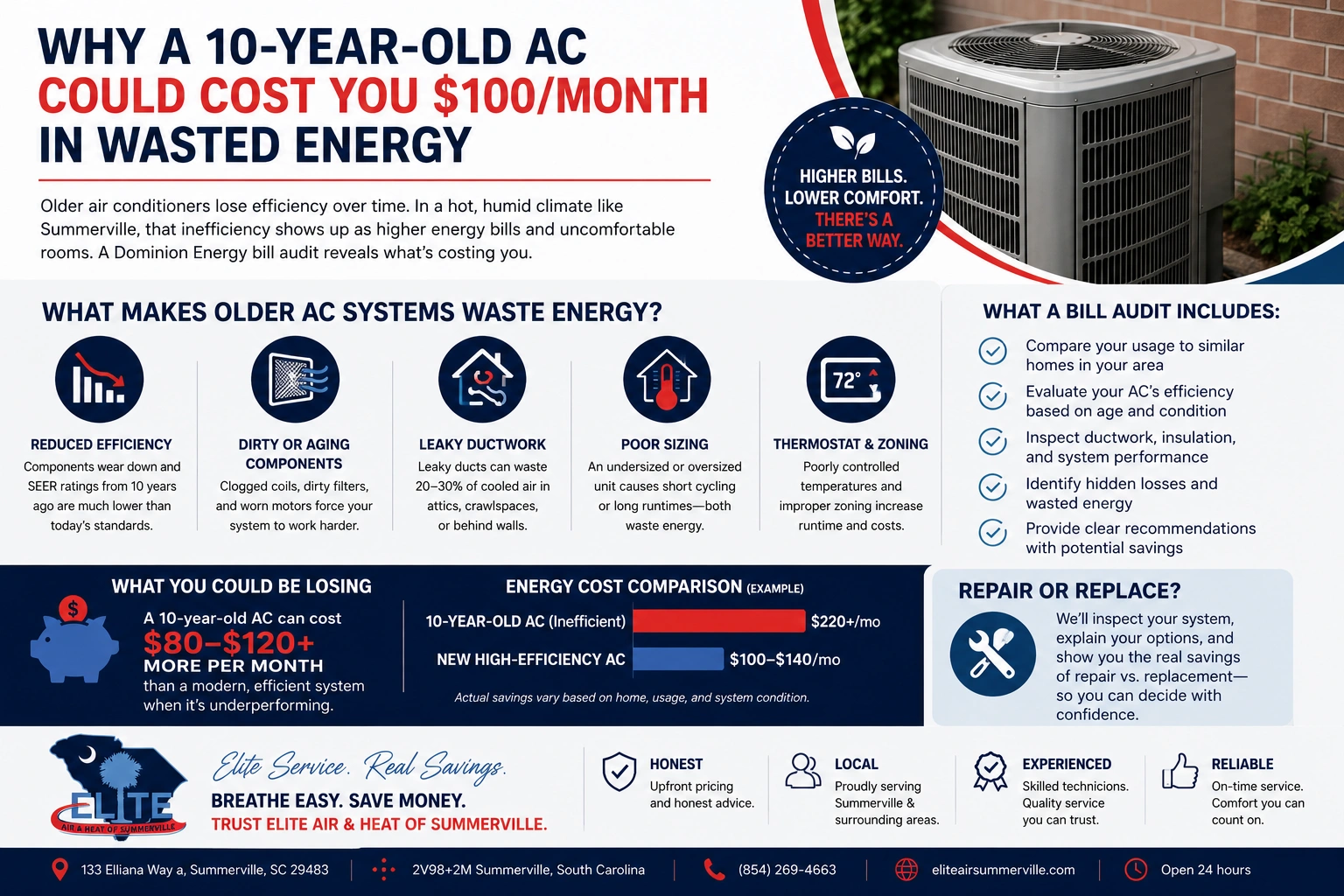
A 10-year-old central AC can cost $80–$120 more per month than a modern, high-efficiency system if it’s underperforming. That doesn’t automatically mean you need a replacement today—but it does mean you might be paying for cold air that never fully reaches your living space.
Paying too much for electricity?
A 10-year-old AC could be adding unnecessary costs to every Dominion Energy bill. Call now for a system evaluation.
Why Older ACs Waste Energy
- Reduced Efficiency: Even well-maintained systems degrade. The compressor, coils, and refrigerant lines don’t work as efficiently as they did when new. Seasonal Energy Efficiency Ratio (SEER) ratings from 10 years ago are lower than today’s minimums.
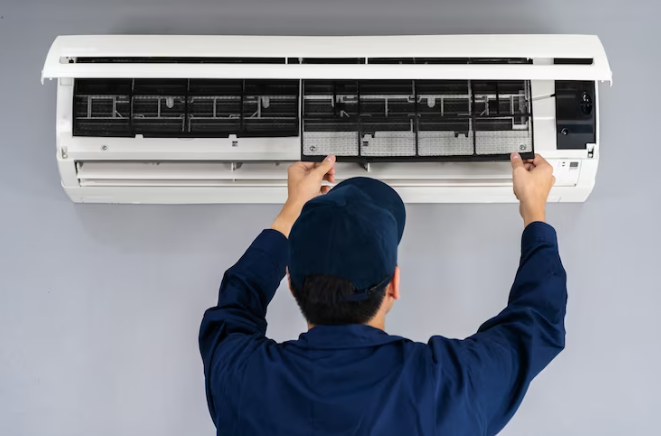
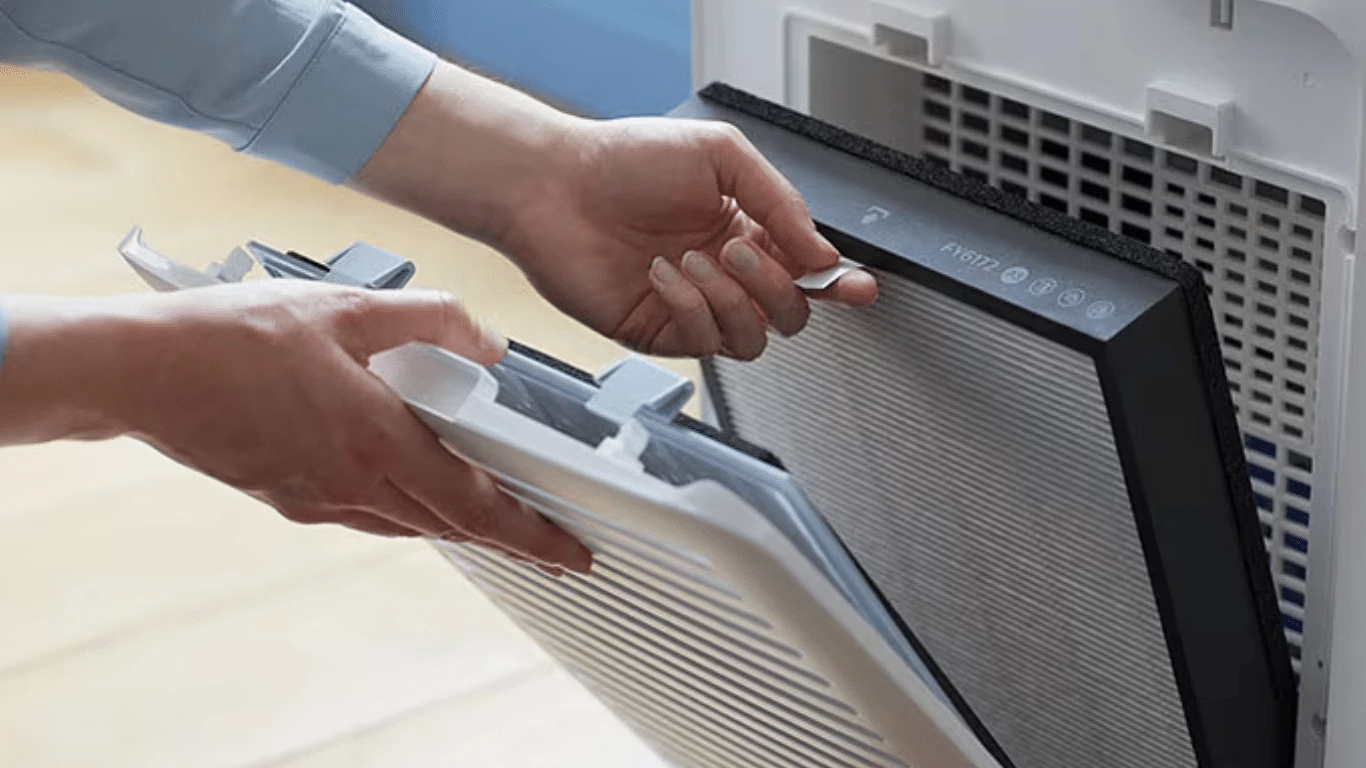
- Dirty or Aging Components: Clogged coils, old filters, and worn-out motors increase electricity use without improving cooling.
- Leaky Ductwork: Older ducts may leak 20–30% of cooled air into attics, crawlspaces, or walls—wasting energy every month.
- Undersized or Oversized Unit: Homes often change over 10 years (added insulation, windows, or living spaces), making the original AC either too small or too large, causing it to cycle inefficiently.
What a Dominion Energy Bill Audit Shows
A proper audit compares your energy usage to:
- Seasonal averages for similar homes in your area
- Expected performance for your AC model and age
- Efficiency losses from ducts, insulation, or thermostat settings
This is where homeowners often get a shock: your bill isn’t just “higher than usual”—you’re literally paying for wasted cooling.

5 Signs Your Flowertown Home Has “Dirty Sock Syndrome” (Moldy Coils)
If your AC smells like a musty gym sock every time it kicks on, you’re likely dealing with Dirty Sock…

Simple vs. Serious Issues
- Simple: Dirty filters or blocked vents. Easily corrected and immediately improves efficiency.
- Serious: An undersized or failing compressor, leaking refrigerant, or ductwork issues. These problems persist and compound the monthly waste.
How a Technician Approaches It
A skilled technician will:
- Check refrigerant levels, coil condition, and compressor efficiency
- Inspect ductwork for leaks or poor insulation
- Measure airflow and temperature differences across rooms
- Estimate potential savings if the system is repaired vs. replaced
Cost Drivers
| Factor | How It Affects Monthly Bills |
| AC Age | Older units use 20–40% more energy than new high-efficiency models |
| SEER Rating | Each point above the minimum reduces electricity consumption |
| Duct Integrity | Leaks or gaps can waste hundreds of dollars annually |
| Thermostat & Zoning | Poorly controlled zones increase runtime and cost |
| Maintenance History | Neglected units run longer and strain components |
What Homeowners Can Check
- Replace filters monthly during summer
- Ensure vents are open and unobstructed
- Clean debris around outdoor condenser
- Track thermostat settings and energy usage
Avoid DIY: refrigerant handling, compressor replacement, coil cleaning, or duct modifications. Mistakes here can be dangerous and expensive.
Calm Next Step
If your Dominion Energy bills are climbing, the next step is a professional audit and inspection, not guesswork. A good technician will quantify wasted energy, explain why it’s happening, and compare repair vs. replacement costs. Often, investing in a new, properly sized, high-efficiency AC pays for itself in energy savings within a few years.
Is your AC driving up your power bill?
Stop wasting money every month. Schedule a professional AC inspection from Starnes Electric LLC and start saving today.