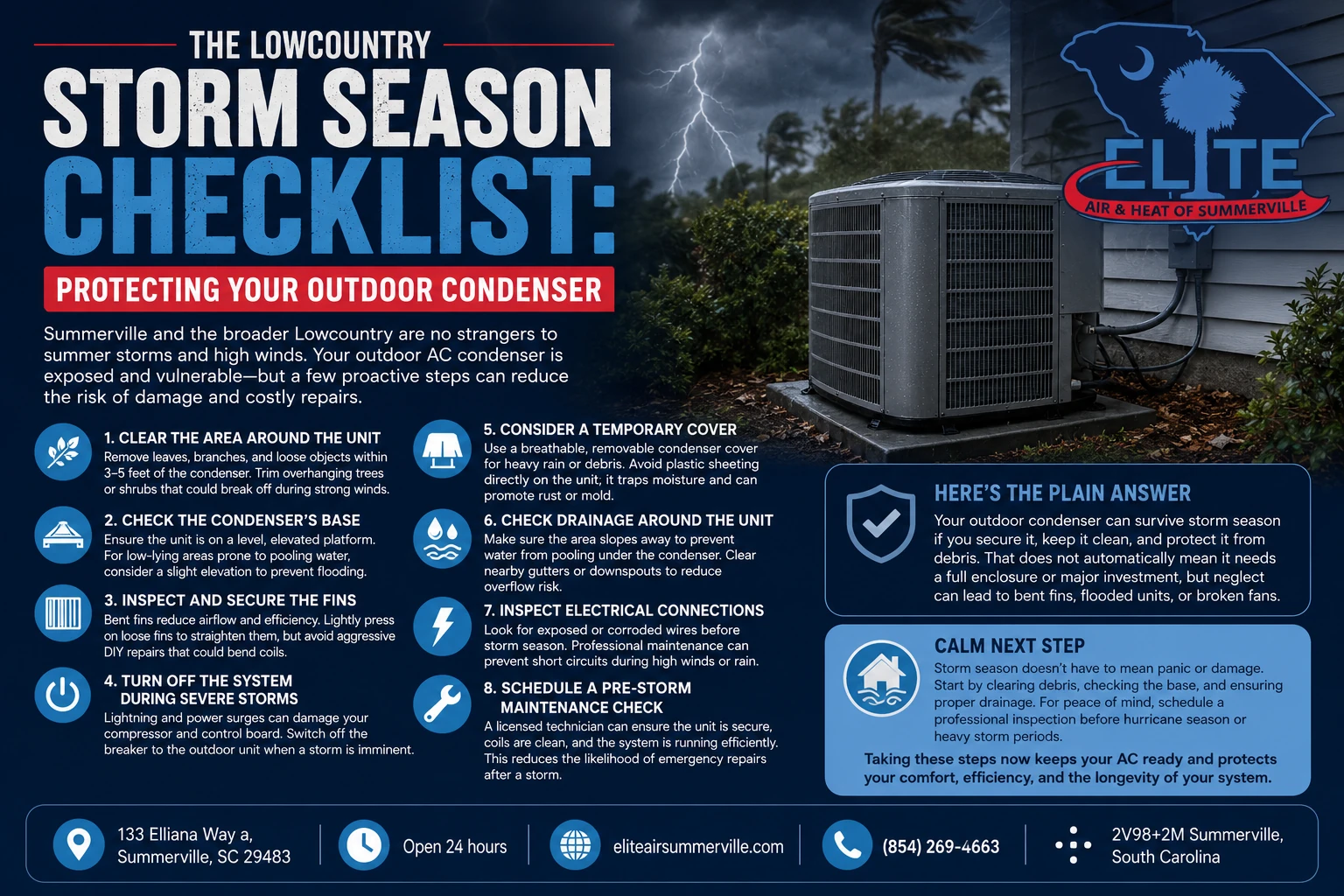

Summerville and the broader Lowcountry are no strangers to summer storms and high winds. Your outdoor AC condenser is exposed and vulnerable but a few proactive steps can reduce the risk of damage and costly repairs.
Don't Let the Next Storm Damage Your AC
Get trusted HVAC maintenance and protect your outdoor unit before heavy rain and high winds arrive.
Here’s the Plain Answer
Your outdoor condenser can survive storm season if you secure it, keep it clean, and protect it from debris. That does not automatically mean it needs a full enclosure or major investment, but neglect can lead to bent fins, flooded units, or broken fans.
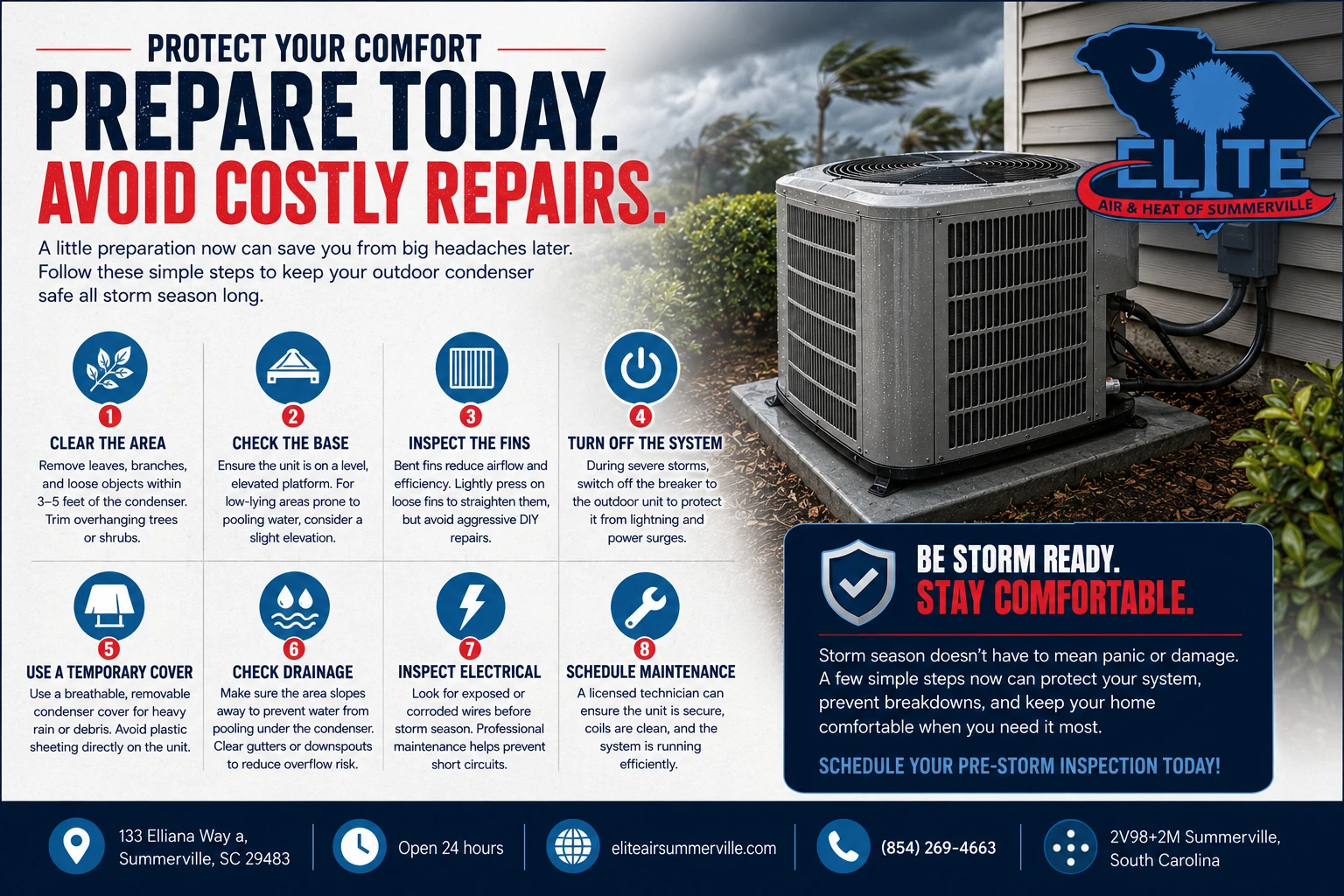
1. Clear the Area Around the Unit
- Remove leaves, branches, and loose objects within 3–5 feet of the condenser.
- Trim overhanging trees or shrubs that could break off during strong winds.
2. Check the Condenser’s Base
- Ensure the unit is on a level, elevated platform.
- For low-lying areas prone to pooling water, consider a slight elevation to prevent flooding.
3. Inspect and Secure the Fins
- Bent fins reduce airflow and efficiency.
- Lightly press on loose fins to straighten them, but avoid aggressive DIY repairs that could bend coils.
4. Turn Off the System During Severe Storms
- Lightning and power surges can damage your compressor and control board.
- Switch off the breaker to the outdoor unit when a storm is imminent.

AC Not Cooling? When to Repair vs Replace Your HVAC System
If your AC not cooling properly, it can quickly turn your home from comfortable to frustrating. The real question most…
5. Consider a Temporary Cover
- Use a breathable, removable condenser cover for heavy rain or debris.
- Avoid plastic sheeting directly on the unit; it traps moisture and can promote rust or mold.
6. Check Drainage Around the Unit
- Make sure the area slopes away to prevent water from pooling under the condenser.
- Clear nearby gutters or downspouts to reduce overflow risk.
7. Inspect Electrical Connections
- Look for exposed or corroded wires before storm season.
- Professional maintenance can prevent short circuits during high winds or rain.
8. Schedule a Pre-Storm Maintenance Check
- A licensed technician can ensure the unit is secure, coils are clean, and the system is running efficiently.
- This reduces the likelihood of emergency repairs after a storm.
Calm Next Step
Storm season doesn’t have to mean panic or damage. Start by clearing debris, checking the base, and ensuring proper drainage. For peace of mind, schedule a professional inspection before hurricane season or heavy storm periods. Taking these steps now keeps your AC ready and protects your comfort, efficiency, and the longevity of your system.
Storm Season Is Coming. Is Your AC Ready?
Prevent costly condenser damage with a professional HVAC inspection before the next storm hits.