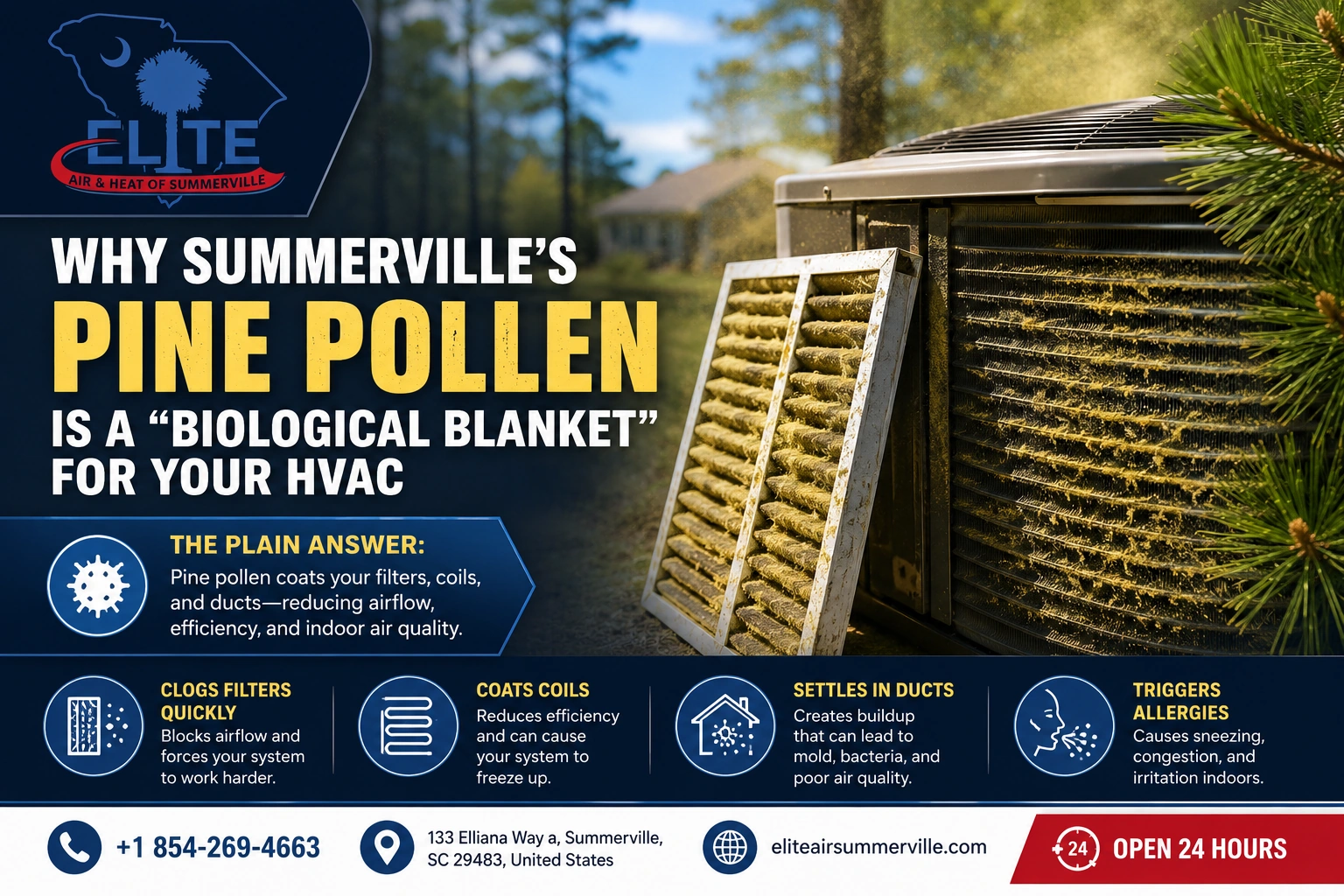

If your HVAC system seems to struggle every spring, you’re not imagining it. In Summerville, the thick pine pollen acts like a “biological blanket,” coating your filters, coils, and ducts and making your system work harder than it should.
Is Pine Pollen Choking Your HVAC?
Don't let pollen reduce your system's performance. Schedule a professional HVAC inspection and restore clean, efficient airflow today.
Here’s the Plain Answer
Pine pollen is tiny, sticky, and abundant. When it accumulates in your HVAC system, it restricts airflow, reduces efficiency, and can trigger allergy symptoms indoors. That does not automatically mean you need a new system but it does mean spring maintenance is critical.
How Pine Pollen Affects Your HVAC
- Clogs Filters Quickly
- Standard filters can become saturated in a matter of weeks, reducing airflow and causing your AC to run longer and less efficiently.
- Coats Evaporator and Condenser Coils
- Sticky pollen on coils insulates them, making heat exchange less effective.
- Reduced efficiency increases energy use and can cause the system to freeze up under heavy load.
- Settles in Ductwork
- Over time, pollen layers in the ducts can become a breeding ground for mold and bacteria, worsening indoor air quality.
- Triggers Indoor Allergies
- Even if your home is kept clean, circulating pollen can cause sneezing, watery eyes, and congestion.
- Even if your home is kept clean, circulating pollen can cause sneezing, watery eyes, and congestion.
Simple vs. Serious
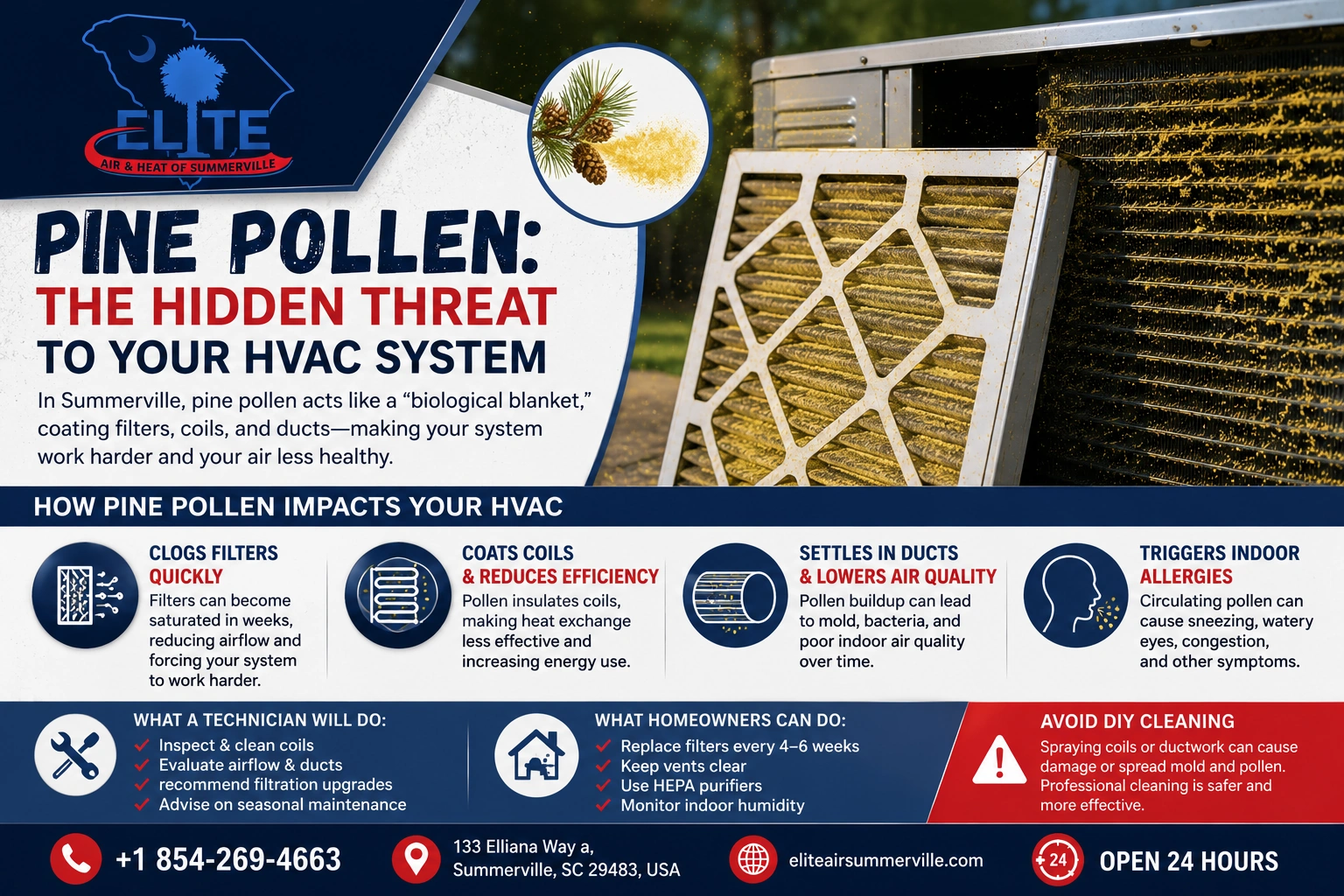
- Simple: Replace filters frequently during peak pollen season and run a high-quality HEPA purifier in key rooms.
- Serious: Pollen buildup on coils, in ductwork, or on blower components requires professional cleaning to restore efficiency and indoor air quality.

The Hidden Value of Comprehensive HVAC Services for Property Longevity
When it comes to maintaining a property, most homeowners focus on what they can see, fresh paint, new landscaping, or…

What a Technician Will Do
- Inspect and clean evaporator and condenser coils
- Evaluate airflow and duct cleanliness
- Recommend filtration upgrades or supplemental air scrubbers
- Advise on seasonal maintenance to prevent recurring problems
What Homeowners Can Safely Do
- Replace HVAC filters every 4–6 weeks during pine pollen season
- Keep return vents clear of dust or obstructions
- Use portable HEPA purifiers in bedrooms and living areas
- Monitor indoor humidity; dryer air helps reduce pollen adhesion
Avoid DIY: Spraying coils or ductwork without proper training can damage your system or spread pollen and mold spores. Professional cleaning is safer and more effective.
Calm Next Step
If your system struggles every spring, or you notice higher energy bills and allergy symptoms, schedule a spring HVAC inspection. A technician can remove the “biological blanket,” optimize airflow, and recommend strategies to keep your home comfortable and efficient throughout the pollen season.
Protect Your HVAC Before Pollen Builds Up
Heavy pine pollen can clog outdoor units and reduce cooling efficiency. Call today for fast, reliable HVAC cleaning and maintenance.