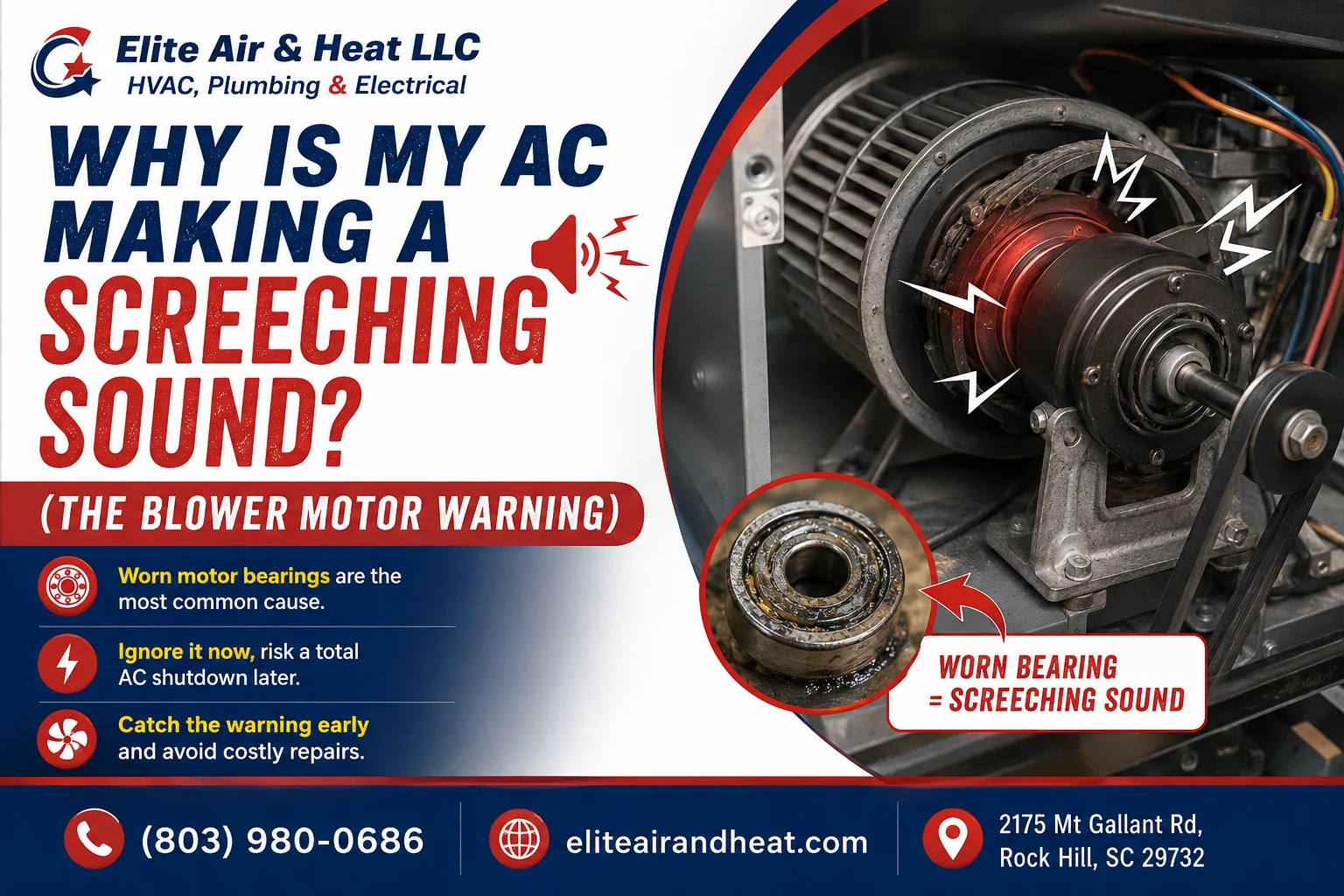

If your air conditioner suddenly starts making a high-pitched screeching, squealing, or screaming sound, don’t ignore it.
In many cases, that noise is coming from the blower motor inside your indoor air handler or furnace cabinet. While some AC noises are merely annoying, a screeching blower motor is often a warning that a component is wearing out and could fail completely if left unchecked.
Here’s the plain answer:
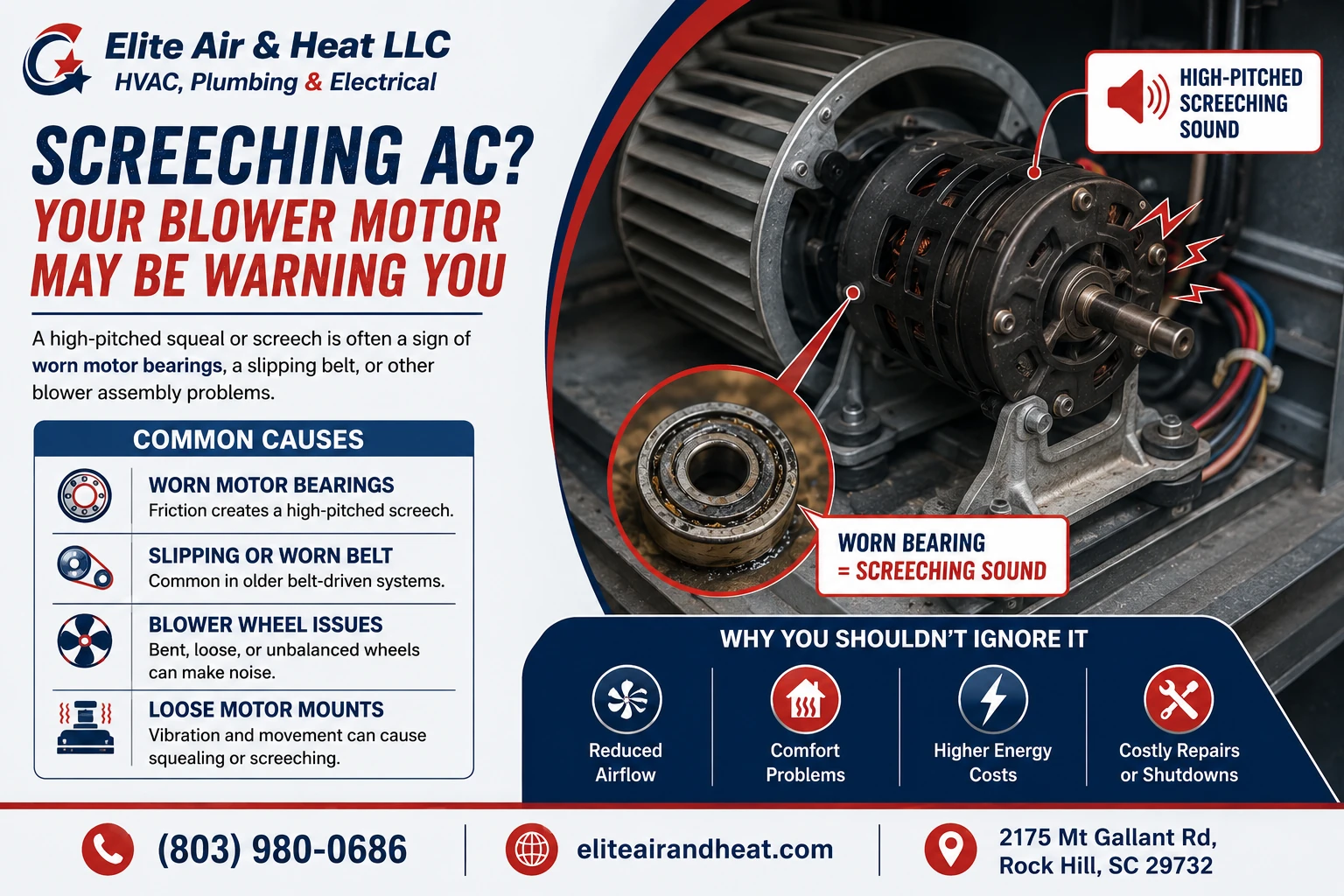
A screeching AC is commonly caused by failing motor bearings, a worn blower motor, a slipping belt on older systems, or mechanical problems inside the blower assembly.
That does not automatically mean you need a new HVAC system. However, it usually means the problem deserves attention sooner rather than later.
Screeching AC? Don’t Ignore It
That sharp noise may be your blower motor warning you of trouble. Get your system checked today.
What Does the Blower Motor Actually Do?
The blower motor is responsible for moving air through your home.
When your thermostat calls for cooling:
- The outdoor unit removes heat.
- The indoor evaporator coil cools the air.
- The blower motor pushes that cooled air through your ductwork.
Without the blower motor, your system can produce cold air but can’t effectively distribute it throughout the house.
What Does a Blower Motor Screech Sound Like?
Homeowners often describe it as:
- A high-pitched squeal
- Metal-on-metal screeching
- A loud whine
- A screaming sound during startup
- A noise that gets louder as the system runs
The sound may start intermittently and gradually become more frequent over time.
This is where homeowners sometimes get into trouble.
Many people assume the noise is harmless because the AC is still cooling. In reality, the motor may be operating under increasing stress.
The Most Common Cause: Worn Motor Bearings
Modern blower motors contain bearings that allow the motor shaft to spin smoothly.
As bearings wear out:
- Friction increases
- Metal components begin rubbing together
- The motor works harder
- Heat builds up inside the motor
The result is often a loud screeching or squealing sound.
If the bearings completely fail, the motor can seize and stop moving air altogether.
Older Systems May Have Belt Problems
If you have an older HVAC system with a belt-driven blower assembly, the screeching could be coming from:
- A worn belt
- Improper belt tension
- Misaligned pulleys
While belt-driven systems are less common today, they’re still found in some older homes and commercial applications.
A worn belt is usually less expensive to repair than a failing motor.
Other Possible Causes
Blower Wheel Damage
The blower wheel (sometimes called a squirrel cage) can become:
- Bent
- Loose
- Unbalanced
When that happens, unusual noises can develop as the wheel rotates.
Motor Mount Issues
Loose mounting hardware can allow vibration and movement that create squealing or screeching sounds.
Debris Inside the Air Handler
Occasionally, foreign objects find their way into the blower compartment and create unusual noises as the blower operates.

Best “Quiet” AC Units for Homes With Close Neighbors in New Developments
If you live in a newer community where homes are built relatively close together, outdoor AC noise becomes a bigger…

What Happens If You Ignore It?
Sometimes homeowners get lucky and the issue remains minor for a while.
Other times, the motor fails completely during the hottest week of summer.
A failing blower motor can eventually lead to:
- No airflow from vents
- System shutdowns
- Overheated electrical components
- Higher energy consumption
- Emergency repair situations
In a hot, humid climate, losing airflow can quickly make the home uncomfortable even if the outdoor unit is still operating.
What Can Homeowners Safely Check?
Before calling for service, you can safely:
Check the Air Filter
A severely clogged filter can restrict airflow and place additional strain on the blower motor.
If the filter looks dirty, replace it.
Listen for When the Noise Occurs
Does the screeching happen:
- Only during startup?
- The entire cooling cycle?
- When the system shuts off?
This information can help a technician diagnose the problem faster.
Check Supply Vents
Make sure furniture, rugs, or other objects are not blocking airflow.
What Not to DIY
Avoid:
- Opening motor housings
- Lubricating modern sealed motors
- Disassembling blower assemblies
- Working around electrical components
Modern HVAC systems contain high-voltage electrical parts and moving equipment that can cause injury.
What a Technician Should Inspect
A good HVAC technician should evaluate:
- Motor bearings
- Motor amp draw
- Capacitor performance
- Blower wheel condition
- Electrical connections
- Airflow restrictions
- Overall blower assembly health
The goal is not to replace parts blindly. The goal is to determine why the noise is occurring and whether the motor is nearing failure.
How Much Does a Blower Motor Repair Cost?
Typical repair costs vary depending on the motor type and system design.
| Repair | Typical Range |
| Capacitor replacement | $150–$400 |
| Minor blower repair | $200–$600 |
| Blower motor replacement | $500–$1,500+ |
| Variable-speed motor replacement | $800–$2,500+ |
The cheaper option is not always wrong, but it should make sense based on the actual diagnosis.
A good technician should be able to show you why a motor needs replacement rather than simply recommending one.
Does a Screeching Blower Motor Mean You Need a New AC?
Usually not.
If the rest of the system is in good condition, replacing the blower motor can often restore normal operation.
However, if the system is:
- 12-15+ years old
- Experiencing repeated repairs
- Struggling with efficiency
- Facing multiple major component failures
it may be worth comparing repair costs against replacement options.
The Bottom Line
If your AC is making a screeching sound, don’t assume it’s normal.
The most common culprit is a failing blower motor bearing, and while the system may continue running for a while, the noise is often an early warning that a larger failure is developing.
If you only remember one thing, remember this:
A screeching blower motor rarely fixes itself. The sooner the cause is identified, the better your chances of avoiding a complete loss of cooling during the hottest part of the season.
If you’re unsure whether the sound is coming from the blower motor, the next step is a proper inspection rather than guessing. A good technician should be able to pinpoint the source of the noise, explain your options, and tell you whether you’re looking at a minor repair or a component nearing the end of its life.
Stop That Screech Before It Gets Worse
A screeching AC could signal a failing blower motor. Call now for fast, professional service.