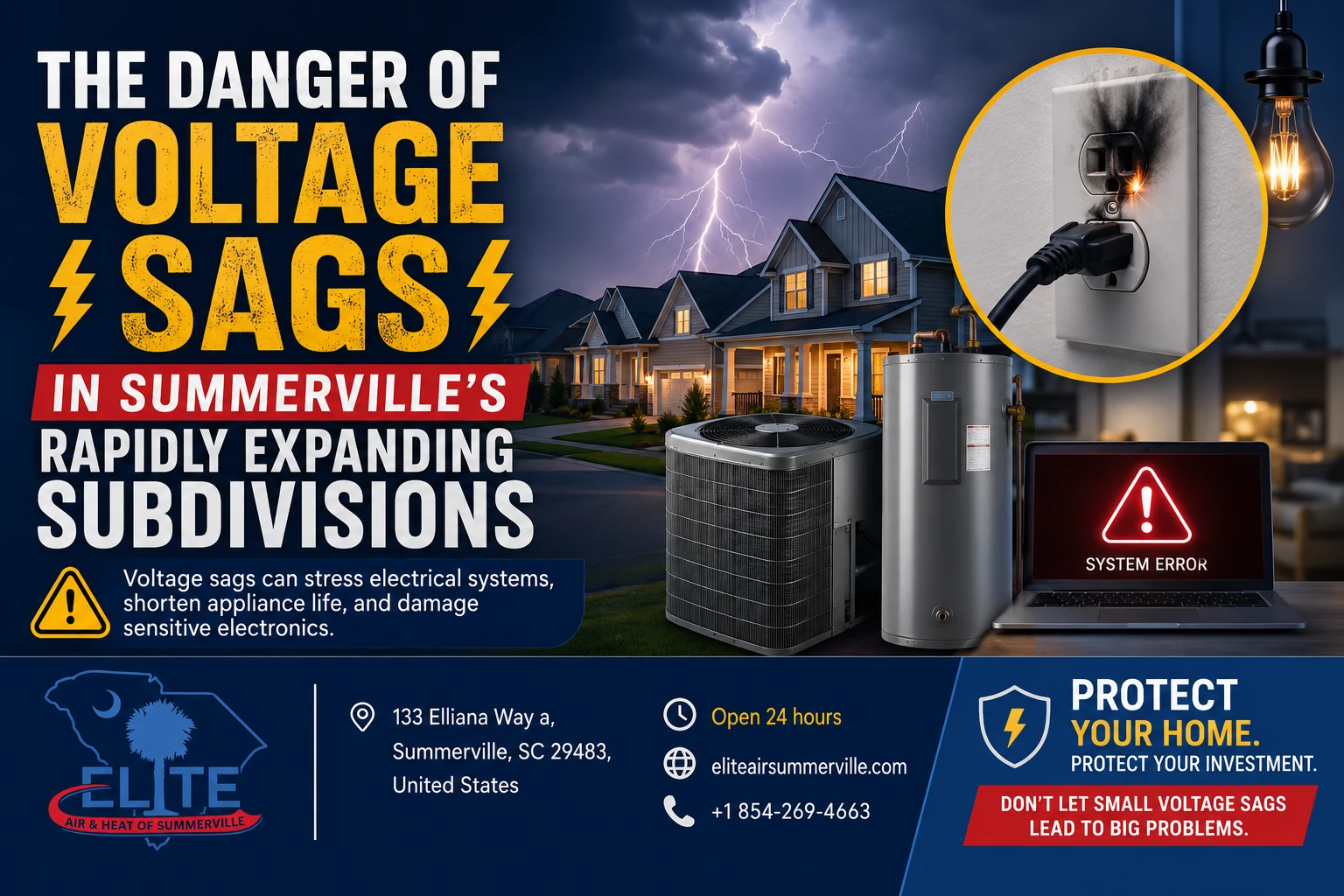

If you’ve noticed flickering lights, electronics acting up, or appliances cycling oddly, your home may be experiencing voltage sags and brief drops in electrical power that are more common in areas with rapid development.
Is your home experiencing voltage sags?
Don't ignore flickering lights or power dips. Schedule a professional electrical inspection before small issues become expensive repairs.
Here’s the Plain Answer
Voltage sags aren’t just annoying, they stress electrical systems, shorten appliance life, and can even damage sensitive electronics. That does not automatically mean your house is unsafe, but it does mean taking steps now can prevent costly repairs.
Why Voltage Sags Happen in Growing Subdivisions
- High Demand on Local Transformers
- Rapidly built neighborhoods often push transformers and distribution lines close to capacity, especially during hot summer days when AC units are running full blast.
- Start-Up Loads from Large Appliances
- Air conditioners, heat pumps, and electric water heaters draw extra power on startup, temporarily dropping voltage to other devices.
- Distance from Substation or Upgraded Lines
- New homes at the edges of service areas or on older circuits may see more frequent dips in voltage.
- New homes at the edges of service areas or on older circuits may see more frequent dips in voltage.
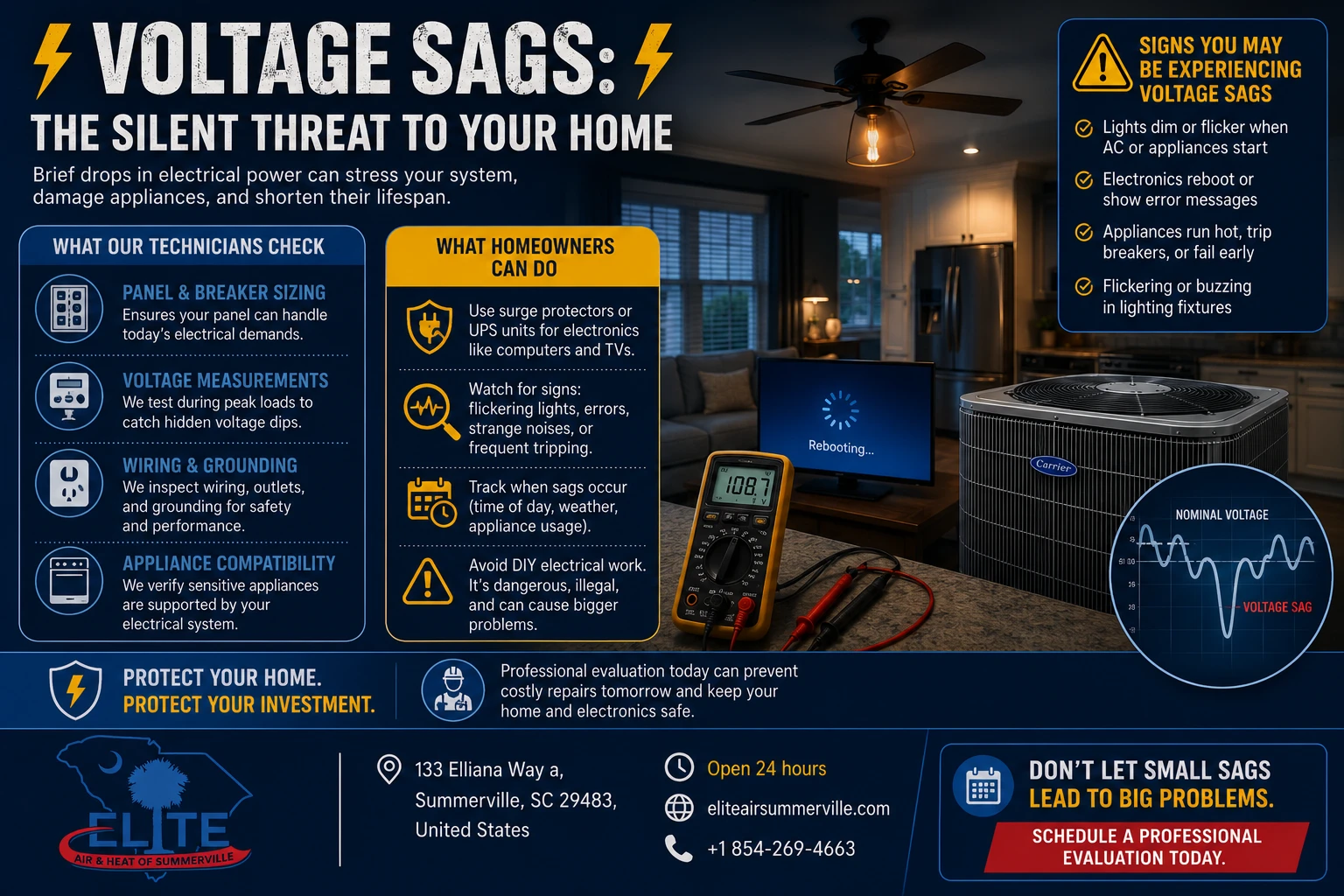
Signs Your Home is Affected
- Lights dim briefly when AC or other appliances start
- Electronics rebooting or showing error messages
- Appliances that run hot, trip breakers, or fail prematurely
- Flickering or buzzing in lighting fixtures

Duct Cleaning vs. Duct Sealing: Which Actually Stops the Dust in Nexton?
Here’s the plain answer: Duct cleaning removes dust that is already inside the duct system. Duct sealing helps stop new…

Simple vs. Serious
- Simple: Minor dips that occur occasionally often mitigated by surge protectors or UPS units for sensitive electronics.
- Serious: Frequent sags that damage appliances, HVAC systems, or circuit boards require professional evaluation of the home’s electrical service and potentially the utility connection.
What a Technician Will Check
- Electrical panel and breaker sizing
- Voltage measurements across circuits during peak loads
- Condition of wiring, outlets, and grounding
- Compatibility of sensitive appliances with existing supply
What Homeowners Can Safely Do
- Use plug-in surge protectors for computers, TVs, and other electronics
- Monitor appliances for unusual noises or frequent tripping
- Track when voltage sags occur (time of day, appliance usage)
Avoid DIY: Replacing panels, breakers, or tampering with wiring without proper training is dangerous and often illegal.
Calm Next Step
If voltage sags are affecting your home or threatening your appliances, a professional electrician can measure and diagnose the problem. Solutions range from panel upgrades, dedicated circuits, whole-home surge protection, or working with the utility to stabilize supply. Addressing it now keeps your home safe and protects your electronics before small sags turn into expensive failures.
Protect your home from hidden power problems.
Voltage sags can damage appliances and electronics. Call today for fast troubleshooting and reliable electrical solutions.