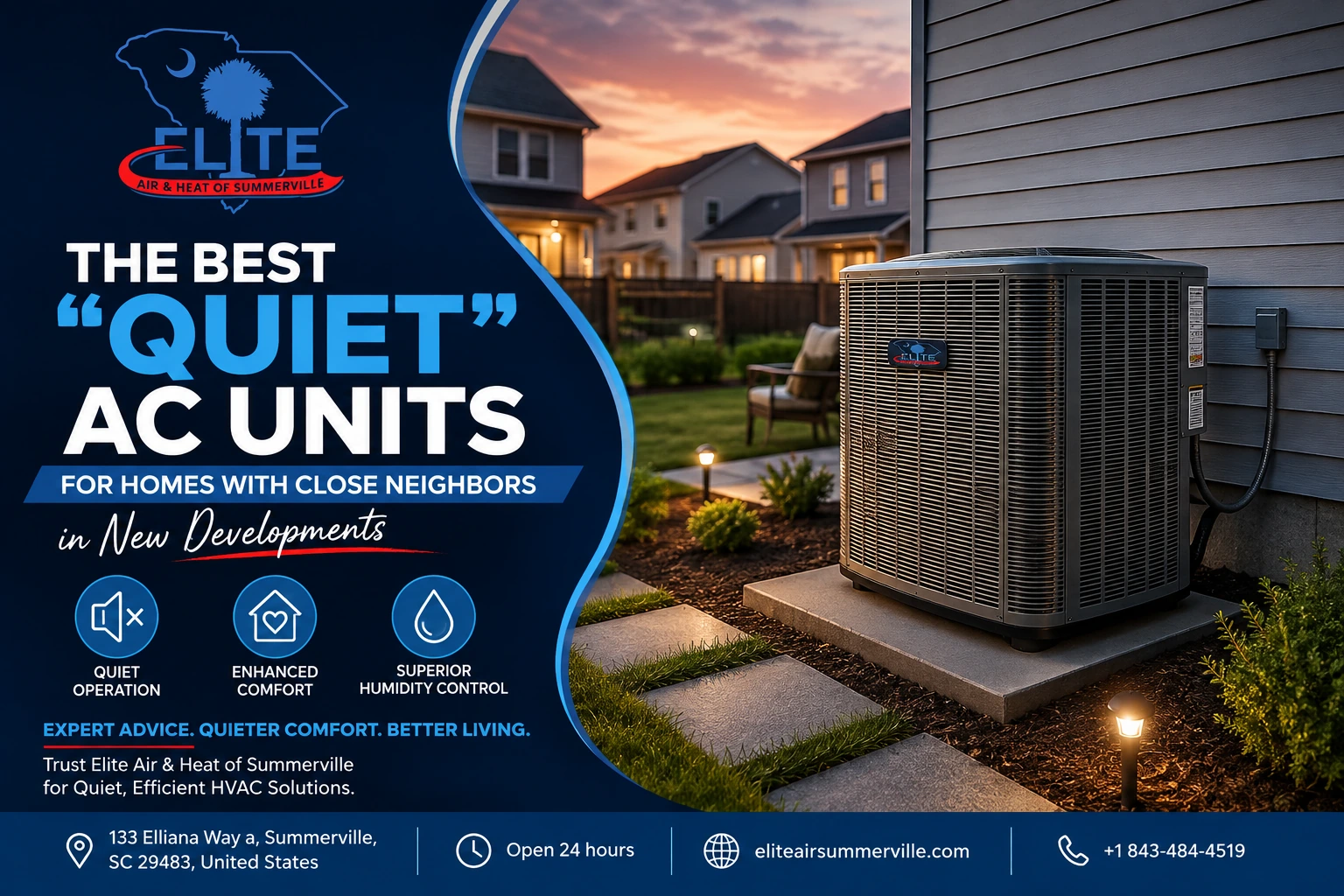

If you live in a newer community where homes are built relatively close together, outdoor AC noise becomes a bigger deal than most homeowners expect.
You may not notice it when touring the home.
But after a few summers, you start hearing:
- Your neighbor’s AC cycling on at night
- Your own unit vibrating near a patio or bedroom window
- A loud startup every time cooling kicks in
Here’s the plain answer:
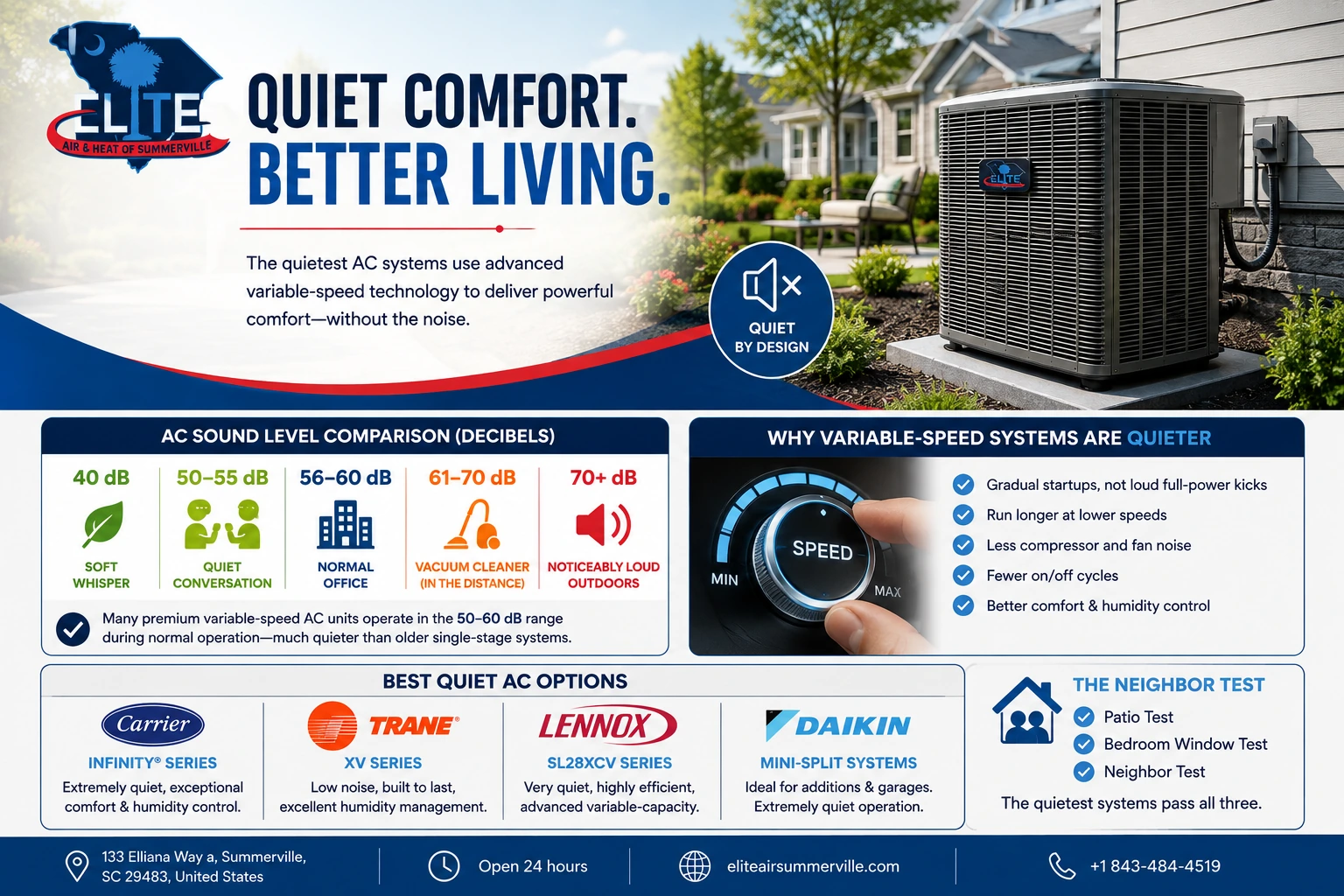
The quietest residential AC systems today are typically variable-speed units from manufacturers like Carrier, Trane, Lennox, and Daikin. Many operate in the 50-60 decibel range during normal operation, which is significantly quieter than many older single-stage systems.
Upgrade to a Quieter AC
Tired of hearing your outdoor unit run? Get a quiet, efficient AC system designed for homes with close neighbors.
But the brand is only part of the story.
A poorly installed premium unit can still be noisy.
First: What Makes an AC Loud?
Most outdoor unit noise comes from three things:
Compressor Noise
The compressor is the heart of the system.
Older single-stage compressors tend to:
- Turn on at full power
- Produce louder startup noise
- Cycle on and off frequently
Variable-speed compressors ramp up gradually and often operate at lower speeds for long periods.
That’s one reason they’re usually much quieter.
Fan Noise
The outdoor fan contributes a surprising amount of sound.
Newer premium systems often feature:
- Larger fan blades
- Improved blade designs
- Lower operating speeds
- Better airflow efficiency
Vibration
This is where homeowners sometimes get into trouble.
Sometimes the equipment itself isn’t loud.
The noise is coming from:
- Improper mounting
- Loose panels
- Refrigerant line vibration
- Pad movement
- Poor installation practices
A good technician should investigate vibration before assuming the equipment is the problem.

Why Your Energy Bills are High (And How HVAC Could Be the Reason)
Ever opened your energy bill and wondered why it’s suddenly so high? You’re not alone. One of the biggest reasons…
What Is Considered a Quiet AC Unit?
For comparison:
| Sound Level | Comparable Noise |
| 50-55 dB | Quiet conversation |
| 56-60 dB | Normal office environment |
| 61-70 dB | Vacuum cleaner from a distance |
| 70+ dB | Noticeably loud outdoors |
Many older single-stage systems operate in the upper 60s or even low 70s.
Premium variable-speed equipment often runs much quieter during most cooling cycles.
Best Quiet AC Options
Best Overall for Quiet Operation
Carrier Infinity Variable-Speed Systems
Carrier’s Infinity lineup is consistently among the quietest systems available.
Pros:
- Extremely quiet operation
- Excellent humidity control
- Strong comfort performance
- Variable-speed compressor technology
Potential downside:
- Higher upfront investment
Best for Consistent Comfort
Trane XV Variable-Speed Series
Trane’s premium variable-speed units are known for:
- Low operating noise
- Durable construction
- Excellent humidity management
A good fit for homeowners focused on comfort and long-term ownership.
Best for Maximum Efficiency
Lennox SL28XCV and Similar Premium Models
These systems offer:
- Very low sound levels
- High efficiency
- Advanced variable-capacity operation
However, higher-efficiency equipment often comes with more sophisticated components and higher repair costs.
Best Ductless Option
Daikin Mini-Split Systems
For room additions, garages, offices, or bonus rooms:
- Extremely quiet indoor units
- Very quiet outdoor operation
- Excellent zoning capability
The “Neighbor Test”
When homeowners ask for a quiet system, I often suggest thinking about three situations:
Patio Test
Can you comfortably sit outside and have a conversation next to the condenser?
Bedroom Window Test
Will the unit wake someone sleeping with a nearby window?
Neighbor Test
Would you want the same unit operating five feet from your own property line?
The quietest systems usually pass all three.
Does Variable-Speed Really Make That Much Difference?
For most homeowners, yes.
Single-stage systems typically operate like a light switch:
- Full power
- Completely off
Variable-speed systems operate more like a dimmer switch.
Most of the time they run at reduced capacity.
That means:
- Less compressor noise
- Less fan noise
- Fewer loud startups
- More consistent comfort
The comfort improvement is often as noticeable as the sound reduction.
What About Humidity?
In the Lowcountry, comfort is not just about temperature.
One advantage of many quiet variable-speed systems is that they also excel at humidity control.
Because they run longer at lower capacities, they often remove more moisture than traditional single-stage equipment.
The result is a home that feels:
- Less sticky
- More comfortable
- More evenly cooled
What a Good HVAC Contractor Should Evaluate
Before recommending equipment, a technician should consider:
- Distance to neighboring homes
- Patio locations
- Bedroom window placement
- HOA considerations
- Existing ductwork
- Comfort goals
- Humidity concerns
The goal is not to buy the most expensive system.
The goal is to find the quietest system that solves your comfort needs without creating new problems.
The Bottom Line
For homeowners in newer developments where houses are built close together, variable-speed AC systems from Carrier, Trane, Lennox, and Daikin are generally among the quietest options available.
If you only remember one thing, remember this:
The quietest AC isn’t just the one with the lowest decibel rating. It’s the one that’s properly sized, properly installed, and able to run at lower speeds most of the time.
If you’re replacing an older system, ask to compare sound ratings alongside efficiency ratings. A good HVAC contractor should be able to explain not only how much energy a system uses, but also what it will actually sound like when you’re trying to enjoy your backyard on a summer evening.
Stop Letting Your AC Make Noise
A loud AC can become a problem on smaller lots. Call now to explore quieter cooling options for your home.