
Here’s the plain answer: ductless mini-splits often make more sense for historic Flowertown cottages when the home has limited duct space, sensitive plaster, low attic clearance, additions, or uneven room comfort.
But central AC can still be the better choice if the cottage already has good ductwork, the home needs a cleaner visual setup, or the homeowner wants one whole-house system with fewer indoor units.
There is no one-size answer. Older Summerville homes can have very different layouts, insulation levels, crawlspaces, attics, fireplaces, additions, and porch conversions. Summerville’s historic housing includes cottages, plantation homes, former inns, and other older structures with varied architecture, which is exactly why the HVAC answer needs to fit the house instead of the other way around.
Cooling Solutions for Older Homes
Need central AC or ductless mini-splits? Get trusted help for your historic cottage today.
The quick comparison
| Option | Best fit | Main tradeoff |
| Central AC | Homes with usable ductwork or room for ducts | More invasive if ducts need major work |
| Ductless mini-splits | Older homes without good duct paths, additions, upstairs rooms, sunrooms | Visible indoor heads and multiple zones to maintain |
| Hybrid setup | Historic homes with some ducts but problem rooms | More design work upfront, but often best comfort |
Why historic cottages are tricky to cool
Older cottages were not built around modern HVAC.
A technician may run into:
- Tight attic access
- Low crawlspaces
- Old plaster walls
- Limited closet space
- Balloon framing or unusual framing cavities
- Additions that were never properly tied into the original system
- Leaky or undersized ducts
- Rooms with big windows, high ceilings, or poor insulation
- Moisture-sensitive materials
This is where homeowners sometimes get into trouble. A contractor may try to force a standard ducted system into a house that really does not have a good place for ducts.
That can lead to noisy airflow, weak rooms, sweating ducts, torn-up finishes, and comfort problems that never fully go away.
When central AC is the better choice
Central AC usually makes sense when the cottage already has a decent duct system or enough space to install one properly.
It may be the better fit if:
- Existing ductwork is in good shape
- The home has accessible attic or crawlspace space
- You want fewer visible indoor components
- You prefer one thermostat controlling most of the home
- The floor plan is fairly open
- You are replacing an older central system
- You want strong whole-house filtration options
Central AC can also be easier for homeowners who do not want wall-mounted indoor mini-split heads in historic rooms.
That matters. In a Flowertown cottage, appearance may not be a small issue. If the home has original trim, plaster, mantels, or carefully restored interiors, the HVAC system should not look like an afterthought.
When central AC becomes a bad fit
Central AC gets expensive or risky when the home needs major ductwork but does not have a good place to put it.
Watch out for quotes that gloss over:
- Where the ducts will actually run
- Whether old plaster or ceilings need to be opened
- Whether ducts will be properly insulated
- Whether attic ducts will sweat in summer
- Whether return air is adequate
- Whether the system can handle closed bedroom doors
- Whether airflow will be balanced room by room
The cheaper central AC quote is not always wrong. But if it does not explain duct design, return air, insulation, and access, it may be leaving out the hardest part of the job.
When ductless mini-splits are the better choice
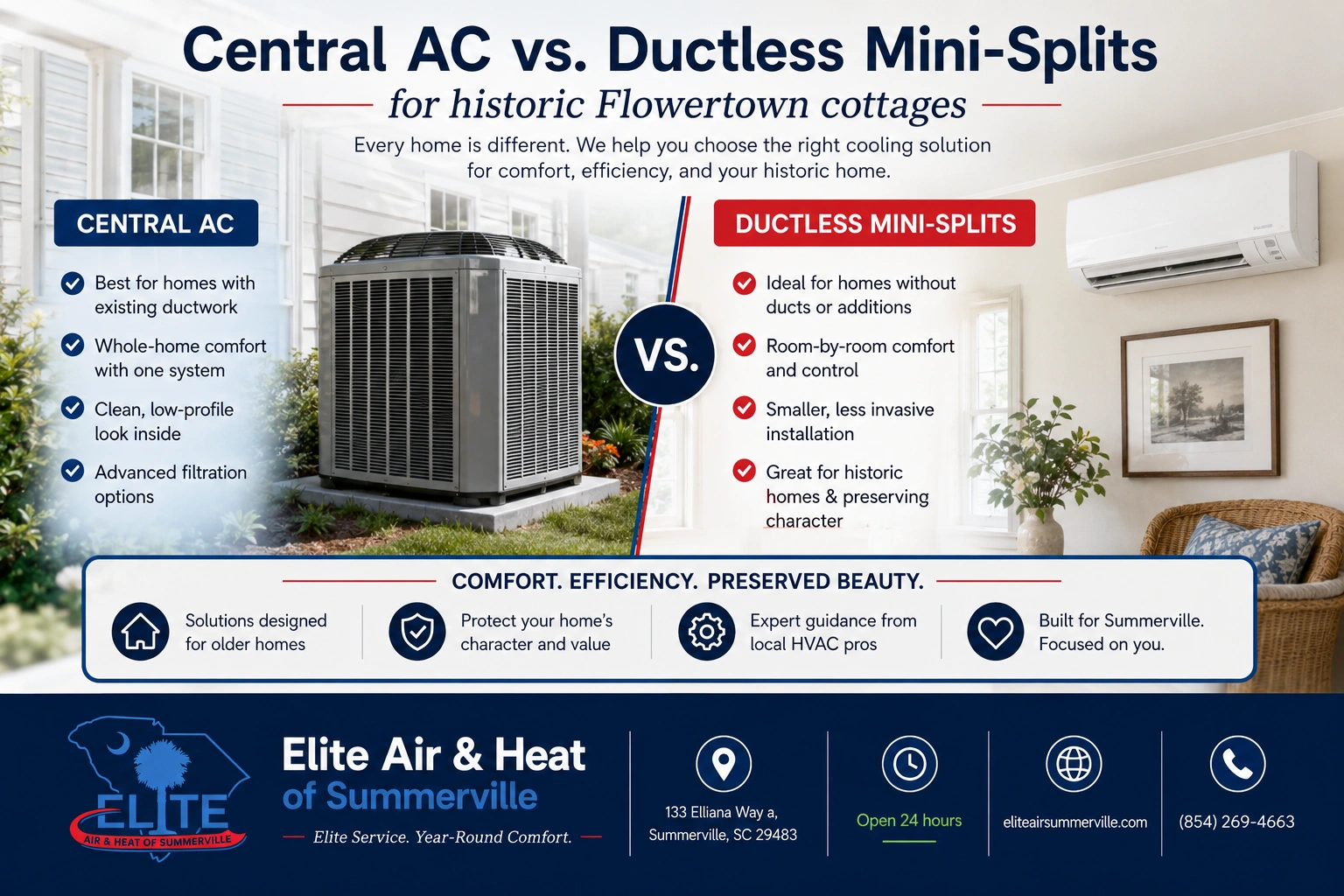
Ductless mini-splits are often a strong option for historic cottages because they do not need large duct runs.
Instead, each indoor unit serves a room or zone. Refrigerant lines connect the indoor units to an outdoor unit through a much smaller wall penetration than traditional ductwork would require.
Mini-splits may be the better fit for:
- Older homes without existing ducts
- Additions
- Converted porches
- Upstairs bedrooms
- Detached cottages or studios
- Rooms that are always hotter or colder
- Homes where preserving walls and ceilings matters
- Owners who want room-by-room control
They can solve problems that central AC sometimes struggles with in older homes, especially when one room bakes in the afternoon sun while another stays comfortable.

Why is My HVAC System Blowing Warm Air? (Causes + Fixes)
Nothing’s worse than turning on your AC and feeling warm air instead of cool relief. If your system isn’t doing…
The downside of ductless systems
Mini-splits are not magic.
The main drawbacks are:
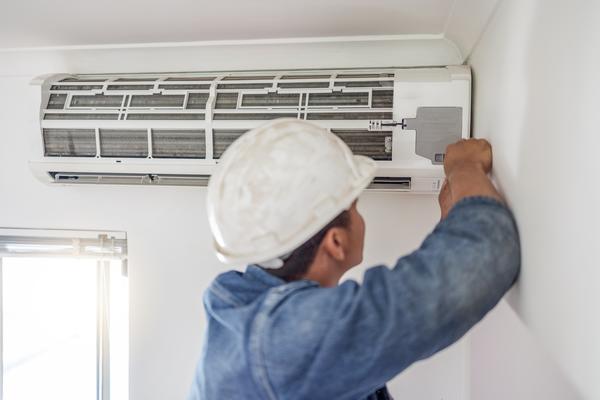
- Indoor units are visible
- Each indoor head needs cleaning and maintenance
- Poor placement can cause drafts or uneven comfort
- Multiple indoor units can raise the project cost
- They may not provide the same whole-house filtration as a ducted system
- Some homeowners dislike the look in formal rooms
- Condensate drainage must be handled carefully
That last point matters in Summerville. Mini-splits remove moisture, and that water has to drain somewhere. A sloppy drain setup can create stains, clogs, odors, or moisture damage.
A good installer should explain where each indoor unit goes, where the lines run, how the drain works, and how the outdoor unit will be placed without hurting the look or function of the home.
Cost comparison in plain terms
For a historic cottage, pricing depends heavily on access and design.
| Project type | Typical cost direction |
| Replace existing central AC with usable ducts | Often lowest-cost path |
| Install new central AC with major ductwork | Can get expensive quickly |
| One ductless mini-split for a problem room | Usually lower than whole-home replacement |
| Whole-home ductless with multiple zones | Can rival or exceed central AC |
| Hybrid central plus ductless zones | Often best comfort, but not always cheapest |
The important thing is not just the equipment price. It is the cost to install it without damaging the home or creating new comfort problems.
For many older cottages, the most expensive mistake is choosing the system that looks cheaper on paper but requires ductwork the house was never built to handle.
What about humidity?
In a historic Lowcountry home, humidity is a major part of comfort.
Central AC can dehumidify well when it is sized correctly and has proper airflow. But oversized central systems can cool too quickly and leave the house damp.
Mini-splits can also dehumidify well, especially with longer runtimes and variable-speed operation. But they must be sized and placed correctly. One oversized ductless head in a small room can short-cycle just like an oversized central system.
In a humid climate, comfort is not just about temperature. The system should be selected for:
- Runtime
- Airflow
- Drainage
- Room-by-room loads
- Moisture control
- Building leakage
- Duct leakage, if ducts are used
If the home smells musty, has sweating vents, or feels sticky at 72 degrees, do not assume a bigger system is the answer.
Best option by situation
If the cottage already has good ductwork
Central AC usually wins.
Have the ducts inspected for leakage, insulation, sizing, and return air before replacing the equipment.
If the cottage has no ducts
Ductless mini-splits often win.
They avoid major demolition and can preserve historic finishes.
If only one or two rooms are uncomfortable
A ductless mini-split may be the cleanest fix.
This is common for additions, upstairs rooms, sunrooms, and converted porches.
If the homeowner dislikes visible indoor units
Central AC or a concealed ducted mini-split may be better.
Some mini-split systems can use short duct runs or hidden indoor units, though they usually cost more and need careful design.
If the home has mixed old and new sections
A hybrid system may be best.
Use central AC where ducts already work, then add ductless zones where the house needs help.
What a good technician should inspect first
Before recommending either option, a contractor should look at:
- Existing duct condition
- Attic and crawlspace access
- Insulation levels
- Window exposure
- Room-by-room comfort complaints
- Electrical capacity
- Drainage paths
- Wall construction
- Outdoor unit placement
- Whether the home has moisture or mold concerns
- Whether any historic preservation limits apply
A good technician should not just say, “Mini-splits are better,” or “Central is better.”
They should be able to show you why that specific home points in that direction.
What homeowners can safely check
Before getting quotes, walk through the house and note:
- Which rooms are uncomfortable
- Whether the problem is temperature, humidity, or both
- Whether the home already has ducts
- Where ducts are located
- Whether vents have weak airflow
- Whether any rooms smell musty
- Whether windows get heavy sun
- Whether additions feel different from the original home
- Where indoor mini-split heads would look acceptable or unacceptable
That information helps separate a real design recommendation from a generic sales pitch.
When not to DIY
Do not try to add refrigerant, install line sets, cut into old plaster, modify electrical circuits, or run condensate drains yourself.
Historic homes are easy to damage and expensive to repair. One bad wall penetration or poorly pitched drain line can create a problem that costs more than the HVAC work.
The bottom line
For historic Flowertown cottages, ductless mini-splits usually win when the home lacks good ductwork or preservation matters. Central AC usually wins when good ductwork already exists and the homeowner wants a cleaner whole-house look.
If you only remember one thing, remember this: the best system is the one that respects the house.
A good HVAC design should cool the home, control humidity, protect the structure, and avoid unnecessary damage to historic materials. In many older Summerville cottages, that means considering ductless or hybrid options before forcing in a standard central system.
Central AC or Mini-Split? We Can Help
Find the best cooling fit for your historic cottage. Schedule your service consultation now.