
When most homeowners think about indoor air quality, they usually think about:
- Dust
- Pollen
- Pet dander
- Dirty air filters
Those things matter.
But in Summerville’s hot, humid climate, the biggest air quality threat is often something less obvious:
Biological growth.
That’s the industry term often used to describe mold, mildew, bacteria, and other microorganisms that can grow in damp environments.
Here’s the plain answer:
Humidity is the fuel that allows biological growth to develop inside HVAC systems, ductwork, crawlspaces, and homes throughout the Lowcountry.
And unlike dust, biological growth can continue spreading as long as moisture remains available.
Worried About Mold in Your Home?
Protect your indoor air from biological growth caused by Summerville's humidity. Call now for professional air quality solutions.
Why Summerville Homes Are Especially Vulnerable
The Lowcountry creates nearly perfect conditions for moisture problems.
For much of the year, we experience:
- High outdoor humidity
- Frequent rainfall
- Long cooling seasons
- Warm temperatures
- Heavy dew points
Your air conditioner is constantly fighting moisture, not just heat.
This is why two homes with identical HVAC systems can have completely different indoor air quality experiences.
One controls humidity effectively.
The other doesn’t.
Where Biological Growth Usually Starts
Many homeowners assume mold problems begin on walls or ceilings.
In reality, some of the most common growth areas are hidden.
Evaporator Coils
Your indoor evaporator coil is cold and often wet during operation.
That makes it one of the most common locations for biological growth inside an HVAC system.
Drain Pans
Condensation drains away through a pan and drain line.
When drainage becomes restricted, standing water can develop.
Ductwork
Leaky or poorly insulated ducts can create moisture issues that are difficult to see.
Crawlspaces
Moisture intrusion beneath the home can affect indoor air quality throughout the structure.
The Warning Signs Homeowners Often Miss
Biological growth rarely announces itself with obvious black spots on the wall.
Instead, homeowners may notice:
- Musty odors
- Persistent humidity
- Increased allergy symptoms
- Recurring respiratory irritation
- Dirty-looking supply vents
- Condensation around registers
- A damp smell when the AC starts
This is where homeowners sometimes get into trouble.
They treat the symptoms without addressing the moisture source.
Why Air Filters Aren’t Always Enough
A quality HVAC filter is important.
But filters primarily capture particles moving through the air.
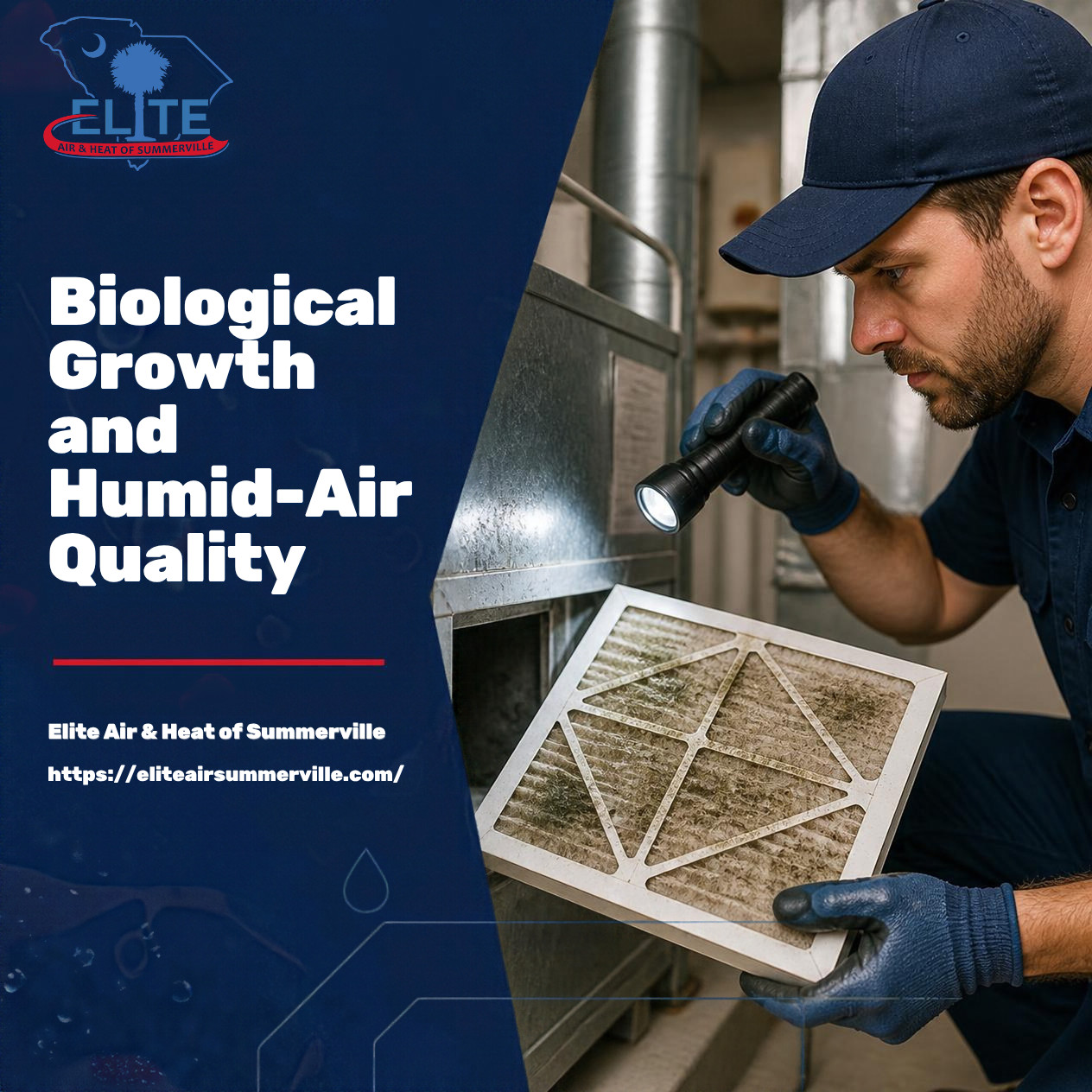
They do not eliminate active biological growth on:
- Coils
- Drain pans
- Wet insulation
- Damp building materials
If moisture remains, growth can continue.
That’s why simply upgrading the filter doesn’t always solve the problem.

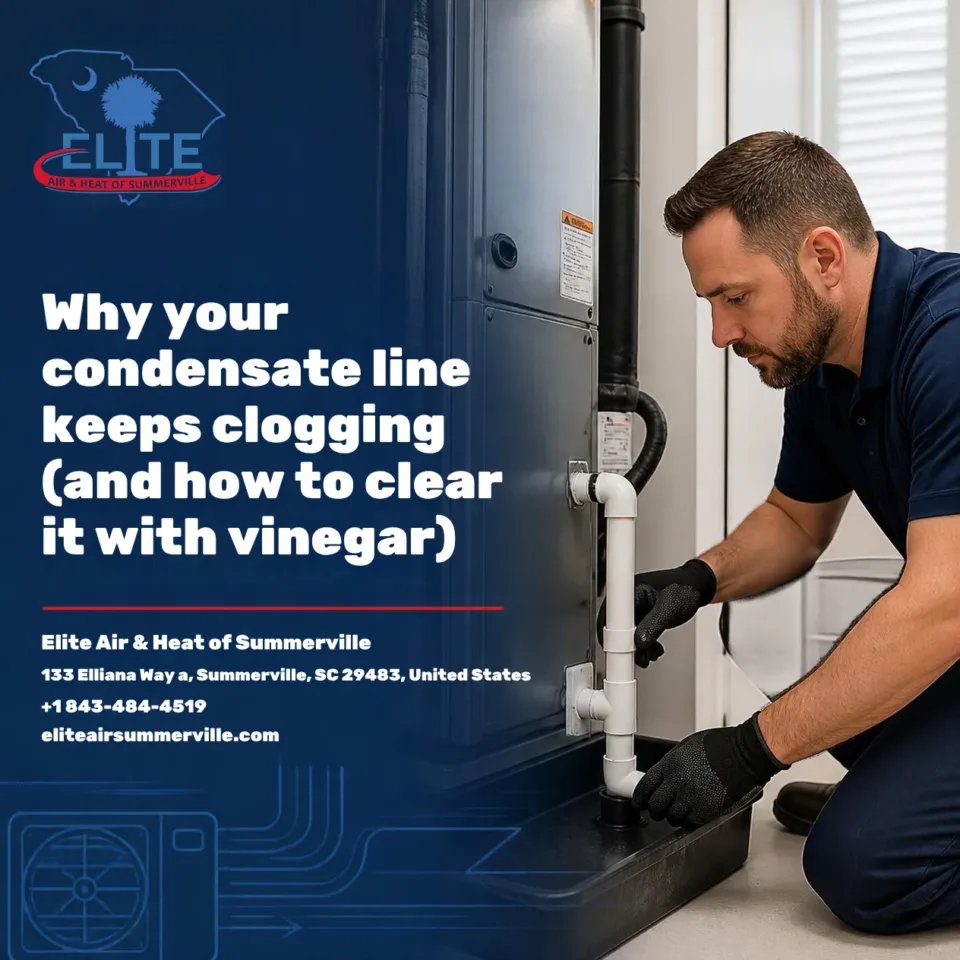
Why Your Condensate Line Keeps Clogging And How to Clear It With Vinegar
If your AC keeps shutting off, water is pooling near the indoor unit, or the drain pan keeps filling up,…
The Real Cause Is Usually Humidity
If you only remember one thing, remember this:
Mold doesn’t need dirt to grow nearly as much as it needs moisture.
Most biological growth problems trace back to one or more of these conditions:
- Indoor humidity above 60%
- Oversized HVAC systems
- Poor airflow
- Drainage problems
- Duct leakage
- Crawlspace moisture
- Building envelope leaks
The growth is the symptom.
The moisture is the cause.
Why Oversized AC Systems Can Make Things Worse
Many homeowners assume a larger AC system will improve comfort.
Sometimes it does the opposite.
An oversized system often:
- Cools quickly
- Shuts off quickly
- Removes less moisture
The thermostat reaches the desired temperature.
The humidity stays elevated.
Over time, that creates conditions that encourage biological growth.
A good technician should evaluate humidity levels and system sizing before recommending larger equipment.
What a Good HVAC Inspection Should Include
When indoor air quality concerns exist, a technician should evaluate:
- Indoor humidity levels
- Evaporator coil condition
- Drain pan cleanliness
- Drain line operation
- Duct leakage
- Airflow performance
- Filter effectiveness
- Signs of moisture intrusion
The goal is not simply to identify growth.
The goal is to identify why the environment is allowing growth to occur.
Can UV Lights and Air Purifiers Help?
They can.
But they should be viewed as supporting tools rather than primary solutions.
UV lights can help reduce growth on HVAC components.
Air purification systems can help address airborne contaminants.
Neither solves a humidity problem.
Without moisture control, the root cause often remains.
The Bottom Line
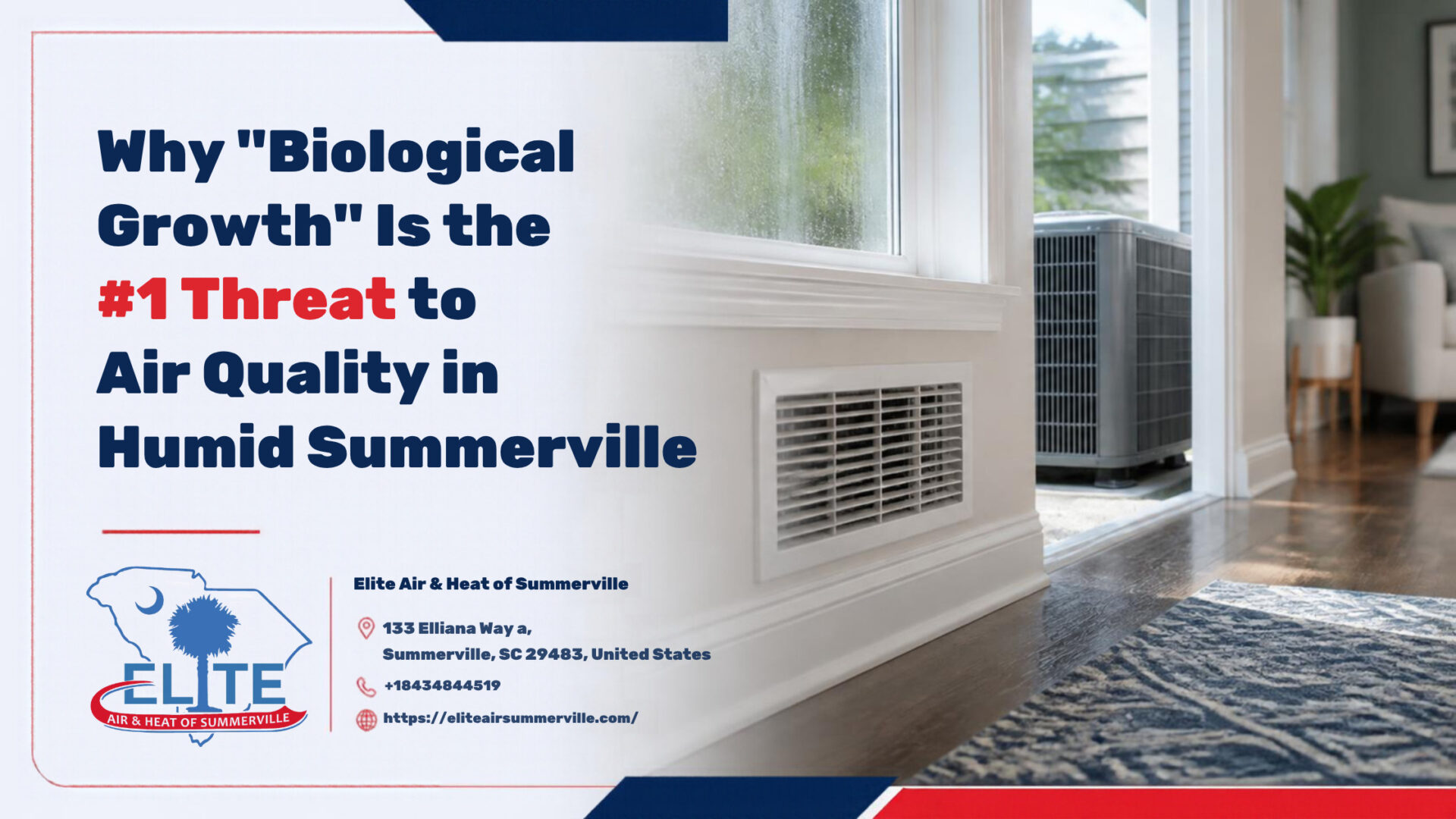
In humid Summerville, biological growth is often the largest indoor air quality threat because the climate naturally provides the moisture it needs to thrive.
Dust, pollen, and pet dander are important concerns. But when moisture is left unchecked, mold and other biological contaminants can become a much larger problem.
The good news is that most biological growth issues are preventable.
A good HVAC strategy focuses on:
- Humidity control
- Proper airflow
- Clean drainage
- Regular maintenance
- Early detection of moisture problems
Because the healthiest air quality improvements don’t start with a gadget.
They start with controlling the conditions that allow biological growth to begin in the first place.
Stop Biological Growth Before It Spreads!
Keep your Summerville home comfortable with professional moisture control and indoor air quality services. Call now!