

If your AC keeps shutting off, water is pooling near the indoor unit, or the drain pan keeps filling up, there is a good chance your condensate line is clogged.
In Summerville’s humidity, this is one of the more common AC problems homeowners run into.
Here’s the plain answer: your condensate line keeps clogging because your AC removes a lot of moisture from the air, and that moisture carries dirt, dust, algae, and biological buildup through a small drain line. Over time, that buildup can slow the drain or block it completely.
A little maintenance with vinegar can help prevent clogs.
But if the line keeps backing up, there may be a deeper issue with the drain setup, system cleanliness, or indoor humidity.
What the Condensate Line Does
Your AC does more than cool the air.
It also removes moisture.
When warm, humid air passes over the cold indoor coil, moisture collects on the coil and drips into a drain pan. From there, the water leaves your home through the condensate drain line.
That is normal.
On a hot, humid Lowcountry day, your AC can pull a lot of water out of the air.
The problem starts when that water does not drain properly.
Why Condensate Lines Clog
Most condensate clogs come from a mix of moisture and buildup.
Common causes include:
- Algae growth inside the drain line
- Dust and dirt from the indoor coil
- A dirty air filter
- Slime buildup in the drain pan
- Mold or mildew growth
- Rust or debris from an older drain pan
- Poor drain line slope
- A sagging or poorly installed drain line
- No cleanout access
- Construction dust in newer homes
- A system that runs long hours in humid weather
In a humid climate, this problem can come back faster because the drain line stays wet for long stretches.
That wet environment is exactly what algae and slime need to grow.
Signs Your Condensate Line Is Clogged
A clogged condensate line can show up in a few ways:
- Water around the indoor unit
- AC shuts off unexpectedly
- Thermostat goes blank
- Float switch trips
- Musty smell near the air handler
- Drain pan is full of water
- Water staining around the ceiling or closet
- Gurgling or bubbling from the drain line
- AC runs but the house feels humid
- The same drain problem keeps coming back
Many systems have a safety switch that shuts the AC off when water backs up.
That shutdown is annoying, but it is there for a reason. It helps prevent water damage.
Can You Clear a Condensate Line With Vinegar?
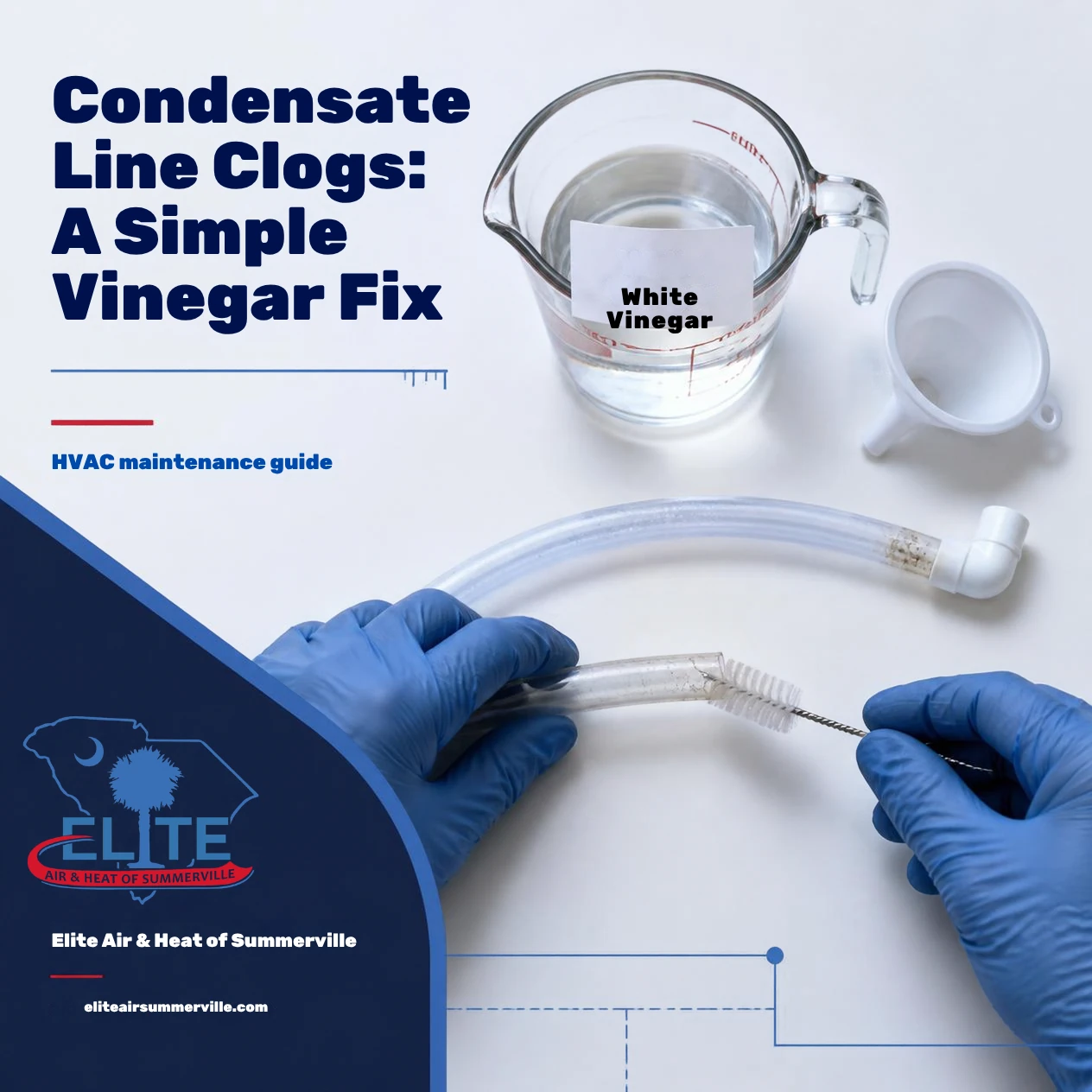
Yes, vinegar can help with light buildup and prevention.
White distilled vinegar is commonly used because it can help break down algae and slime inside the drain line without being as harsh as some chemicals.
But vinegar works best as maintenance.
If the line is fully blocked, vinegar may not clear it by itself. A serious clog may need a wet/dry vacuum, compressed air, or professional drain clearing.
How to Use Vinegar in Your AC Drain Line
Before you start, turn the system off at the thermostat.
Then follow these steps:
- Find the condensate drain line access point.
This is usually a capped PVC pipe near the indoor air handler or furnace. - Remove the cap.
If the cap is glued, do not force it. Some systems do not have an easy cleanout, and forcing the wrong fitting can create a leak. - Pour in white distilled vinegar.
Use about one cup of vinegar. - Let it sit.
Give it about 30 minutes to work through light buildup. - Flush with water if the line is draining.
Slowly pour clean water into the access point to confirm the line is moving. - Replace the cap.
Make sure everything is back in place before turning the system on. - Turn the AC back on.
Watch for water drainage and make sure the system runs normally.
If water backs up immediately, the clog may already be too heavy for vinegar.
Do not keep pouring liquid into a clogged line if it has nowhere to go.
How Often Should You Use Vinegar?
For many homes, pouring vinegar into the drain line every one to three months during the cooling season can help reduce buildup.
In Summerville’s long cooling season, monthly treatment may make sense if you have had clogs before.
If your system rarely clogs, every few months may be enough.
The right schedule depends on how hard the system runs, how clean the indoor coil is, how well the drain is pitched, and how much humidity the AC removes.
Vinegar vs. Bleach: Which Is Better?
Many homeowners have heard of using bleach in an AC drain line.
Some technicians may use bleach in certain situations, but vinegar is often the safer homeowner choice because it is less harsh.
Bleach can be hard on some materials and may create strong fumes, especially in tight indoor spaces.
Vinegar is not magic, but it is usually a gentler maintenance option.
If the drain line has a major blockage, neither vinegar nor bleach is the real fix.
The line needs to be cleared properly.
When Vinegar Is Not Enough
Vinegar may not solve the problem if:
- The line is completely blocked
- The drain pan is full of sludge
- The indoor coil is dirty
- The drain line is sagging
- The pipe has poor slope
- The trap is installed incorrectly
- The line is too long or poorly routed
- The outlet is buried or blocked outside
- The system is pulling in a lot of dust
- The clog keeps coming back every few weeks
This is where homeowners sometimes get into trouble.
They keep pouring vinegar into the line, but the real issue is a bad drain layout or dirty equipment.
If the problem keeps coming back, the goal is not to keep clearing the same clog.
The goal is to find out why the line keeps clogging.
What Homeowners Can Safely Check
You can safely check a few things before calling for service:
- Is the air filter dirty?
- Is there water around the indoor unit?
- Is the drain pan full?
- Is the float switch tripped?
- Is the drain outlet outside blocked by dirt, mulch, or insects?
- Is the PVC drain line visibly sagging?
- Does the system shut off only during heavy AC use?
- Does water drain normally after adding vinegar?
- Has the line clogged more than once this season?
These details help a technician narrow down the cause.
When Not to DIY
Do not keep trying DIY fixes if water is close to overflowing into ceilings, walls, floors, or insulation.
Do not open sealed HVAC panels if you are unsure what you are removing.
Do not use high-pressure air without knowing where the line drains.
Do not cut PVC pipe unless you know how to repair it correctly.
Do not ignore repeated float switch trips.
And do not bypass the float switch just to keep the AC running.
That safety switch may be the only thing preventing water damage.
What a Technician Should Inspect
If the condensate line keeps clogging, a good technician should inspect more than the pipe.
They should check:
- Drain pan condition
- Condensate line slope
- Cleanout access
- Trap design
- Float switch operation
- Drain outlet location
- Indoor coil cleanliness
- Air filter condition
- Blower compartment cleanliness
- Signs of biological growth
- System airflow
- Indoor humidity
- Whether the line needs to be flushed, vacuumed, or reworked
A good technician should be able to explain whether the issue is normal buildup, poor maintenance, bad drain design, or a larger humidity and airflow problem.
What Does It Cost to Clear a Condensate Line?
If vinegar does not clear the clog, professional drain clearing is usually one of the more affordable AC service repairs.
As a general planning range:
| Service | Typical Cost Range |
| Basic diagnostic visit | $100–$250+ |
| Condensate drain clearing | $150–$400+ |
| Drain line flush and treatment | $150–$350+ |
| Float switch replacement | $150–$350+ |
| Drain line repair or reroute | $300–$1,000+ |
| Drain pan or major indoor repair | Varies widely |
These are planning ranges, not a quote.
The cost depends on access, severity, whether parts are needed, and whether the drain line needs to be redesigned instead of just cleared.
How to Prevent the Clog From Coming Back
The best prevention is simple but consistent.
- Change filters regularly
- Keep the area around the indoor unit clean
- Use vinegar during cooling season
- Make sure the drain outlet stays open
- Schedule seasonal maintenance
- Have the drain pan inspected
- Have the indoor coil checked if clogs keep returning
- Address high indoor humidity
- Do not ignore slow drainage
Maintenance matters because a dirty system sends more debris into the drain.
A clean system usually drains better.
The Bottom Line
A condensate line clog is common in humid areas because your AC is constantly pulling water out of the air.
Vinegar can help prevent light algae and slime buildup, especially if you use it regularly during the cooling season.
But if the line keeps clogging, vinegar may only be treating the symptom.
If you only remember one thing, remember this:
A clogged condensate line is not just an inconvenience. It can shut your AC down or cause water damage if the safety switch fails or the backup is ignored.
Elite Air & Heat of Summerville can clear the line, inspect the drain pan and float switch, and explain whether the clog is normal buildup or a sign of a drain, airflow, or humidity problem that needs a better fix.