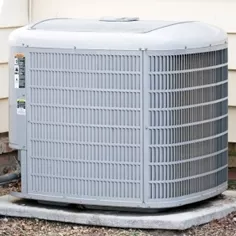


You walk past your outdoor AC unit and hear a steady hissing sound.
Sometimes that sound is harmless. Air conditioners and heat pumps can make brief hissing or pressure-equalizing noises during normal operation.
But a hissing sound that is new, unusually loud, or continues while the system is running can also point to something more serious: a refrigerant leak.
Here’s the plain answer.
A hissing outdoor unit does not automatically mean you have a refrigerant leak. But if the noise is persistent and your AC is also struggling to cool, freezing up, or running longer than normal, refrigerant should be high on the list of things a technician checks.
And refrigerant is not something homeowners should try to diagnose or refill themselves.
Don’t Ignore That Hissing Sound
Your AC could be leaking refrigerant. Get it checked before the problem gets worse.ional AC inspection and repair.
What Does a Refrigerant Leak Actually Sound Like?
Refrigerant circulates through a closed system of copper tubing, coils, and components under pressure.
If a small hole, crack, loose connection, or damaged component allows refrigerant to escape, the pressure difference can create a sound similar to:
- Hissing
- Whistling
- Faint spraying
- Bubbling or gurgling in some situations
A very small leak may be difficult to hear at all.
A larger leak may produce a much more noticeable hiss.
The important point is that the sound alone does not confirm the diagnosis. A technician needs to determine where the noise is coming from and whether the refrigerant circuit is actually leaking.
When Is Hissing From an Outdoor Unit Normal?
Not every hiss means something is wrong.
Heat pumps, in particular, can make noises homeowners do not expect as refrigerant pressures change during operation.
You may occasionally hear a short hiss when:
- The system starts or shuts down
- Refrigerant pressures equalize
- A heat pump changes operating modes
- The reversing valve operates
If the sound lasts only briefly and the system is heating or cooling normally, there may be nothing wrong.
What gets our attention is a persistent or worsening hissing noise combined with a change in system performance.
That is a different situation.
Signs the Hissing May Be a Refrigerant Leak
Pay attention to what the system is doing in addition to the noise.
A refrigerant problem becomes more likely when the hissing is accompanied by symptoms such as:
- The AC runs but the house stays warmer than the thermostat setting
- Cooling cycles become unusually long
- The system seems to run almost constantly
- Air coming from the vents does not feel as cold as usual
- Ice develops on the refrigerant line or indoor coil
- Your electric bill rises without an obvious reason
- Cooling performance gradually gets worse
- The system has previously been told it was “low on refrigerant”
That last one is especially important.
Refrigerant Does Not Normally Get Used Up
An air conditioner is not supposed to consume refrigerant like a car consumes gasoline.
It operates in a sealed refrigeration circuit.
So if an HVAC system is low on refrigerant, there is usually a reason.
Most commonly, there is a leak somewhere in the system.
Simply adding refrigerant may restore cooling temporarily, but it does not necessarily solve the underlying problem.
If the refrigerant level drops again, repeatedly “topping it off” can turn into an expensive cycle without fixing the actual failure.
The goal is not to keep buying refrigerant.
The goal is to find out why the system is losing it.
Where Do Refrigerant Leaks Usually Happen?
A refrigerant leak can occur in several parts of the system.
Common locations include the:
Evaporator coil
The evaporator coil is located inside or near the indoor air handler or furnace.
Leaks can develop because of corrosion, age, manufacturing issues, or deterioration over time.
Because the coil is inside the home, you may never hear the refrigerant escaping outdoors.
Condenser coil
The condenser coil surrounds much of your outdoor unit.
It deals with weather, vibration, debris, and years of exposure, so damage or corrosion can eventually create leaks.
Refrigerant line connections
The copper refrigerant lines have joints and connection points throughout the system.
A weak braze joint, fitting, or service valve can sometimes leak.
Copper refrigerant tubing
Copper lines can develop damage from rubbing against another surface, vibration, corrosion, improper installation, or physical damage.
Service valves and Schrader valves
The service ports technicians use to connect gauges can also become leak points.
This is why locating a refrigerant leak properly matters.
Guessing which component is leaking can become expensive very quickly.
Why Low Refrigerant Makes Your AC Struggle
Refrigerant is what allows your air conditioner to move heat from inside your home to the outdoors.
When the refrigerant charge becomes too low, the system cannot move heat the way it was designed to.
Cooling capacity falls.
The AC may compensate by running longer.
And in Summerville’s long, humid cooling season, that can become especially noticeable.
Your thermostat might say 72°F or 74°F while the house keeps drifting warmer in the afternoon.
You may also notice that the home feels sticky even when the temperature does not seem terrible.
In a humid climate, comfort is not just about temperature.
Your air conditioner also plays an important role in moisture removal. A system that is not operating correctly may have trouble controlling both.

Can a Refrigerant Leak Cause the AC Coil to Freeze?
Yes.
Low refrigerant can cause the pressure and temperature inside the evaporator coil to drop enough for moisture on the coil to freeze.
You might see ice on:
- The larger copper refrigerant line
- The indoor evaporator coil
- The air handler
- Nearby refrigerant components
But low refrigerant is not the only cause of a frozen AC.
Restricted airflow can do it too.
For example:
- A badly clogged filter
- A dirty evaporator coil
- A failing blower motor
- Closed or blocked vents
- Ductwork problems
That is why a frozen system should not automatically be diagnosed as a refrigerant leak.
A good technician should check both the refrigeration side and the airflow side of the system.

AC Not Cooling? When to Repair vs Replace Your HVAC System
If your AC not cooling properly, it can quickly turn your home from comfortable to frustrating. The real question most…
What Should You Do If the AC Is Hissing?
There are a few things homeowners can safely check before scheduling service.
1. Listen for how long the noise lasts
A brief hiss during a normal operating transition can be different from a constant hiss.
Notice whether it lasts seconds, minutes, or continuously.
2. Check the thermostat
Make sure the system is actually cooling toward the thermostat setting.
If the thermostat is set to 74°F and the house is sitting at 80°F while the AC runs continuously, that is useful information.
3. Check your air filter
A severely restricted filter can cause airflow problems that mimic some refrigerant-related symptoms.
If the filter is visibly dirty, replace it with the correct type and size.
4. Look for visible ice
Check the exposed refrigerant line near the outdoor unit and the accessible portions of the indoor equipment.
Do not chip, scrape, or break ice off the equipment.
5. Notice whether airflow has changed
Weak airflow from the vents may point toward an airflow or blower problem rather than refrigerant alone.
These checks can help you describe the problem.
They cannot confirm a refrigerant leak.
What Should You Not DIY?
Do not try to:
- Add refrigerant yourself
- Open refrigerant service valves
- Connect gauges unless you are qualified to work on the equipment
- Cut or repair refrigerant lines
- Use leak-sealing chemicals without understanding the consequences
- Continue repeatedly resetting a system that is shutting itself down
Refrigeration systems operate under pressure, and refrigerants require proper handling.
There is also a practical reason not to experiment.
An incorrect refrigerant charge can make the system perform worse and potentially damage expensive components.
What Should an HVAC Technician Check?
This is where homeowners sometimes get into trouble.
Being told that the system is “a little low” is not the same thing as receiving a complete diagnosis.
A good technician should be able to explain why refrigerant is suspected and what evidence supports that conclusion.
Depending on the system and symptoms, the diagnostic process may include:
- Checking indoor and outdoor temperatures
- Inspecting airflow
- Looking for ice or oil residue
- Measuring refrigerant pressures and temperatures
- Evaluating superheat and subcooling when appropriate
- Inspecting accessible coils and refrigerant lines
- Checking service valves and connections
- Using electronic leak detection equipment
- Performing additional leak testing when needed
You should not need to understand every technical measurement.
But the technician should be able to translate the findings into plain language.
For example:
“The system is low on refrigerant, and we found evidence that the evaporator coil is leaking.”
That is much more useful than:
“You need three pounds of refrigerant.”
One tells you the problem.
The other tells you only what is being added.
Should You Repair the Leak or Replace the System?
That depends on where the leak is, how old the equipment is, what refrigerant the system uses, and the overall condition of the equipment.
A repair may make sense when:
- The equipment is relatively young
- The leak is in an accessible, repairable location
- The rest of the system is in good condition
- The repair has a reasonable expected lifespan
- Parts are readily available
Replacement becomes more worth discussing when:
- The system is near the end of its expected service life
- An expensive coil is leaking
- Multiple major repairs are developing
- The system has recurring refrigerant problems
- Efficiency and comfort are already poor
- The repair cost represents a large percentage of replacement cost
That does not automatically mean an older system needs to be replaced.
And one refrigerant leak does not automatically mean the system is finished.
The recommendation should make financial sense.
A good technician should be able to show you why.
Be Careful With the “Recharge and See What Happens” Approach
There are situations where adding refrigerant can be part of a reasonable repair strategy.
But homeowners should understand what they are paying for.
If a technician recommends adding refrigerant without repairing a confirmed leak, ask:
Do we know where the refrigerant is going?
Then ask:
Is this expected to be a temporary solution or a lasting repair?
Those are fair questions.
Sometimes a homeowner knowingly chooses a temporary repair because of budget, timing, equipment age, or replacement plans.
That is different from believing the system has been permanently repaired when it has only been recharged.
Can You Keep Running an AC With a Refrigerant Leak?
It is usually not a good idea to let a system with a significant refrigerant problem continue struggling indefinitely.
Low refrigerant can reduce cooling capacity and force the system to run for long periods.
Depending on the circumstances, continued operation may also place additional stress on the compressor.
The compressor is one of the most expensive components in the system.
If the AC is no longer cooling, is heavily iced over, or is making an unusual continuous hissing sound, shutting the cooling system down and having it inspected is often the safer approach.
What If You Smell Something Too?
Refrigerant leaks do not always produce an obvious smell that homeowners can identify reliably.
Do not use smell as your primary diagnostic tool.
If you notice an unusual odor, feel unwell, or believe a significant leak may have occurred in an enclosed area, move to fresh air and have the situation professionally evaluated.
And if you ever suspect another source such as a natural gas leak, treat that as a separate safety issue and follow your gas utility’s emergency guidance.
Do not assume every hiss around HVAC equipment is refrigerant.
If You Only Remember One Thing, Remember This
A hissing outdoor AC unit is a warning sign, not a diagnosis.
Brief pressure noises can be normal.
Persistent hissing combined with poor cooling, icing, long run times, or a history of low refrigerant deserves a proper inspection.
And if someone says your system is low on refrigerant, ask the question that matters:
“Why is it low?”
The goal is not to buy the biggest repair or automatically replace the system.
The goal is to understand the actual problem.
If your AC or heat pump is hissing, losing cooling capacity, freezing up, or repeatedly needing refrigerant, Elite Air & Heat of Summerville can inspect the full system and help you understand whether you are dealing with a minor repair, a refrigerant leak, or a larger equipment issue before you approve the work.
Hear Hissing From Your Outdoor AC Unit?
A refrigerant leak can damage your system. Call now for professional repair.