

If your AC or heat pump is low on refrigerant, there is one thing to understand first:
Refrigerants do not get “used up” like gas in a car.
If the system is low, it usually means there is a leak.
Here’s the plain answer: fixing a refrigerant leak can cost anywhere from a few hundred dollars to several thousand dollars, depending on where the leak is, what refrigerant the system uses, whether the part is under warranty, and whether the repair still makes sense for the age of the equipment.
A small leak on a newer 2026 system may be worth repairing, especially if the equipment is under warranty. A major leak on an older unit may be harder to justify, especially if the system uses older refrigerant, has other problems, or is near the end of its life.
Refrigerant Leak Driving Up Repair Costs?
Get expert leak detection and clear repair options for your HVAC system. Call now before the problem gets worse.
Typical Refrigerant Leak Repair Cost
Most refrigerant leak repairs fall into a broad range:
| Type of Repair | Typical Cost Range |
| Basic leak search or diagnostic | $100–$400 |
| Minor accessible leak repair | $300–$900 |
| Refrigerant recharge after repair | $200–$1,000+ |
| Evaporator coil replacement | $1,200–$3,500+ |
| Condenser coil replacement | $1,500–$4,000+ |
| Major refrigerant line repair | $600–$2,000+ |
| Repair on an older R-22 system | Often expensive enough to consider replacement |
These are general ranges, not a quote. The final price depends on what actually failed.
The important thing is this: you do not want to keep adding refrigerant without finding the leak. That may get the house cooling temporarily, but it usually does not solve the problem.
Why 2026 Systems Can Be Different
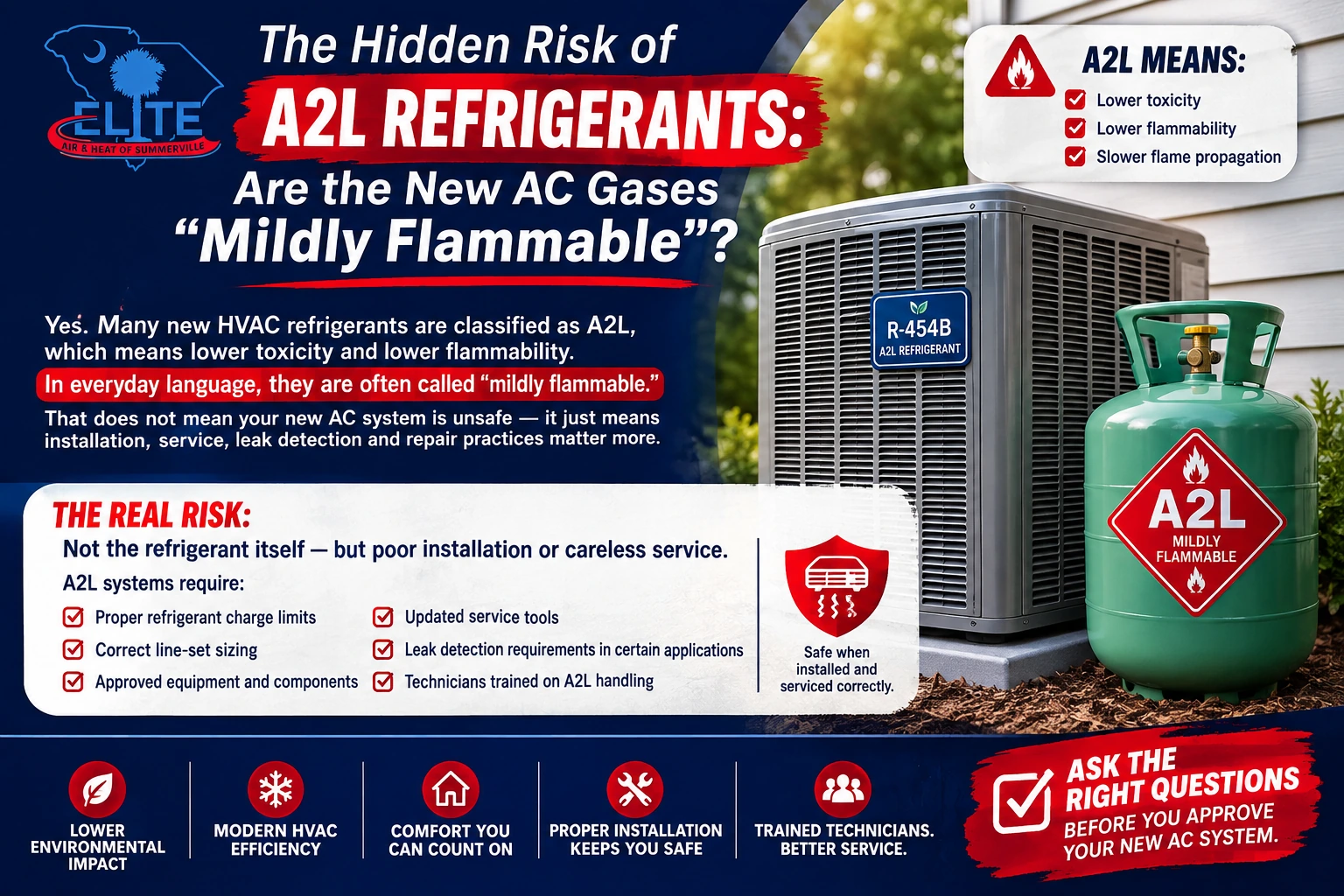
Many 2026 HVAC systems are built around newer refrigerants, commonly R-454B or R-32, because the industry has been moving away from higher-GWP refrigerants like R-410A in new equipment. The EPA’s HFC transition rules set a 700 GWP limit for many new residential and light commercial AC and heat pump systems beginning in 2025.
For a homeowner, that means a 2026 system may not use the same refrigerant as an older unit.
That does not automatically make the repair cheaper or more expensive. It just changes what the technician has to consider.
A 2026 system may involve:
- Newer refrigerant type
- Different safety and handling requirements
- Factory warranty coverage
- Newer coils, valves, and components
- More available replacement parts, depending on brand
- A stronger reason to repair instead of replace, because the system is still young
If your 2026 system has a refrigerant leak, the first question is usually not, “Should I replace the system?”
The better question is:
“Is this covered under parts warranty, labor warranty, installation warranty, or manufacturer warranty?”
Cost to Fix a Refrigerant Leak in a 2026 System
For a newer 2026 AC or heat pump, the leak repair cost often depends heavily on warranty coverage.
If the leaking part is under warranty, the manufacturer may cover the part, but not always the labor, refrigerant, diagnostic fee, shipping, or related materials.
A realistic range might look like this:
| 2026 System Situation | What You Might Pay |
| Warranty part, minor labor only | $300–$900 |
| Warranty coil, labor and refrigerant not covered | $800–$2,000+ |
| Non-warranty minor leak repair | $500–$1,500 |
| Non-warranty coil replacement | $1,500–$3,500+ |
| Installation-related leak | May depend on installer warranty |
This is where homeowners sometimes get caught off guard.
A system can be “under warranty” and still cost money to repair. Warranty coverage often protects the part, not every cost connected to the repair.
A good technician should explain exactly what is covered and what is not before you approve the work.
Cost to Fix a Refrigerant Leak in an Older Unit
Older systems are a different conversation.
The repair may still be possible, but the math changes.
An older system may use R-410A, and very old systems may still use R-22. R-22 has been phased out for new production and is generally only available through recovered or reclaimed supply, which can make repairs much more expensive.
Older systems also tend to have more than one issue. A refrigerant leak may show up alongside:
- Weak compressor performance
- Rusted or deteriorating coils
- Poor airflow
- Dirty indoor coil
- Failing blower motor
- Electrical wear
- Old contactors or capacitors
- Duct leakage
- Poor humidity control
That does not automatically mean replacement is required.
But it does mean the technician should look at the whole system, not just the leak.
For an older unit, the repair range may look like this:
| Older System Situation | What You Might Pay |
| Minor accessible leak repair | $400–$1,200 |
| Refrigerant recharge with R-410A | $300–$1,200+ |
| Evaporator coil replacement | $1,500–$3,500+ |
| Condenser coil replacement | $1,800–$4,000+ |
| R-22 leak repair and recharge | Often high enough to compare replacement |
| Repeated leak repairs | Usually a sign to discuss replacement |
The older the system, the more important the repair-versus-replace conversation becomes.
Why Older Refrigerant Leaks Can Cost More
Older refrigerant leak repairs can cost more for a few reasons.
First, refrigerant availability changes over time. R-410A is still used in many existing systems, but new equipment rules have shifted the market toward lower-GWP refrigerants. EPA rules restricted the use of higher-GWP HFCs in many new AC and heat pump products starting in 2025.
Second, older equipment may be harder to repair cleanly. Coils can corrode, fittings can weaken, and repair access can be poor.

Third, the leak may not be the only problem. In Summerville’s hot, humid cooling season, a weak or leaking system can run for long hours. That extra runtime can stress the compressor, electrical components, and blower system.
The leak may be what you notice first, but it may not be the only thing affecting comfort.
Should You Repair or Replace?
Here is the practical way to think about it.
Repair usually makes sense when:
- The system is newer
- The leak is small and accessible
- The leaking part is under warranty
- The compressor is healthy
- The system cools and dehumidifies well when properly charged
- This is the first major repair
- The total repair cost is reasonable compared to replacement
Replacement may make more sense when:
- The system is older than 10–12 years
- The repair is several thousand dollars
- The system has had repeated refrigerant leaks
- The compressor is weak or failing
- The unit uses R-22
- The home still feels humid or uneven after repairs
- The system is oversized, undersized, or poorly matched
- You are spending money every season to keep it running
The cheaper option is not always wrong, but it should make sense.
A $700 leak repair on a newer system can be a smart repair.
A $3,000 coil replacement on a 14-year-old system may not be.

Common HVAC Problems and How Professionals Fix Them
That high energy bill might not be as normal as you think. If your monthly costs keep climbing, your HVAC…

What a Good Technician Should Check
Before recommending a refrigerant leak repair, a technician should be able to explain what was inspected.
That may include:
- Refrigerant pressures
- Superheat and subcooling readings
- Indoor evaporator coil condition
- Outdoor condenser coil condition
- Refrigerant line set
- Service valves
- Brazed joints
- Schrader cores
- Compressor condition
- Airflow across the indoor coil
- Filter and blower condition
- Signs of oil around leak points
- Whether the system has had refrigerant added before
A good technician should not just say, “You are low on Freon.”
They should be able to show where the leak is likely coming from, explain how serious it is, and tell you whether the repair is worth doing.
What Homeowners Can Safely Check First
You should not try to repair a refrigerant leak yourself. Refrigerant work requires proper tools, training, and handling.
But you can check a few things before calling:
- Is the air filter dirty?
- Is the outdoor unit blocked by grass, leaves, or debris?
- Is the indoor coil frozen?
- Is the system running constantly?
- Are supply vents weak or closed?
- Is the thermostat set correctly?
- Has this happened before?
If the indoor coil is frozen, turn the system off and let it thaw before the technician arrives. A frozen system is harder to diagnose correctly.
Do not keep running the AC if it is frozen, low on refrigerant, or blowing warm air. That can put extra stress on the compressor.
Do Not Just Keep Adding Refrigerant
This is the biggest mistake homeowners make with refrigerant leaks.
Adding refrigerant without fixing the leak may cool the house for a little while, but the refrigerant will usually leak back out.
That means you pay again.
And again.
And again.
Worse, a low-charge system can overwork the compressor. The compressor is one of the most expensive parts of the system. If it fails on an older unit, replacement often becomes the better conversation.
If the issue keeps coming back, replacing parts blindly usually is not the answer.
The Bottom Line
A refrigerant leak in a 2026 system is usually a repair-and-warranty conversation.
A refrigerant leak in an older system is a repair-versus-replace conversation.
The leak location, refrigerant type, warranty coverage, system age, and overall condition all matter.
If you only remember one thing, remember this: the cost to fix a refrigerant leak is not just about adding refrigerant. It is about finding the leak, repairing it correctly, confirming the system is safe to run, and deciding whether the repair makes financial sense.
Elite Air & Heat of Summerville can help inspect the system, explain what is actually leaking, review warranty options, and give you a clear repair-or-replace recommendation before you spend money blindly.
Don’t Let a Refrigerant Leak Get Worse
Protect your HVAC system from costly damage. Schedule professional refrigerant leak service today.