
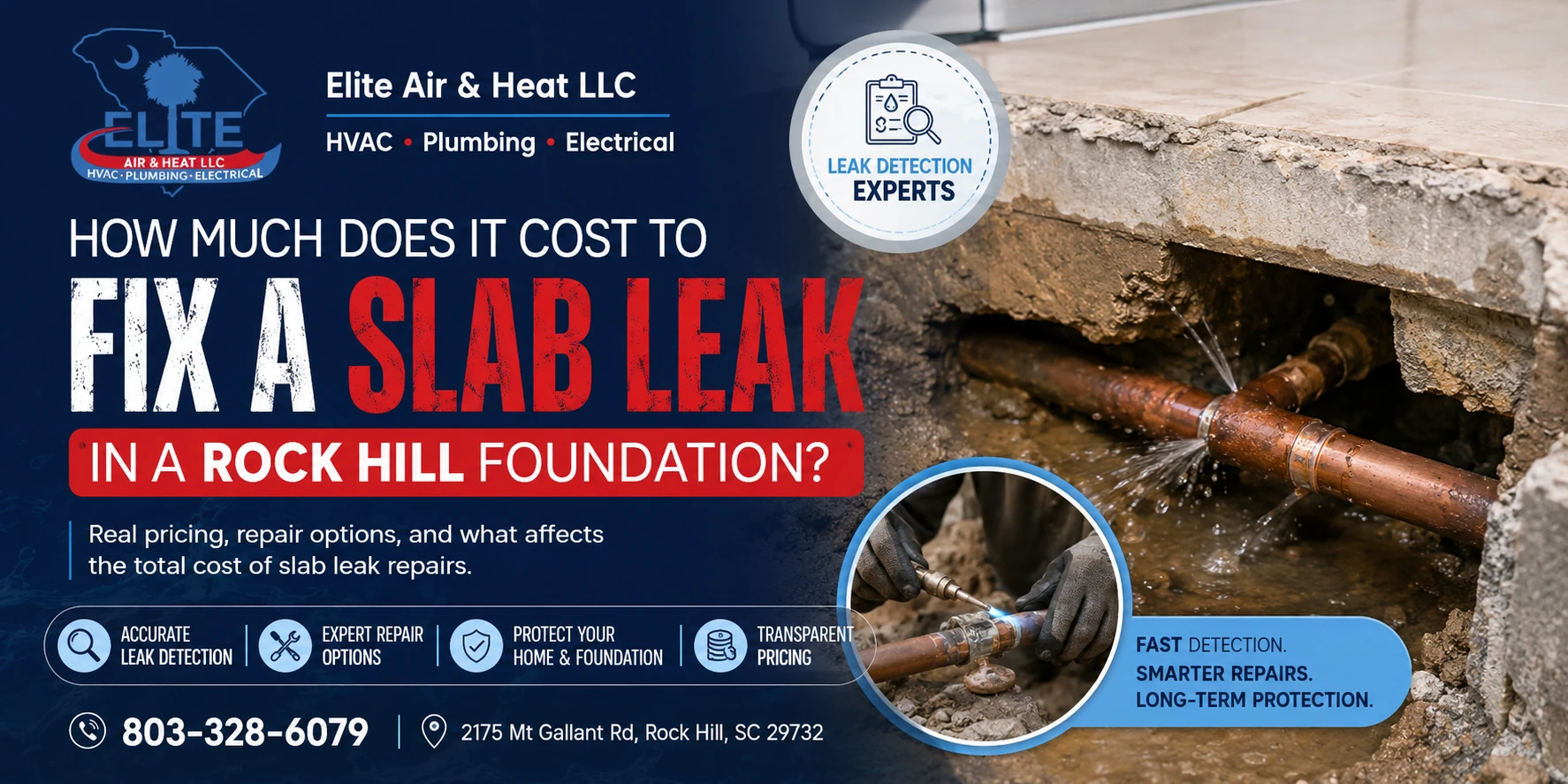

If you’ve recently discovered a slab leak, the next step is a proper leak detection and diagnosis rather than guessing. A good plumber should be able to show you where the leak is, explain your repair options, and tell you why one solution makes morIf you’ve been told you have a slab leak, your first question is usually simple:
“How much is this going to cost me?”
Here’s the plain answer.
In Rock Hill, SC, most slab leak repairs fall somewhere between $1,500 and $8,000+, depending on where the leak is located, how it’s repaired, and whether flooring or foundation access is involved.
Think You Have a Slab Leak?
Don’t let a hidden plumbing leak turn into a costly foundation problem. Call today for expert leak detection and repair.
| Repair Type | Typical Cost Range |
| Leak detection only | $250–$800 |
| Spot repair through slab | $1,500–$4,000 |
| Pipe reroute (bypassing damaged pipe) | $2,500–$8,000+ |
| Whole-home repipe (if multiple leaks exist) | $5,000–$20,000+ |
| Foundation/flooring restoration | Additional cost depending on damage |
The biggest mistake homeowners make is assuming the leak repair itself is the entire project. In many cases, the plumbing repair is only part of the total cost.

What Is a Slab Leak?
A slab leak occurs when a water line running beneath your home’s concrete foundation develops a leak.
Common signs include:
- Unexplained increases in water bills
- Hot spots on the floor
- Damp flooring or carpet
- Water sounds when no fixtures are running
- Cracks in flooring or foundation
- Reduced water pressure
- Mold or musty odors
That does not automatically mean you have major foundation damage. Many slab leaks are caught and repaired before structural issues develop.

Common HVAC Problems and How Professionals Fix Them
That high energy bill might not be as normal as you think. If your monthly costs keep climbing, your HVAC…

What Makes Slab Leak Repairs Expensive?
The cost usually comes down to four factors.
1. Leak Location
A leak near the edge of the foundation is typically easier and less expensive to access.
A leak under the center of the home often requires:
- Concrete cutting
- Jackhammering
- Excavation
- Floor repairs
The harder it is to reach the pipe, the more labor is involved.
2. Type of Pipe
Older homes may have:
- Copper piping
- Galvanized piping
- Polybutylene piping
Some materials are easier to repair than others.
If the pipe has failed due to age rather than a single isolated defect, a simple repair may not be the best long-term solution.
3. Spot Repair vs. Reroute
This is where homeowners sometimes get into trouble.
A contractor may offer a lower-cost spot repair, while another recommends rerouting the line entirely.
Neither option is automatically right.
Spot Repair Usually Makes Sense When:
- The pipe is otherwise in good condition
- The leak is isolated
- No history of previous slab leaks exists
Rerouting Usually Makes Sense When:
- Multiple leaks have occurred
- Pipes are aging throughout the system
- Access is extremely difficult
- Future failures are likely
A good plumber should be able to explain why they are recommending one option over the other.
Does Homeowners Insurance Cover Slab Leaks?
Sometimes.
Most policies treat slab leaks in two separate ways:
The Plumbing Repair
Many policies do not cover repairing the failed pipe itself because it is considered normal wear and tear.
Access and Damage Restoration
Some policies may help cover:
- Concrete removal
- Flooring damage
- Drywall repairs
- Water damage cleanup
Coverage varies significantly between carriers and policy types.
Before approving major work, contact your insurance company and ask exactly what portion of the repair may be covered.
Can a Slab Leak Cause Foundation Damage?
Yes, but not every slab leak does.
Long-term leaks can:
- Wash away supporting soil
- Cause settlement
- Create floor movement
- Lead to cracking
The longer a leak runs unnoticed, the higher the risk.
If you only remember one thing, remember this:
The most expensive slab leaks are usually the ones that go undetected for months.
What Should a Slab Leak Inspection Include?
Before approving a repair, a plumber should clearly explain:
- How the leak was located
- Whether the pipe can be repaired or should be rerouted
- The likelihood of additional leaks
- Whether flooring or concrete removal is required
- What restoration work is included
- What restoration work is not included
The cheaper option is not always wrong, but it should make sense based on the condition of the plumbing system.
Is It Better to Repair or Repipe?
That depends on the age and condition of the system.
| Situation | Usually Best Option |
| First isolated leak | Repair |
| Multiple slab leaks | Consider reroute or repipe |
| Aging copper throughout home | Evaluate repipe |
| Extensive foundation access required | Often reroute |
The goal is not to buy the biggest repair. The goal is to understand the actual problem and choose the solution that gives you the best long-term value.
Final Thoughts
For most Rock Hill homeowners, a slab leak repair typically lands between $1,500 and $8,000, but the real cost depends on accessibility, pipe condition, and whether restoration work is required afterward.
e sense than another before you approve the work.
Slab Leak Costs Adding Up?
Get the leak found and repaired before foundation damage gets worse. Call now for professional slab leak service in Rock Hill.