
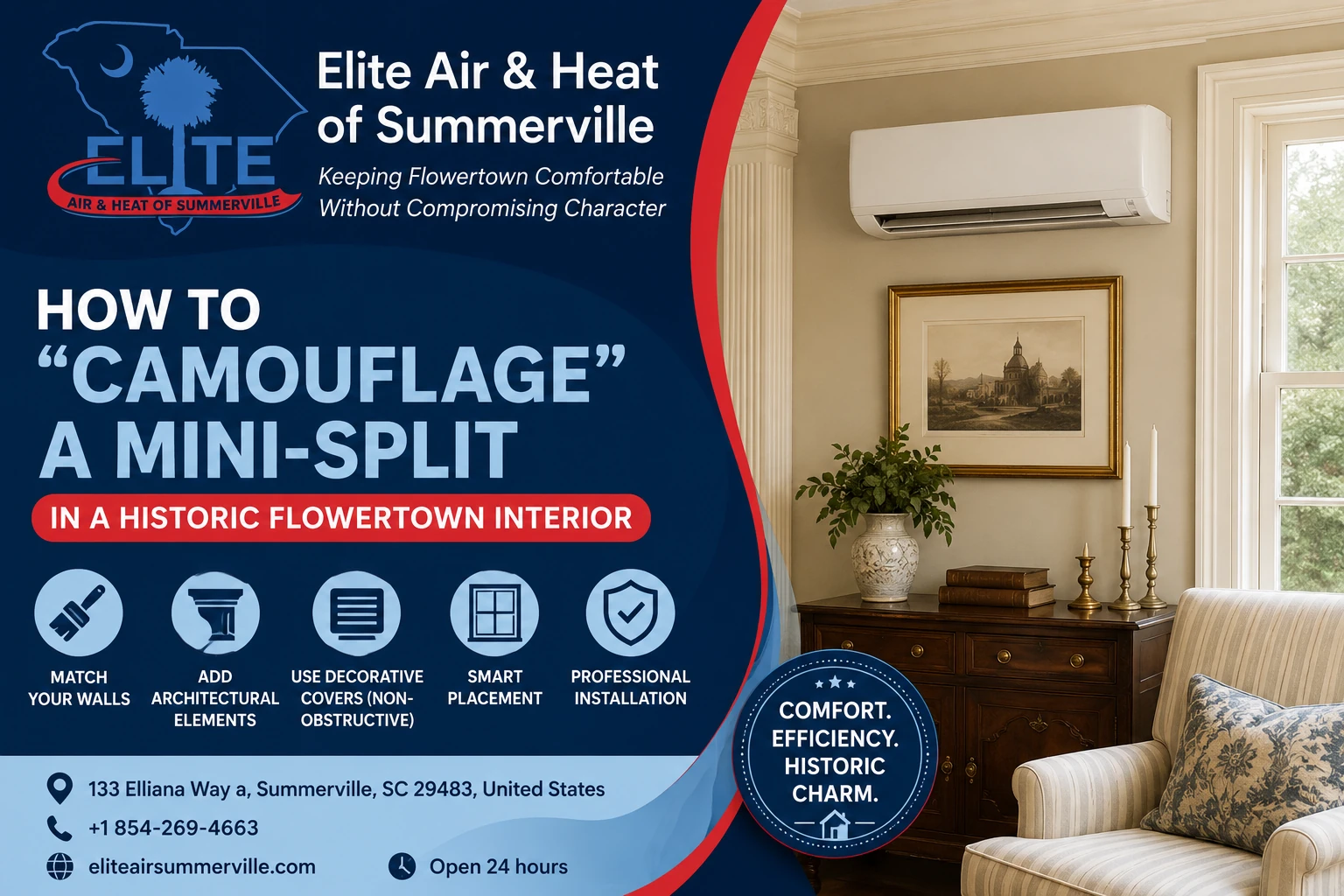

Mini-splits are a great solution for cooling or heating rooms without major ductwork but in historic homes, the indoor unit can stand out against original trim, moldings, and plaster walls. The goal isn’t just aesthetics, it’s keeping your home comfortable without compromising the character you’ve preserved.
Upgrade Comfort Without Ruining Your Interior
Enjoy efficient heating and cooling with a mini-split installation designed to complement your home's historic style. Call for a free consultation.
Here’s the Plain Answer
A mini-split can blend into your interior if you plan placement, color, and concealment carefully. That does not automatically mean hiding it behind furniture; good airflow must be maintained for efficiency and safety.
Tips to Camouflage a Mini-Split
- Choose the Right Wall and Height
- Install above eye level or near the ceiling to reduce visual intrusion.
- Avoid blocking airflow with furniture or decorative items.
- Use Matching Colors
- Paint the unit’s mounting plate or surrounding trim to match walls (avoid painting the fins themselves).
- Some manufacturers offer neutral-colored units that blend with historic interiors.
- Incorporate Architectural Elements
- Install a shallow shelf or molding around the unit that looks intentional.
- Use a framed panel above or below to integrate it with wainscoting or chair rails without obstructing airflow.
- Decorative Covers (Non-Obstructive)
- Lightweight slatted covers allow airflow while reducing visual prominence.
- Ensure any cover leaves at least 6–12 inches of clearance around the unit to maintain performance and warranty compliance.
- Placement Relative to Windows or Artwork
- Position near corners or alongside windows where it blends naturally with existing trim.
- Avoid placing units directly over historically significant artwork or moldings that could be damaged during maintenance.
- Coordinate with Room Layout
- Incorporate furniture or shelving in a way that frames rather than blocks the mini-split.
- Low-profile units work well in reading nooks, small bedrooms, or home offices.

What a Technician Will Check
- Airflow clearance requirements for efficiency and warranty
- Proper drainage and refrigerant lines routing without damaging plaster or trim
- Electrical and structural considerations for mounting safely

10 Best Ways to Lower Your Dominion or Berkeley Electric Bill This Summer
Hot Lowcountry summers mean your AC is running almost constantly, and those energy bills can spike. The plain answer: small…

What Homeowners Can Safely Do
- Choose wall placement and colors thoughtfully before installation
- Select decorative elements or shelves that don’t block airflow
- Keep the unit clean and unobstructed for optimal performance
Avoid DIY: cutting or modifying the mini-split housing, blocking airflow, or painting the fins. This can damage the system, void warranties, and reduce efficiency.
Calm Next Step
If your goal is comfort without compromising historic charm, a professional installation paired with careful camouflage strategies can make a mini-split nearly invisible. A licensed technician will ensure efficiency, safety, and preservation of your home’s character while keeping the system functional for years to come.
The Right Mini-Split Starts With Expert Installation
Avoid poor placement and preserve your home's beauty with customized mini-split solutions from trusted local professionals.