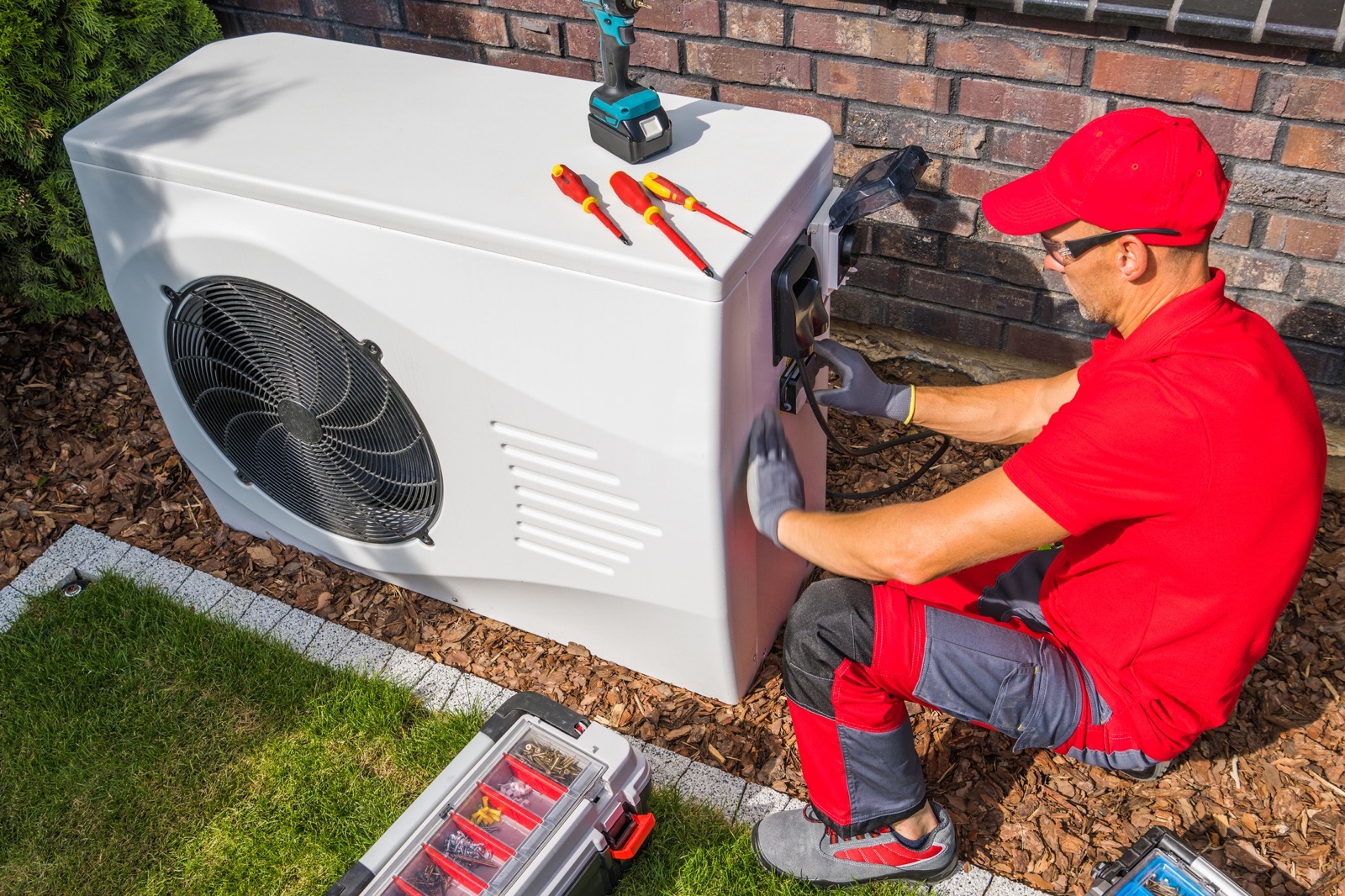


Historic homes in downtown Summerville have a different HVAC problem than newer homes.
You are not just trying to cool the house.
You are trying to do it without tearing up plaster walls, damaging original woodwork, overloading old ductwork, or creating humidity problems in a home that was never built for modern air conditioning.
Protect Your Historic Home’s Comfort
Upgrade your HVAC without compromising your home’s character. Call today for expert service.
Here’s the plain answer:
The best HVAC solution for a historic home is usually the one that improves comfort with the least damage to the structure.
1. Ductless Mini-Splits
Best for: additions, upstairs bedrooms, sunrooms, guest rooms, and homes without usable ductwork.
Ductless systems are often a strong fit because they require only a small wall penetration instead of large duct runs.
They can also solve room-by-room comfort problems without forcing the whole house into one temperature.
The tradeoff: some homeowners do not love the look of indoor wall-mounted heads.
2. High-Velocity Small-Duct Systems
Best for: historic homes where traditional ductwork will not fit.
These systems use smaller flexible ducts that can often be routed through tighter spaces than standard ductwork.
That can help preserve plaster, trim, ceilings, and historic details.
The tradeoff: installation quality matters. Poorly designed high-velocity systems can be noisy or uncomfortable.
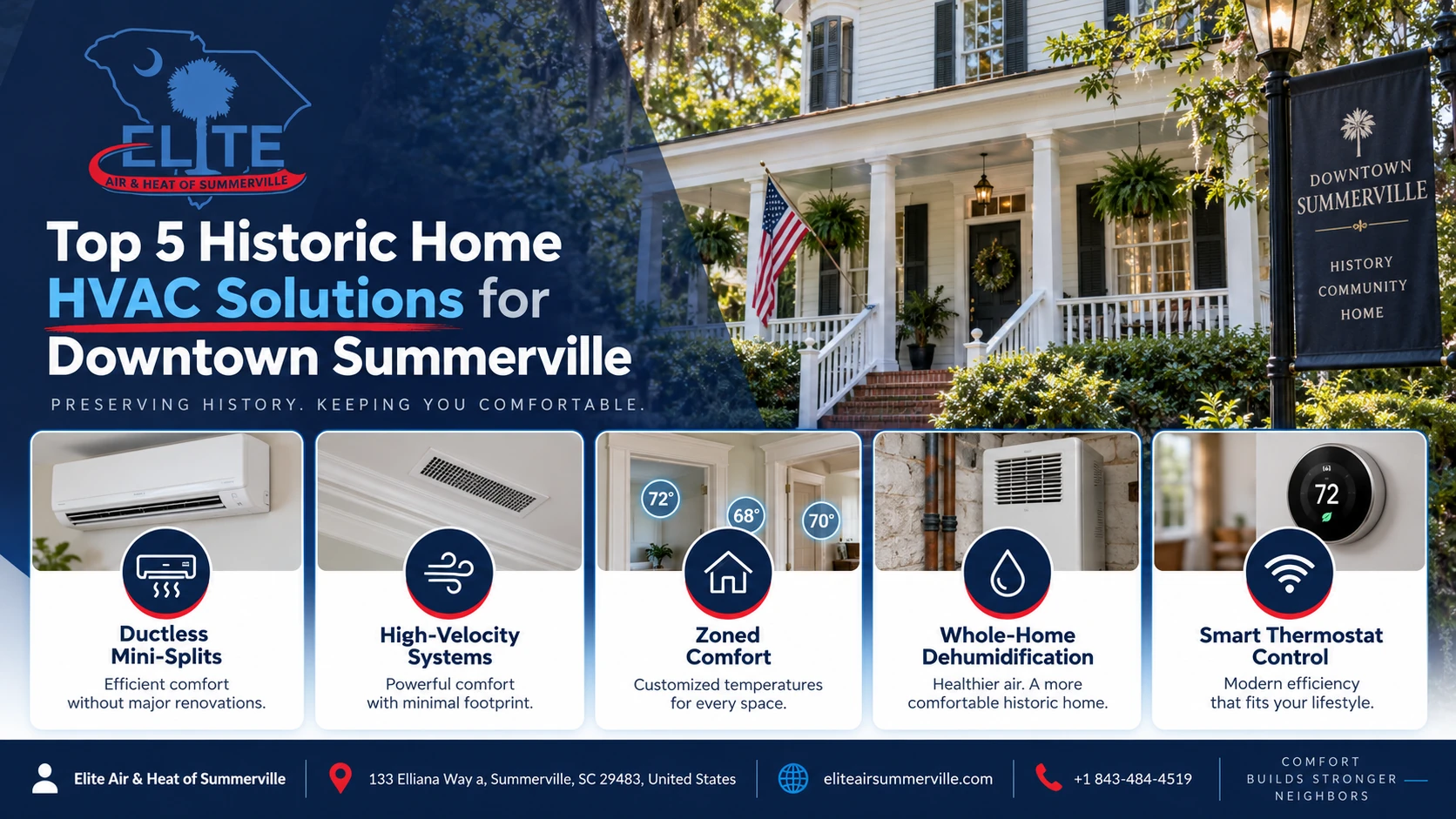
3. Zoned HVAC
Best for: homes with hot upstairs rooms, large temperature swings, or rooms used at different times.
Zoning lets different areas of the home call for heating or cooling separately.
That matters in older homes because one side of the house may face more sun, have less insulation, or hold heat differently.
The tradeoff: zoning only works well when the duct design and equipment can support it.
4. Heat Pumps With Humidity Control
Best for: year-round comfort in Summerville’s long cooling season.
Modern heat pumps can handle both heating and cooling efficiently, but in the Lowcountry, humidity control is just as important as temperature.
Variable-speed or two-stage systems often do a better job keeping the home from feeling sticky.
The tradeoff: the system must be sized carefully. Bigger is not better in a historic home.

How Much Does It Cost to Fix a Slab Leak in a Rock Hill Foundation?
If you've recently discovered a slab leak, the next step is a proper leak detection and diagnosis rather than guessing.…
5. Duct Sealing and Airflow Corrections
Best for: older homes that already have HVAC but still feel dusty, humid, or uneven.
Before replacing equipment, it is worth checking whether the existing system is losing air through leaky ducts, poor returns, or attic duct runs.
Sometimes the “HVAC problem” is really an airflow problem.
A good technician should inspect:
- Duct leakage
- Return air sizing
- Static pressure
- Room-by-room airflow
- Indoor humidity
- Attic heat gain
- Equipment sizing
The Bottom Line
For downtown Summerville historic homes, the best HVAC options are usually:
- Ductless mini-splits
- High-velocity small-duct systems
- Zoned HVAC
- Variable-speed heat pumps
- Duct sealing and airflow improvements
If you only remember one thing, remember this:
Do not let anyone sell you a bigger system before they understand the house.
A historic home needs an HVAC plan that respects the structure, controls humidity, and solves the actual comfort problem without unnecessary damage.
Upgrade Your HVAC the Right Way
Keep your historic home comfortable with professional HVAC solutions built around its unique needs.