
A brand-new home should feel comfortable.
The AC should keep up.
The upstairs bedrooms should not feel five degrees hotter than the downstairs living room.
The house should not feel sticky when the thermostat says 72.
But in many new construction neighborhoods, homeowners run into HVAC problems sooner than expected.
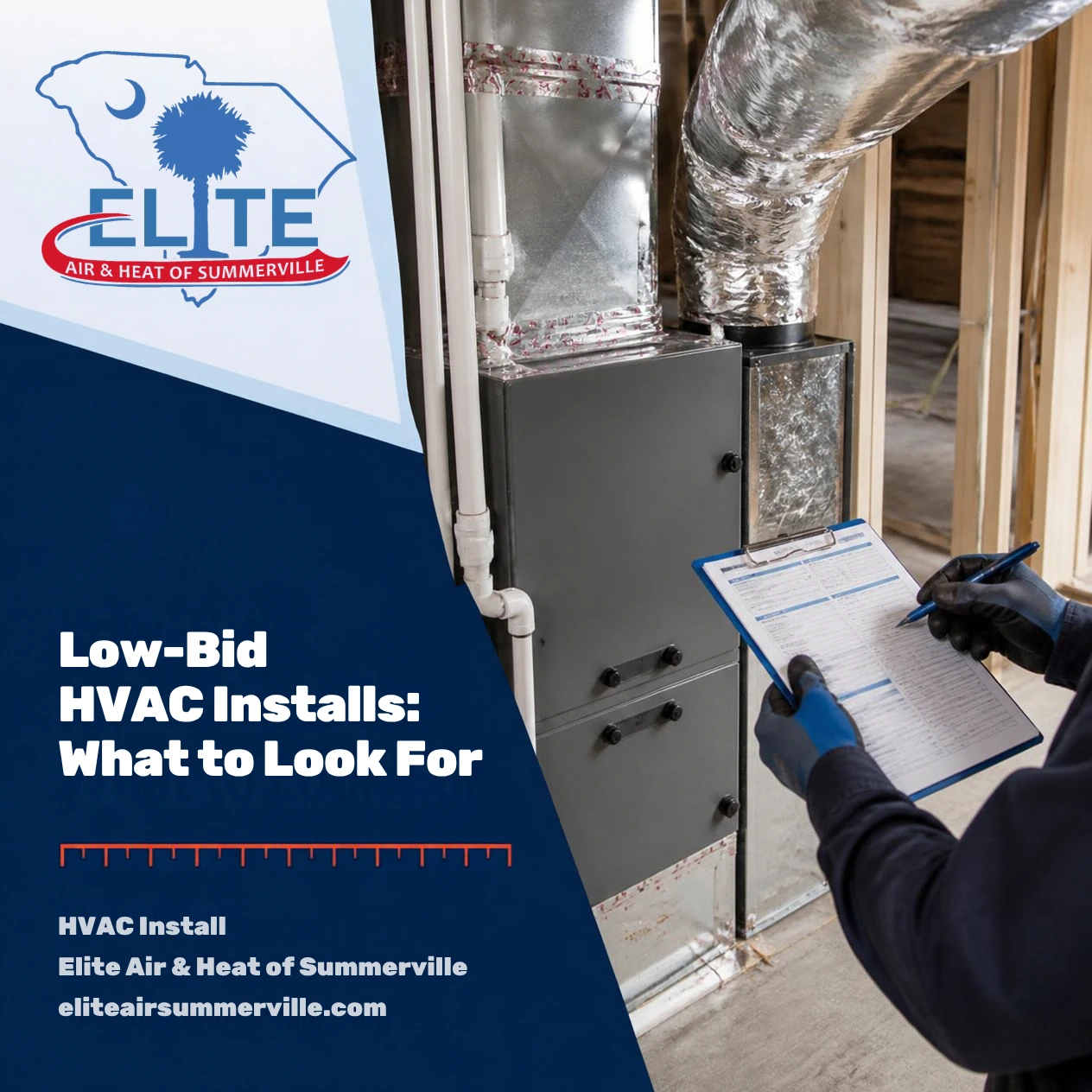
Here’s the plain answer: low-bid HVAC installs in new construction can cost homeowners more later when the system is sized quickly, ductwork is rushed, airflow is not tested, humidity control is ignored, or the installation is built to pass minimum requirements instead of performing well in the actual home.
That does not mean every builder-grade HVAC system is bad.
It does mean a new house is not automatically a well-designed comfort system.
Why New Construction HVAC Gets So Price-Sensitive
In large developments, builders often work with tight budgets and fast schedules.
Every trade has a number to hit.
HVAC is no different.
The contractor may be asked to install systems across many homes as quickly and affordably as possible. That can create pressure to keep labor time down, use standard layouts, and avoid anything that slows production.
That does not always create a bad result.
But when the goal becomes “get it installed” instead of “make this specific home comfortable,” problems can show up after the homeowner moves in.
This is where homeowners sometimes get caught off guard.
They assume a new home means new equipment, new ductwork, and no HVAC concerns.
But comfort problems are often design and installation problems, not just equipment age problems.
Common Problems With Low-Bid New Construction HVAC
1. Poor Duct Design
Ductwork is the delivery system.
If the ductwork is undersized, poorly routed, kinked, crushed, leaking, or unbalanced, the equipment cannot perform the way it should.
Common duct problems in new construction include:
- Long duct runs with weak airflow
- Upstairs rooms that do not get enough supply air
- Too few return vents
- Undersized return air
- Flex duct that is kinked or sagging
- Ducts routed through hot attic spaces
- Leaky duct connections
- Poorly sealed boots and plenums
- Rooms that were never balanced properly
A new AC connected to bad ductwork can still leave the house uncomfortable.
The unit may be working.
The air just may not be getting where it needs to go.
2. “One Size Fits Most” System Sizing
A good HVAC system should be sized for the home.
That includes more than square footage.
Sizing should consider:
- Insulation
- Windows
- Ceiling height
- Sun exposure
- Air leakage
- Home orientation
- Duct location
- Number of stories
- Occupancy
- Local humidity
- Room-by-room loads
In production building, there can be a temptation to use standard system sizes across similar floor plans.
That may work in some homes.
But small differences matter.
A home with more afternoon sun, a finished bonus room, a third floor, or ducts in a hot attic may not behave like the same plan across the street.
A good technician should not assume the system is right just because it is new.
3. Oversized Systems That Cool But Do Not Dehumidify
Homeowners often think a bigger AC is better.
In a humid climate, that can backfire.
An oversized system may cool the air quickly, shut off too soon, and fail to run long enough to remove moisture.
That can leave the home feeling cold and clammy.
You may see:
- Thermostat says 72, but the house feels sticky
- Air feels damp
- Musty odors develop
- Indoor humidity stays high
- The system turns on and off frequently
- Some rooms never feel right
In the Lowcountry, comfort is not just about temperature.
Humidity control matters.
A system that is technically cooling may still be doing a poor job of making the home comfortable.
4. Weak Return Air
Supply air gets most of the attention because it is what homeowners feel coming from the vents.
But return air matters just as much.
The system has to pull air back from the home so it can condition it again.
If return air is weak, blocked, undersized, or poorly located, the system can struggle.
Signs of return air problems include:
- Whistling return grilles
- Doors that pull shut
- Rooms that get stuffy
- Weak airflow
- Dust problems
- Hot upstairs rooms
- Pressure imbalances
- The system sounding strained
A low-bid install may meet the basic layout requirement but still leave the system short on return airflow.
That can affect comfort, efficiency, and equipment life.
5. Poor Startup and Commissioning
Installing the equipment is not the finish line.
A good HVAC installation should be started, tested, and adjusted.
That process may include checking:
- Refrigerant charge
- Temperature split
- Static pressure
- Airflow
- Drain operation
- Thermostat setup
- Electrical readings
- Blower speed
- Safety switches
- Equipment communication
- Room-by-room comfort concerns
If the system is installed and rushed into operation without proper commissioning, small problems may never get corrected.
The homeowner may not notice immediately.
But over time, the system may run longer, cool unevenly, short cycle, freeze up, drain poorly, or wear faster than expected.
6. Drain Line Problems
New homes in humid climates produce a lot of condensation during cooling season.
That water has to drain correctly.
If the drain line is poorly pitched, partially clogged with construction debris, missing proper safety protection, or not installed cleanly, homeowners can end up with:
- Water around the indoor unit
- Ceiling stains
- System shutdowns
- Musty odors
- Drain pan overflow
- Repeated float switch trips
Drain problems are not always expensive at first.
But water damage can be.
A good install should include proper drainage and safety shutoffs where needed.
7. Builder-Grade Equipment Is Not Always the Problem
It is easy to blame the equipment.
Sometimes the system is simply basic.
But basic equipment is not automatically bad.
A standard-efficiency HVAC system can perform well if it is sized properly, installed correctly, connected to decent ductwork, and maintained.
The bigger issue is often the total installation.
A basic system installed correctly may outperform a higher-end system installed poorly.
The brand on the outdoor unit is only part of the story.
Why These Problems Show Up After Move-In
Many new construction HVAC problems do not show up during the walkthrough.
The house may be empty.
Blinds may not be installed yet.
Cooking, laundry, showers, electronics, people, pets, and daily life have not added heat and humidity to the home yet.
The system may seem fine until:
- Summer heat settles in
- The upstairs bedrooms are used every night
- The home is fully furnished
- Doors stay closed
- Filters begin loading up
- Construction dust settles into the system
- Humidity rises
- The AC has to run for long stretches
That is when design and airflow problems become obvious.
Common Homeowner Complaints in New Construction
Homeowners often describe the problem this way:
- “The upstairs is always hotter.”
- “The builder says it is normal.”
- “The thermostat says 72, but it feels humid.”
- “One room barely gets air.”
- “The AC runs all day.”
- “The system is brand new, so why is it struggling?”
- “The bedroom over the garage is uncomfortable.”
- “The vents are loud.”
- “The filter gets dirty fast.”
- “The drain keeps shutting the system off.”
These complaints should not be dismissed automatically.
Sometimes there is a simple fix.
Sometimes the system needs balancing, duct sealing, return improvements, thermostat adjustment, or a deeper airflow inspection.
What Homeowners Can Safely Check First
Before assuming the whole system is wrong, homeowners can check a few simple things:
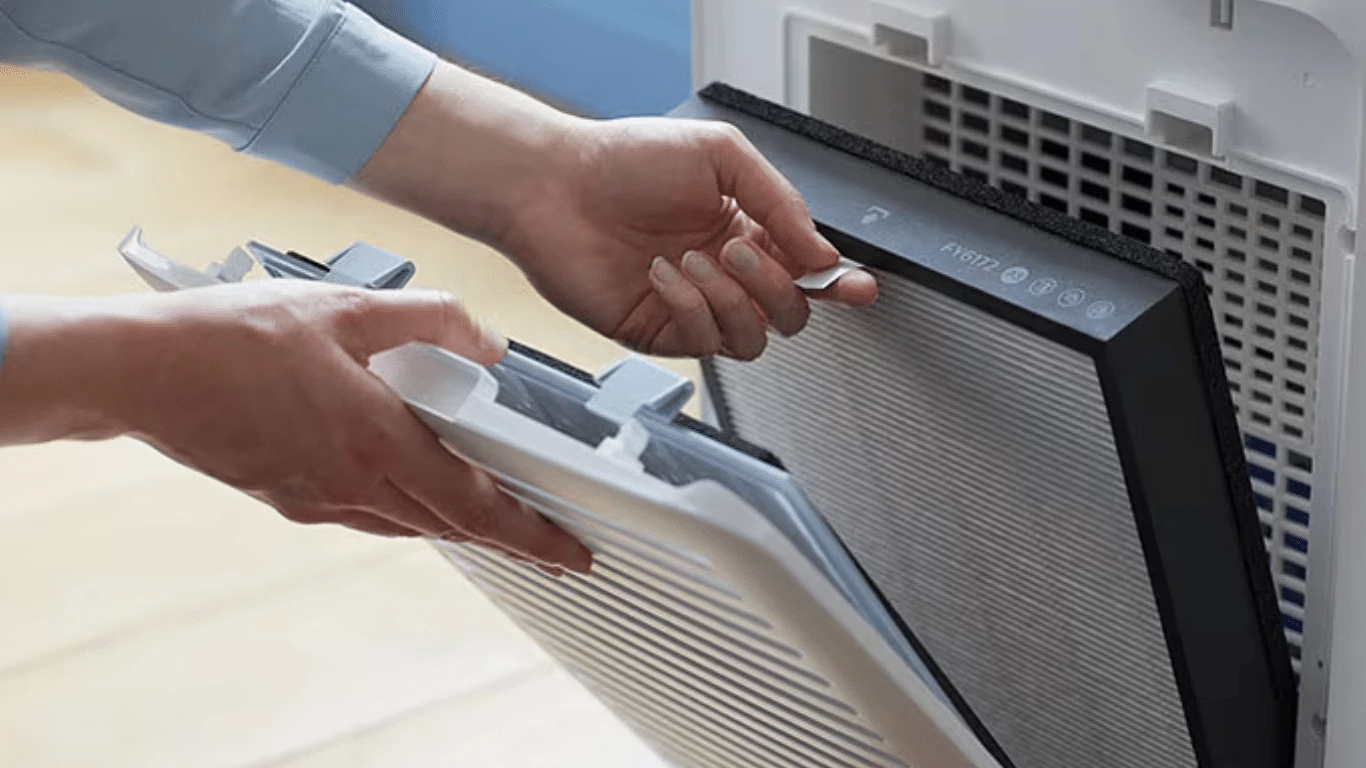
- Make sure the air filter is clean
- Confirm all supply vents are open
- Make sure return vents are not blocked by furniture
- Check whether bedroom doors make airflow worse when closed
- Note which rooms are uncomfortable and when
- Compare upstairs and downstairs temperatures
- Use a humidity meter to check indoor humidity
- Look for water near the indoor unit
- Listen for whistling or noisy vents
- Check whether the outdoor unit is blocked by landscaping
Do not crawl through unsafe attic spaces, open electrical panels, cut into ductwork, or adjust refrigerant.
The safe homeowner job is observation.
The technician’s job is testing.
What a Good Technician Should Inspect
A proper new construction HVAC evaluation should look beyond the thermostat.
A technician should inspect:
- Equipment size
- System age and model
- Filter size and condition
- Supply airflow
- Return airflow
- Duct layout
- Duct leakage
- Static pressure
- Refrigerant performance
- Indoor coil condition
- Outdoor coil condition
- Drain line and safety switch
- Thermostat location
- Thermostat settings
- Blower speed
- Room-by-room comfort complaints
- Indoor humidity
A good technician should be able to explain whether the problem is equipment, ductwork, airflow, humidity, controls, or home design.
That distinction matters.
Should You Call the Builder First?
If the home is still under builder warranty, start there.
Document the issue clearly.
Write down:
- Dates
- Indoor temperatures
- Humidity readings
- Which rooms are affected
- Photos of thermostat readings
- Photos of water leaks or visible duct issues
- Service history
- What has already been adjusted
Ask the builder or HVAC contractor to inspect the problem and explain their findings.
But if the answer does not make sense, or if the same issue keeps coming back, a second opinion may be worth it.
The goal is not to blame someone.
The goal is to identify the actual problem before the warranty window closes.
When a Second Opinion Makes Sense
A second opinion may be smart when:
- The builder says everything is normal, but the home is uncomfortable
- One floor is consistently too hot or too cold
- Indoor humidity stays high
- The system runs constantly
- Repairs keep repeating
- Drain problems keep coming back
- Rooms have weak airflow
- The system is noisy
- The contractor recommends replacement without explaining why
- The warranty period is close to ending
A second opinion should not just be another sales visit.
It should include measurements, inspection, and a clear explanation.
A good technician should be able to show you why the system is or is not performing correctly.
What Fixes Are Common?
The right fix depends on the cause.
Common solutions may include:
| Problem | Possible Fix |
| Weak airflow to rooms | Balancing, duct repair, blower adjustment |
| Leaky ducts | Duct sealing |
| Poor return air | Add or resize return ductwork |
| High humidity | Thermostat setup, airflow adjustment, dehumidification, sizing review |
| Hot upstairs | Zoning, duct correction, insulation review, mini-split option |
| Drain shutdowns | Drain cleaning, pitch correction, safety switch review |
| Poor thermostat location | Relocation or remote sensor |
| Undersized or oversized system | Load calculation and replacement discussion |
The cheapest fix is not always wrong, but it should match the actual problem.
The Bottom Line
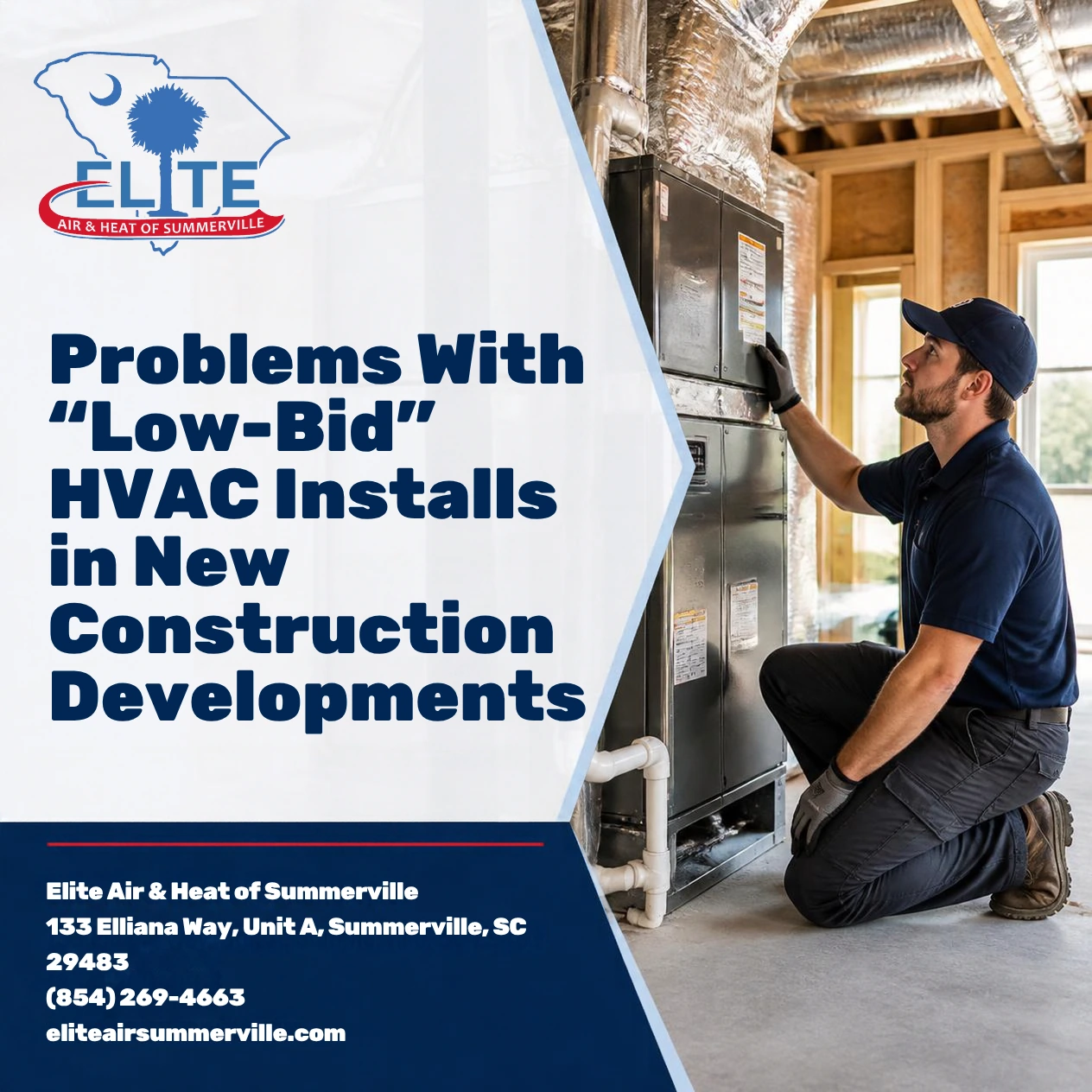
Low-bid HVAC installs in new construction developments can create long-term comfort problems when the work is rushed, underspecified, or built around minimum cost instead of real performance.
That does not mean every new construction system is bad.
It means homeowners should pay attention when a brand-new home has uneven rooms, high humidity, weak airflow, constant runtime, or repeated drain issues.
If you only remember one thing, remember this:
New equipment does not guarantee good comfort. The system still has to be sized, ducted, balanced, drained, wired, and tested correctly.
Elite Air & Heat of Summerville can inspect new construction HVAC concerns, explain whether the issue is airflow, ductwork, humidity, controls, or equipment sizing, and help homeowners understand what should be corrected before small comfort problems become long-term frustrations.